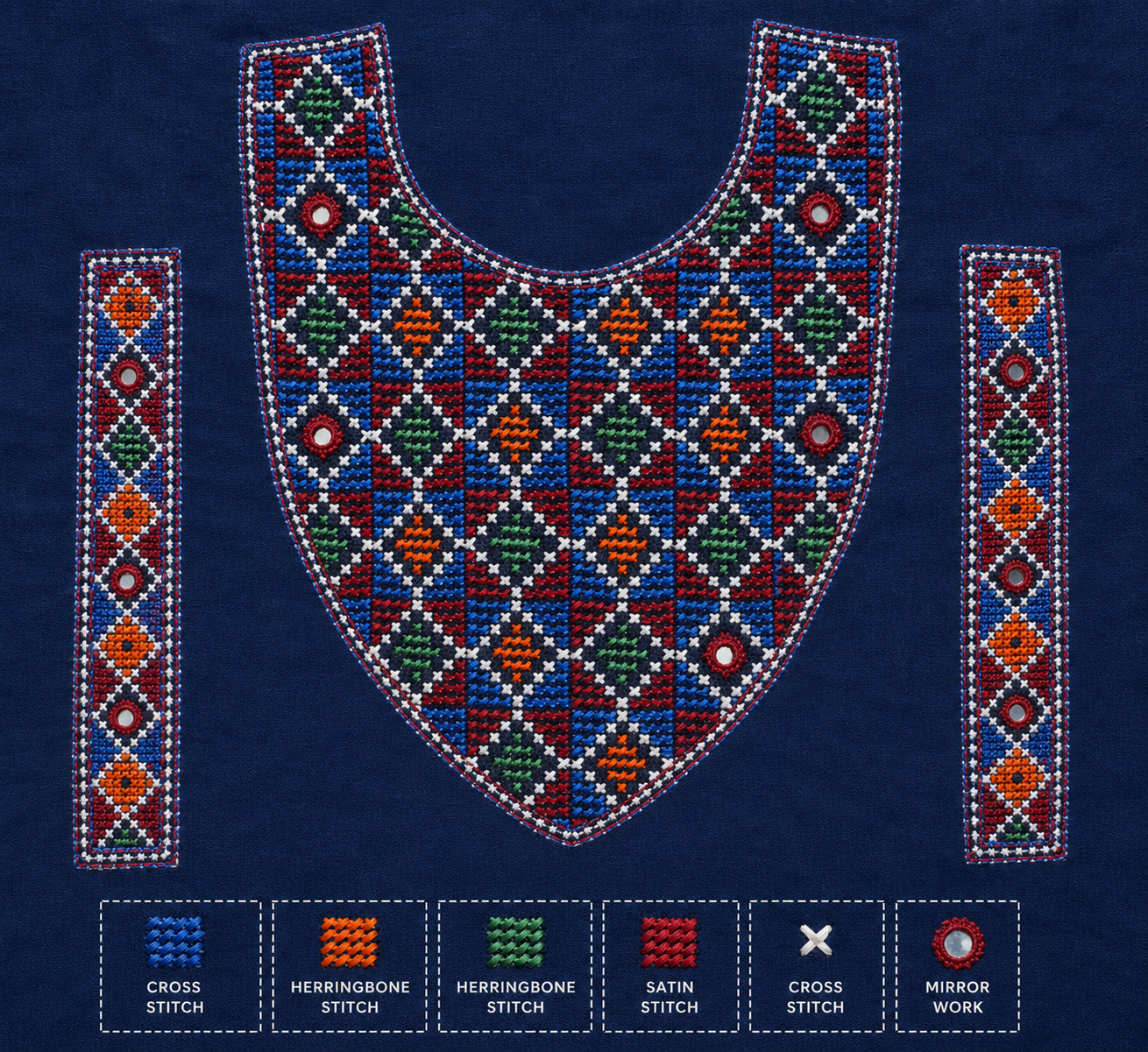
KUTCHI EMBROIDERIES
Ahir
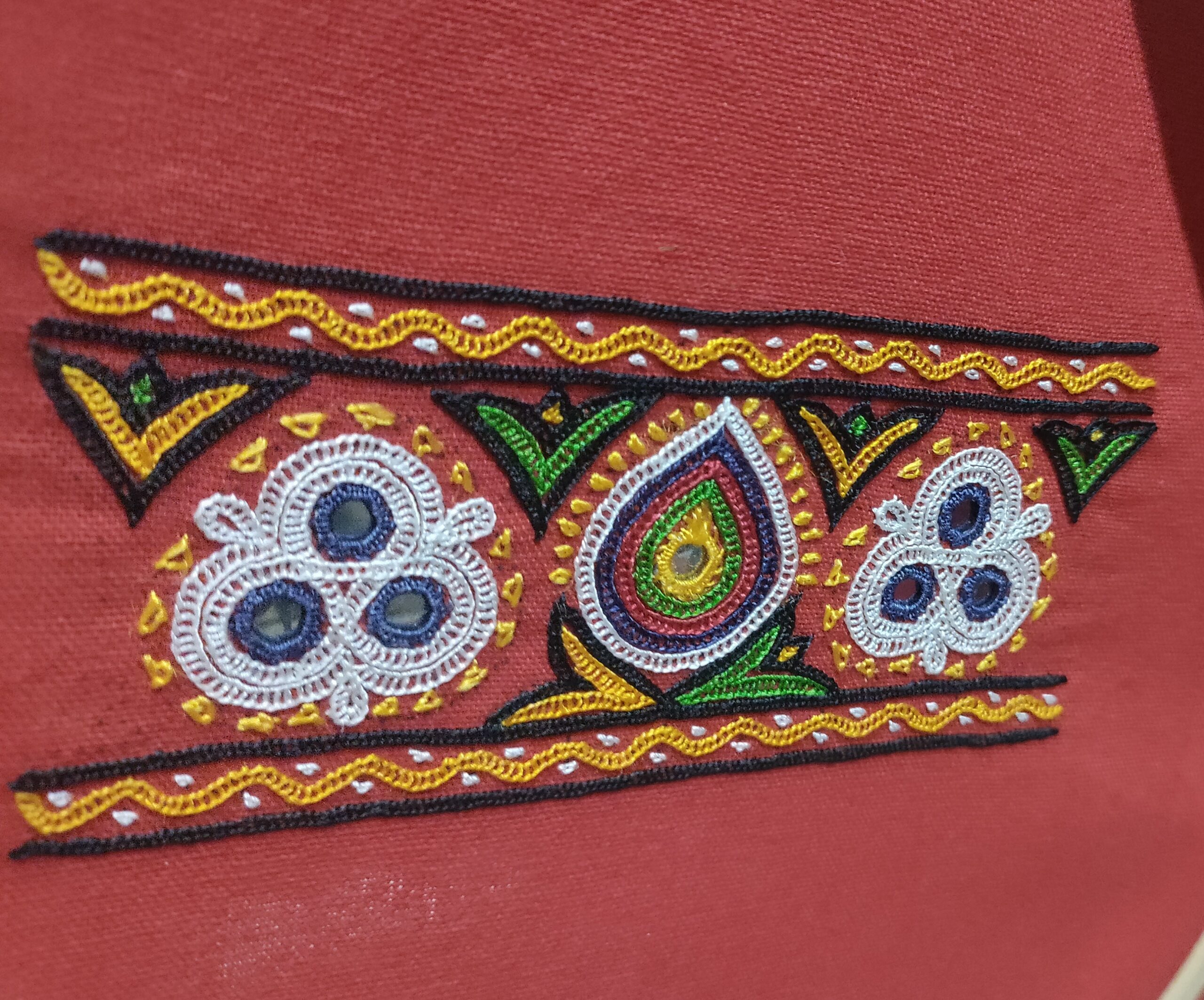
Ahir embroidery from Gujarat is an ancient craft that originated amongst the Ahir tribe residing in the region of Kutch. It entails the use of richly colored hand embroidery on cotton, silk, and wool thread accompanied with mirror decorations on cotton, silk, and mashru fabrics. The art form consists of floral, geometrical, animal, and cultural motifs with inspiration drawn from the life of shepherds and nature. The use of bright colors like red, yellow, green, blue, and orange creates a dazzling impact. The technique entails marking the design on the cloth and decorating it through the chain stitch, herringbone stitch, and mirror decoration by hand.
Pakko Embroidery
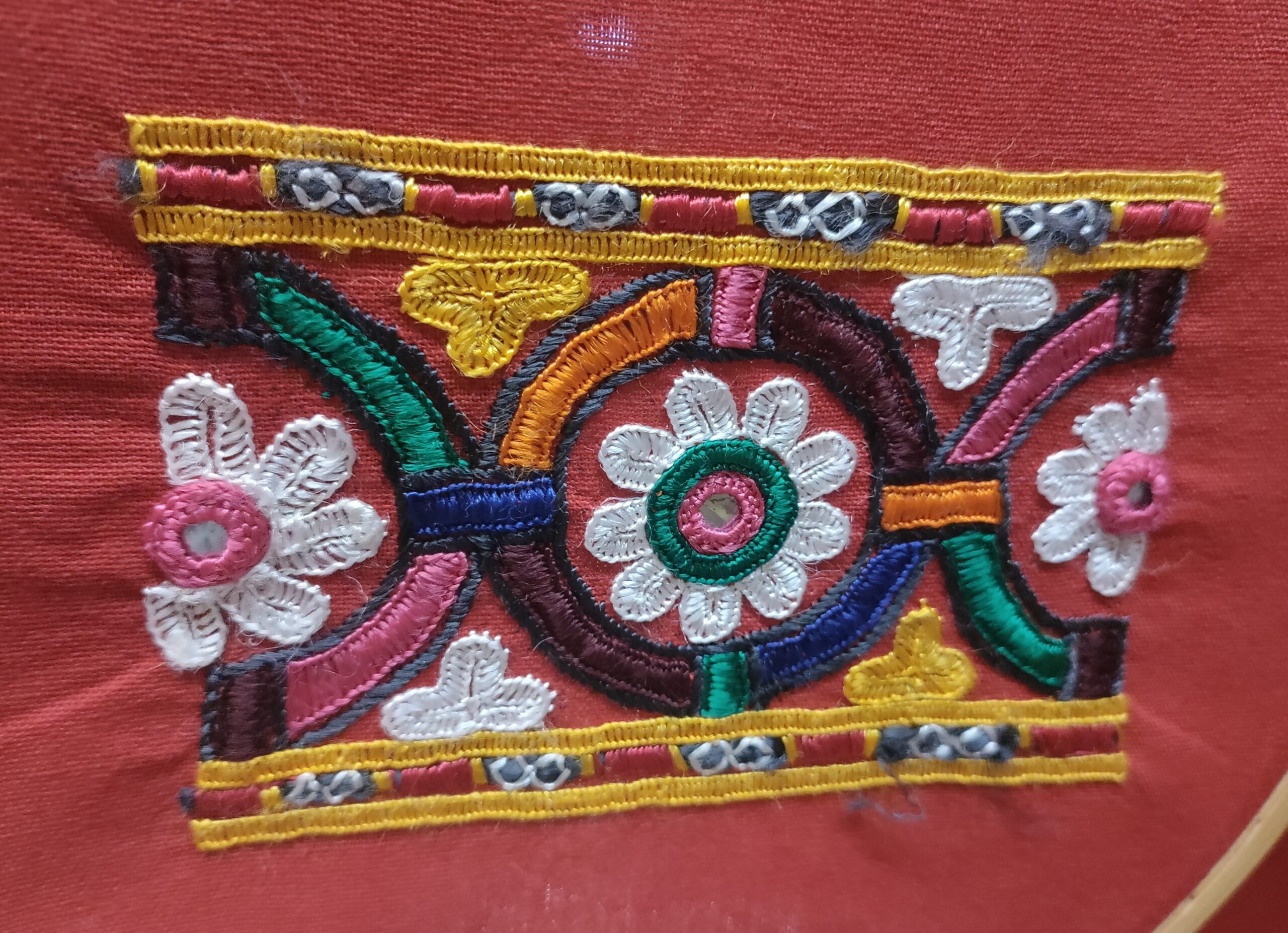
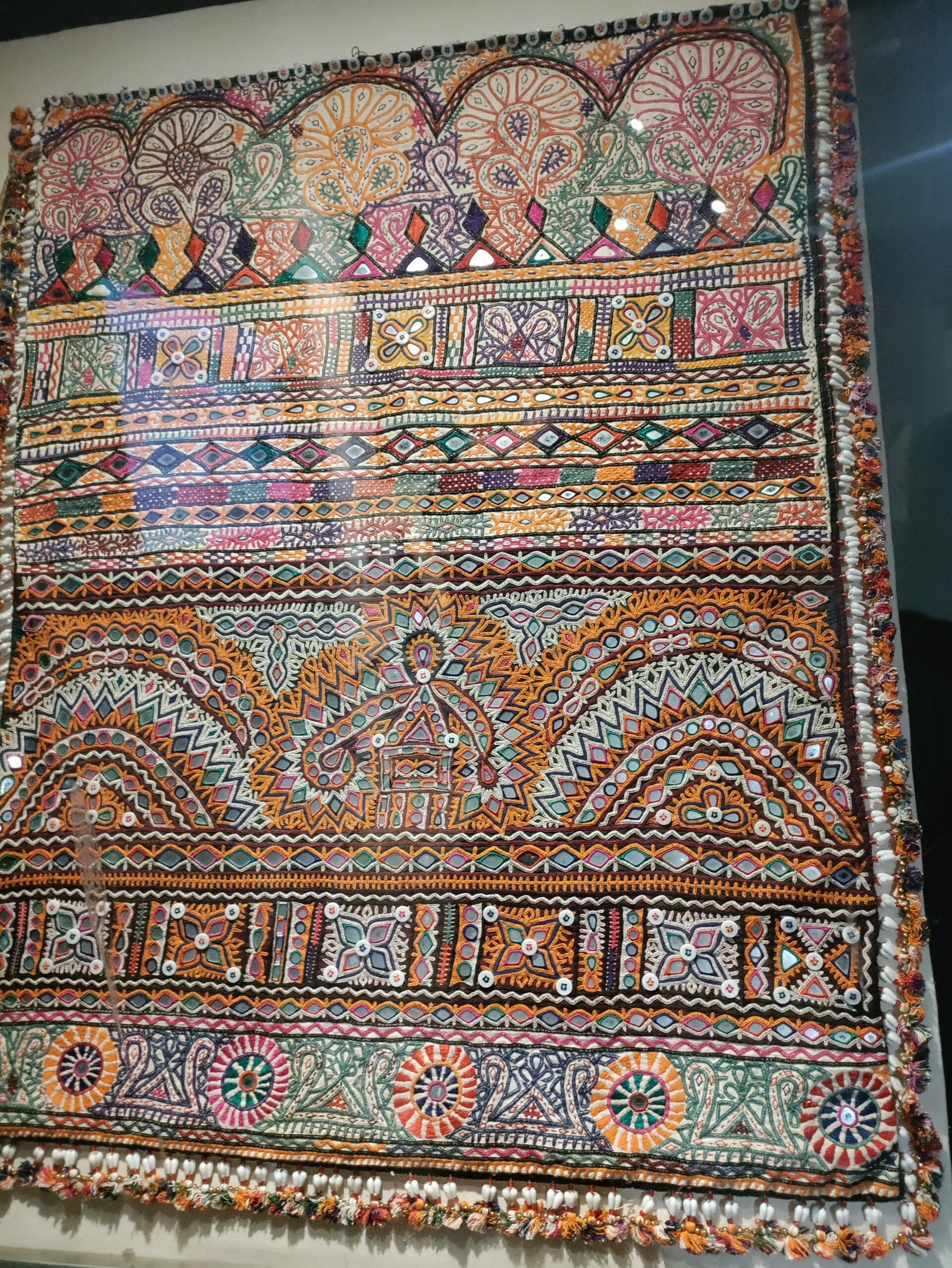
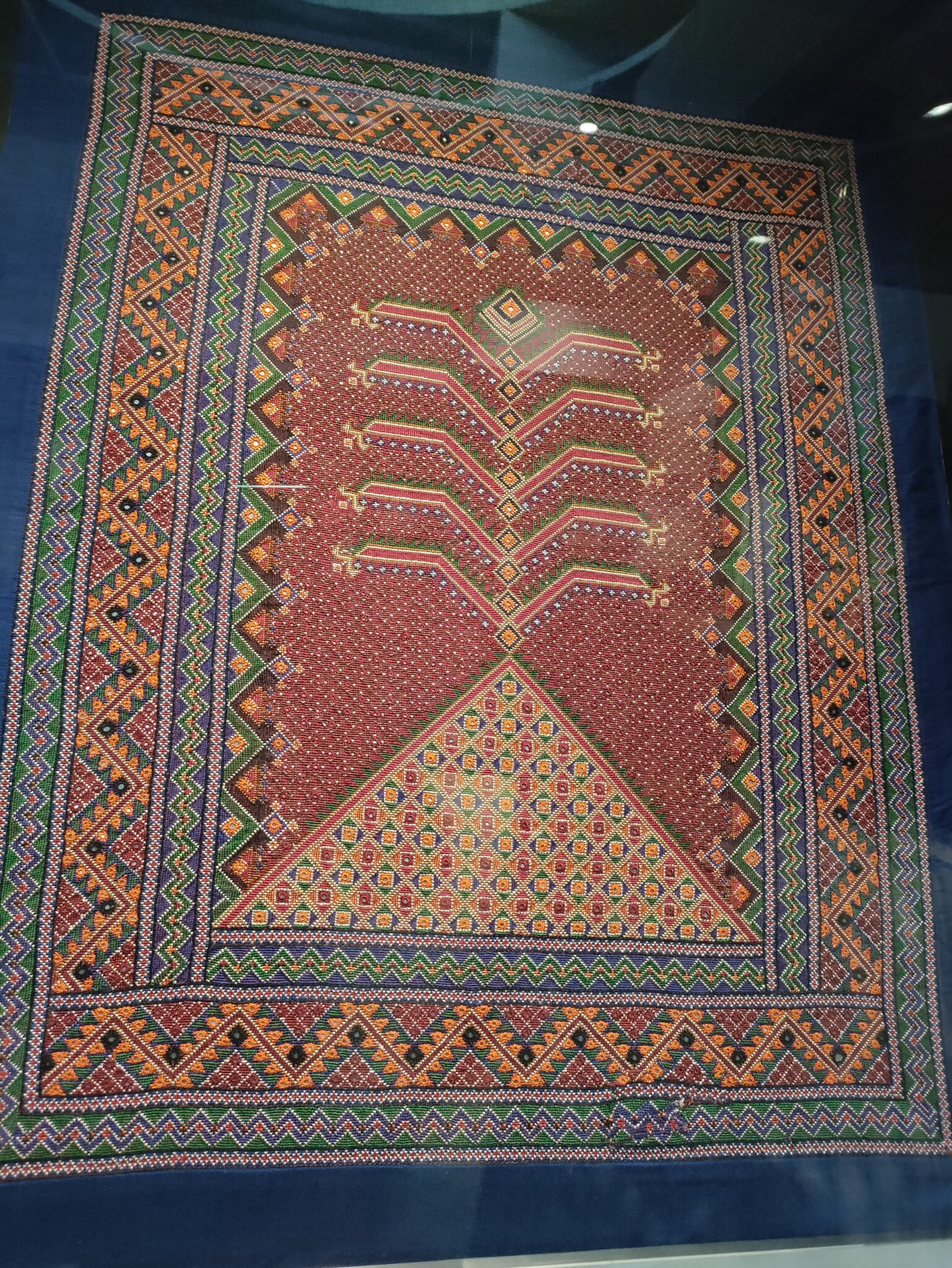
Pakko embroidery is a form of embroidery done using the most durable technique which is practiced mostly by the Meghwal and Sodha castes residing in Kutch, Gujarat. The term ‘Pakko’ means “Solid” or “Firm”. This is so because this kind of embroidery is characterized by dense and solid stitching which makes this embroidery technique very durable. It is often confused with the Soof and Rabari embroidery styles due to the cultural proximity among these communities. The distinctive features of this embroidery include thick and solid satin stitches which have a raised surface. It is also embellished with tiny mirrors (abhlas) which are sewn on the fabric using buttonhole stitches.
The traditional use of the Pakko embroidery includes wedding dresses, torans, canopies for shrines, household decorations, etc. It represents prosperity and joy. In terms of design, the motifs consist of vines and floral leaves, birds (especially parrots and peacocks), and temples. The colors used in the embroidery range from red, green, yellow, blue, and white and are stitched against dark backgrounds like black, maroon, and blue.
Neran
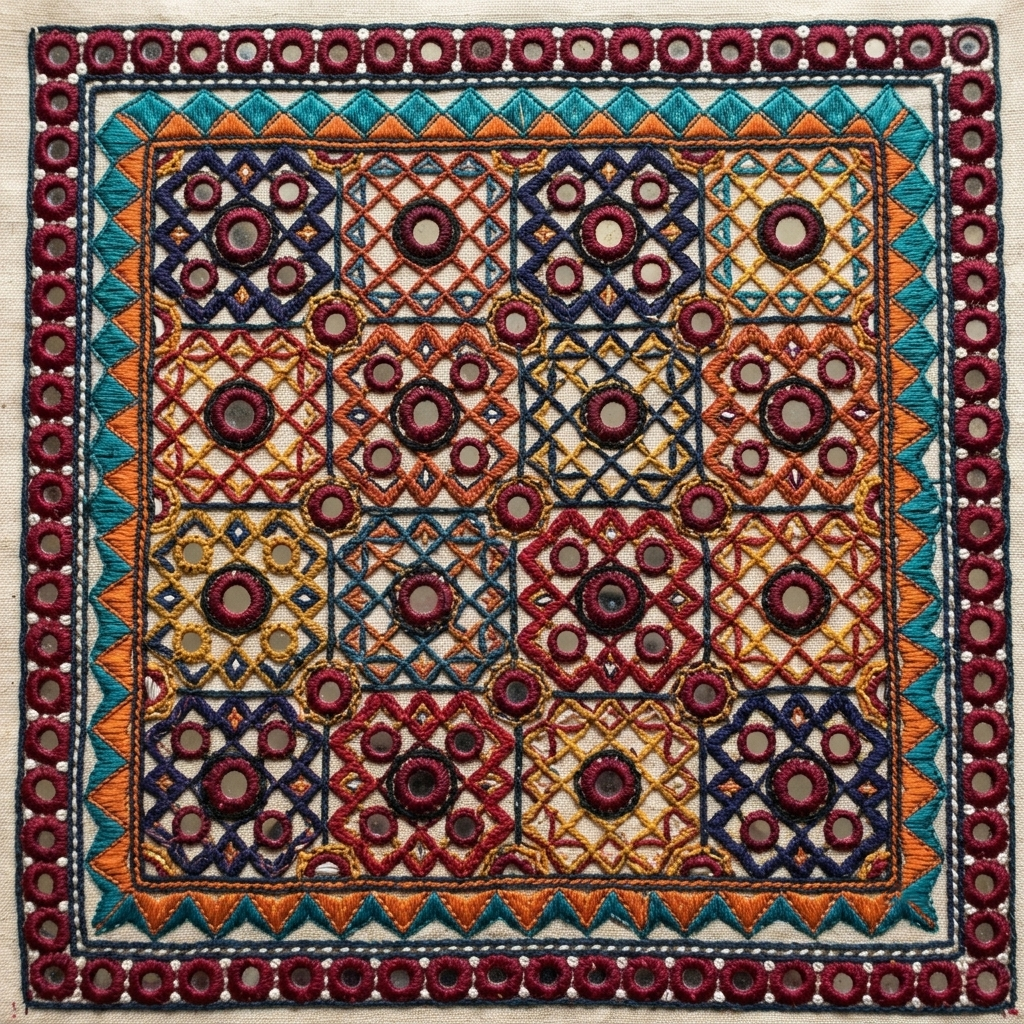
Neran embroidery is an art form that involves needlework done by communities living as pastoralists in the Kutch district of Gujarat. This is a type of embroidery that makes use of very fine needlework together with mirrors to create elaborate decoration. As opposed to the heavy appearance seen in Pakko embroidery, Neran embroidery is less dense in nature and consists of fine lines as well as symmetrical design patterns. Such embroidery can be found in clothing items, odhanis, decorating animals, dowry items, and household items in general.
This embroidery technique employs either cotton or silk thread in various colors such as red, yellow, green, blue, black, and white on dark backgrounds to enable easy identification of the embroidery against the base material. There are several designs and motifs in Neran embroidery including flowers, creepers, birds, and geometrical figures. Chain stitching, satin stitch, and herringbone stitch are some of the popular styles of stitching in this embroidery alongside mirror work and outlines of buttonhole stitching. In recent times, Neran embroidery has been adopted in fashionable bags and other home décor products.
Soof Embroidery
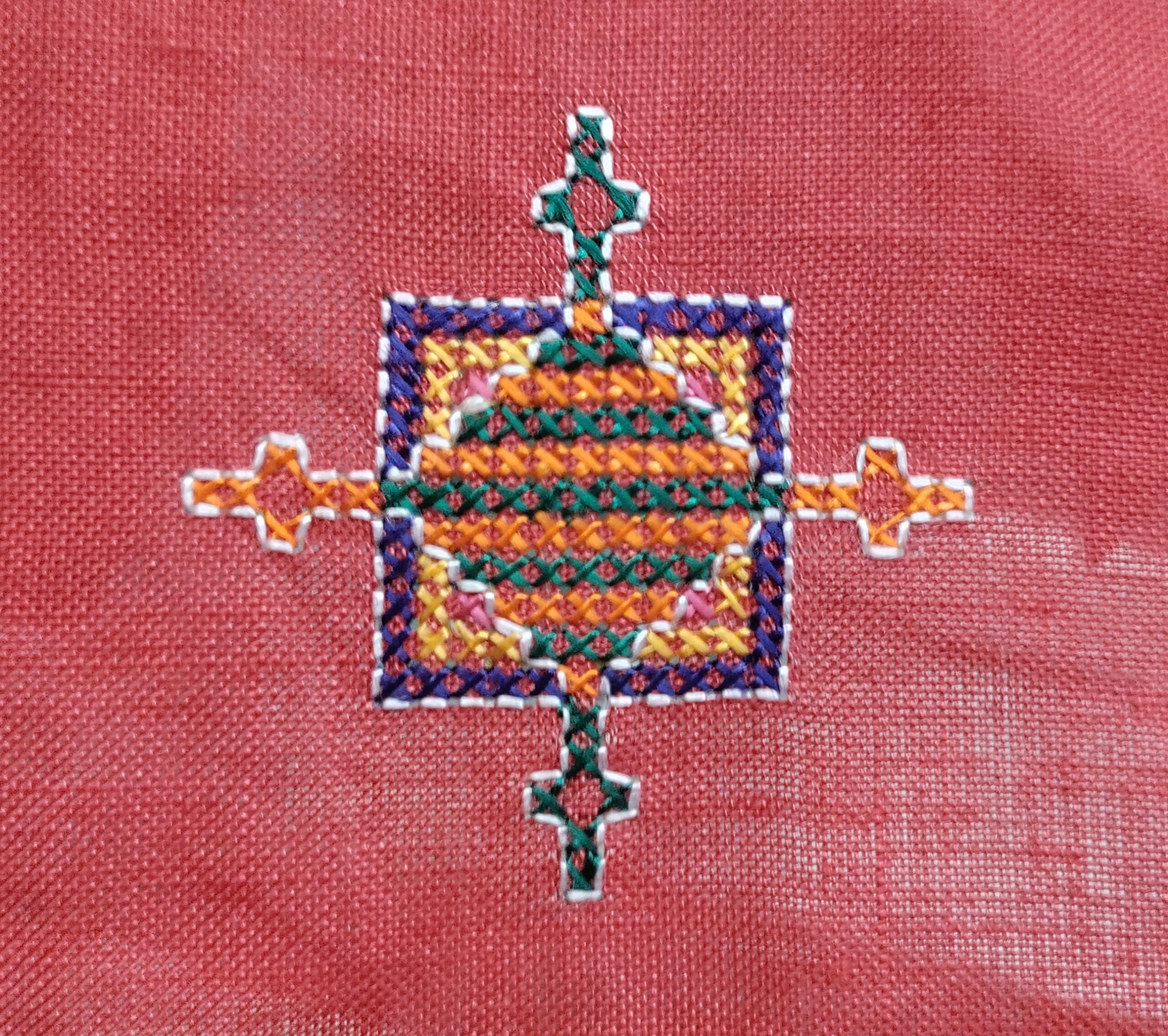
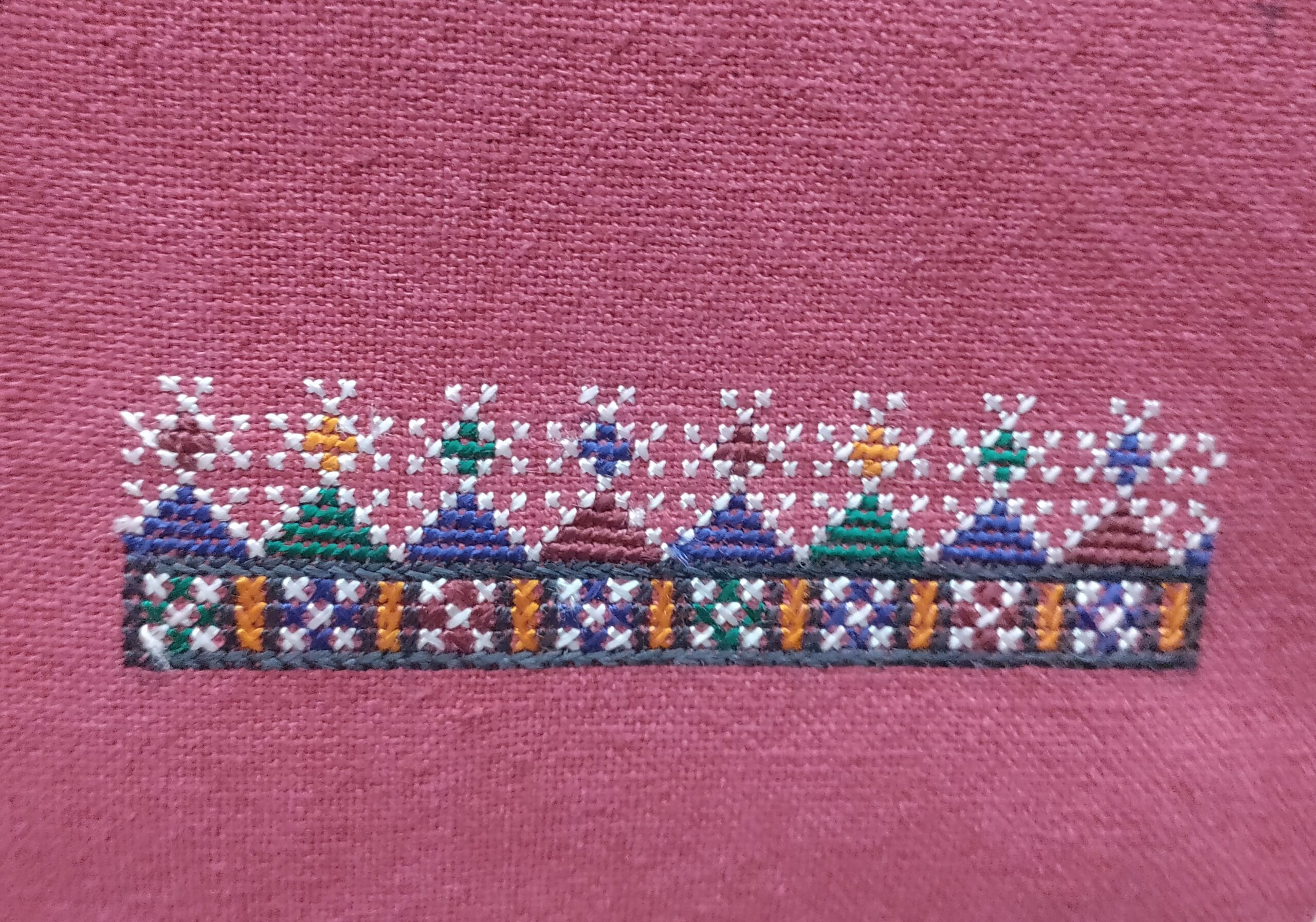
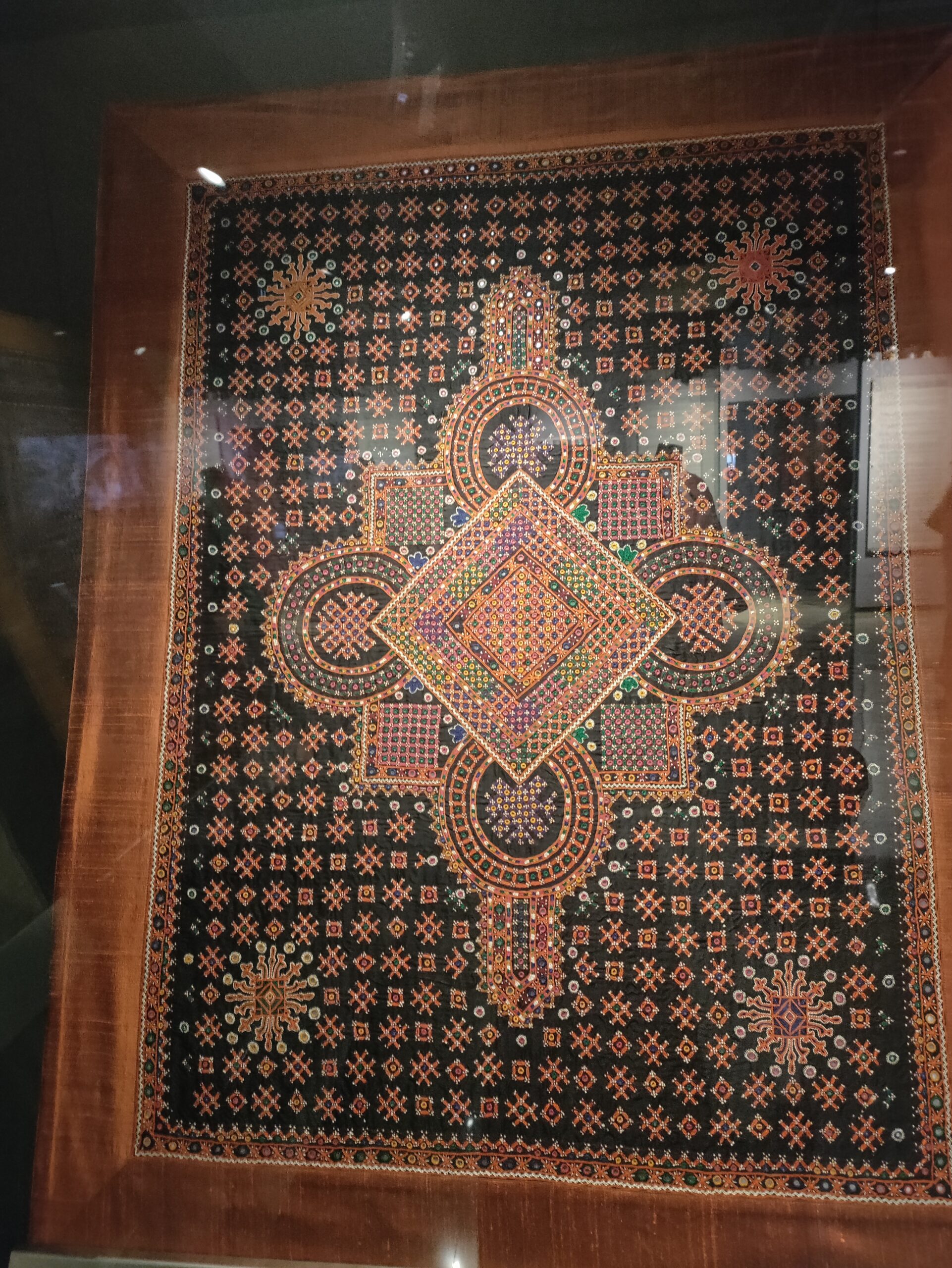
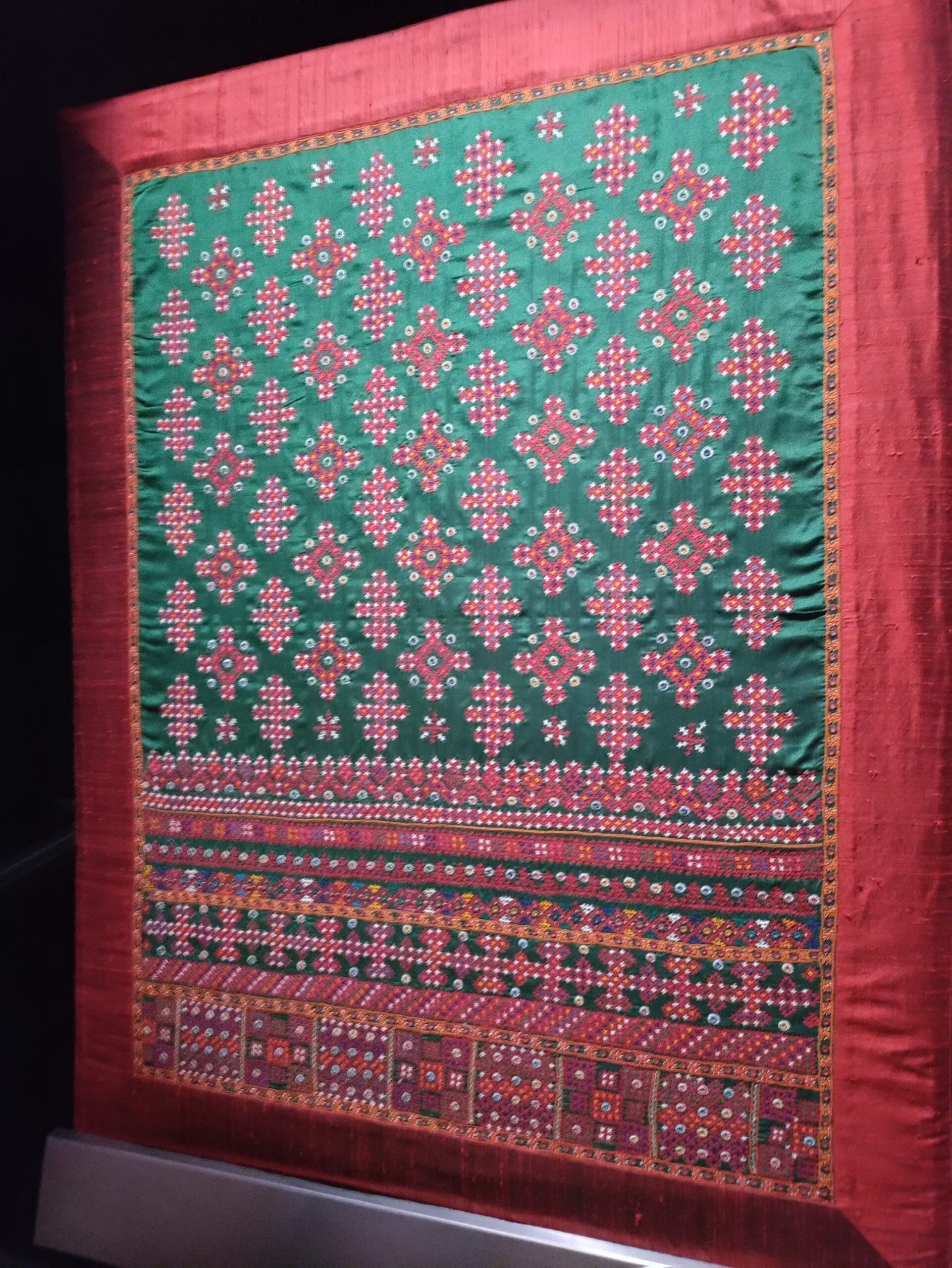
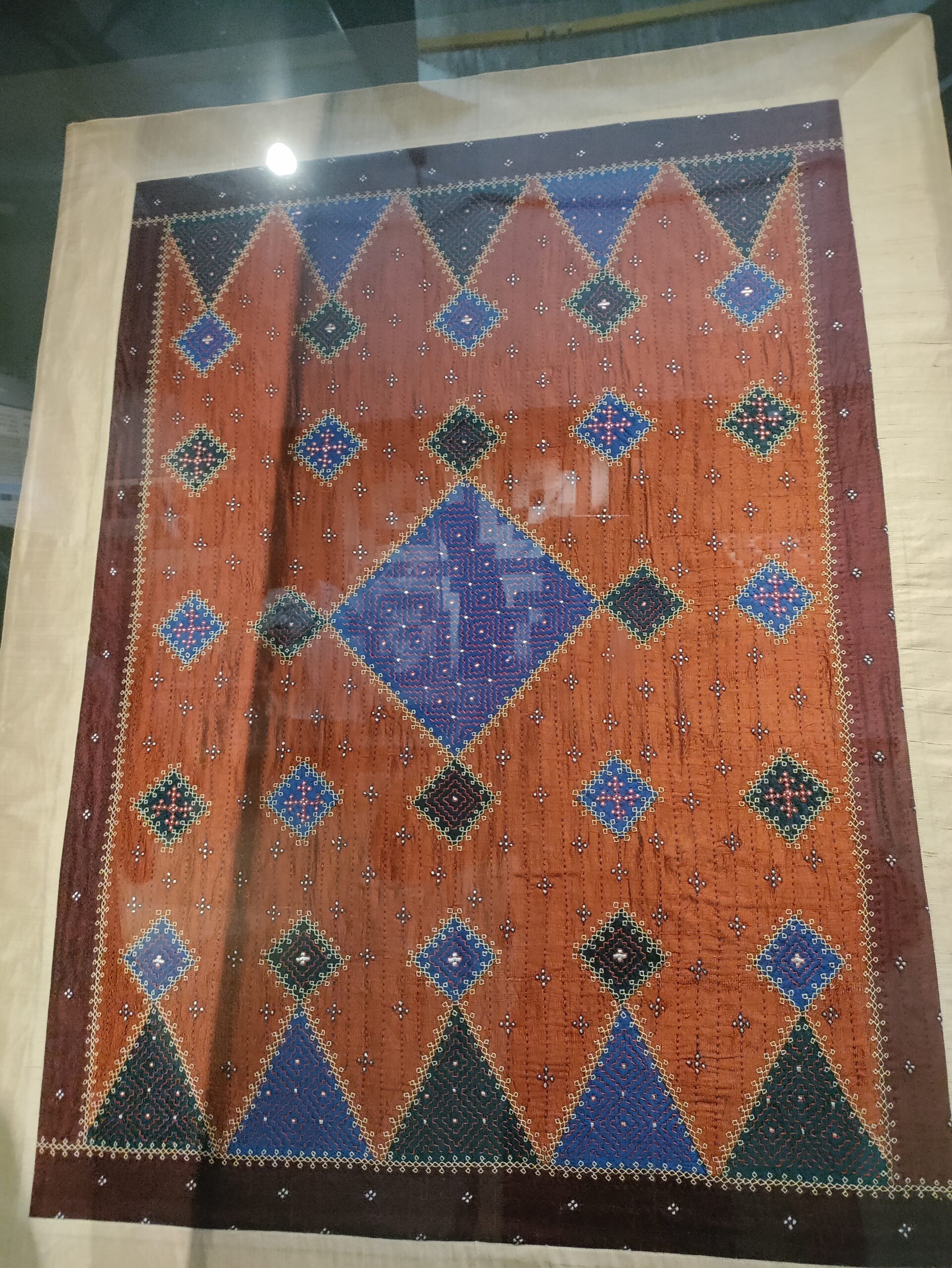
Soof embroidery refers to an exquisite form of embroidery practiced in Gujarat’s Kutch region, characterized by its perfection, symmetry, and counted stitch work. “Soof” implies both wisdom and cleanliness – qualities which are inherent to this embroidery practice. It has been mainly done by women belonging to Sodha Rajput or Meghwal communities who were migrants from Sindh region of Pakistan. It is very significant in terms of preserving their cultural heritage and identity. Interestingly, what distinguishes this embroidery form from other embroideries is that craftsmen design intricate geometric patterns solely based on their visual and spatial sense, and not by tracing patterns.
Aari Bharat
Aari Bharat, or the Chain stitch embroidery, is a traditional style of embroidery that is mostly carried out by artisans from Bhavnagar region in Gujarat. This embroidery dates back to the twelfth century when the embroidery was applied on leather items like shoes, purses, etc. The embroidery was then popularized during the Mughal era because of the royal patronage received during the era. The embroidery is done using the Aari, a hooked needle that resembles a crochet needle, creating beautiful chain stitches with great ease. Some of the motifs embroidered in this style include peacock, parrot, flower, elephant, palkis, and female figures. Bright colors of silk, cotton, and zari threads are applied on silk, velvet, satin, and georgette fabrics.
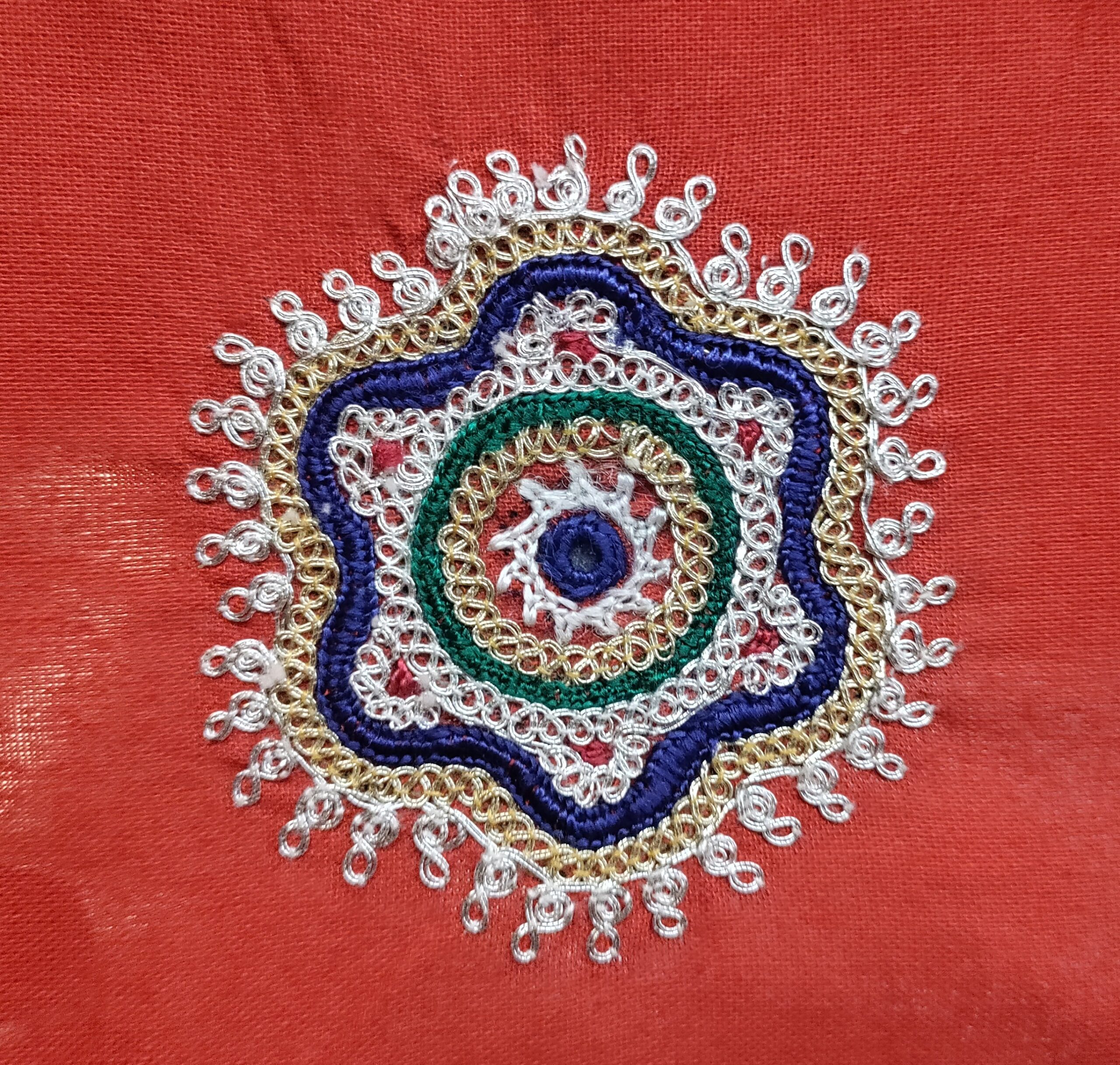
The node embroidery is one of the most popular forms of embroidery of Gujarat and Kutch. This form of embroidery consists of raised stitch knots, resembling the nodes. It creates three-dimensional patterns. The craft involves the use of several embroidery forms including mirror embroidery, chain stitch, and patchwork embroidery. In terms of the stylistic features, the Node embroidery can be associated with the folk culture of Gujarat and Kutch.
Node
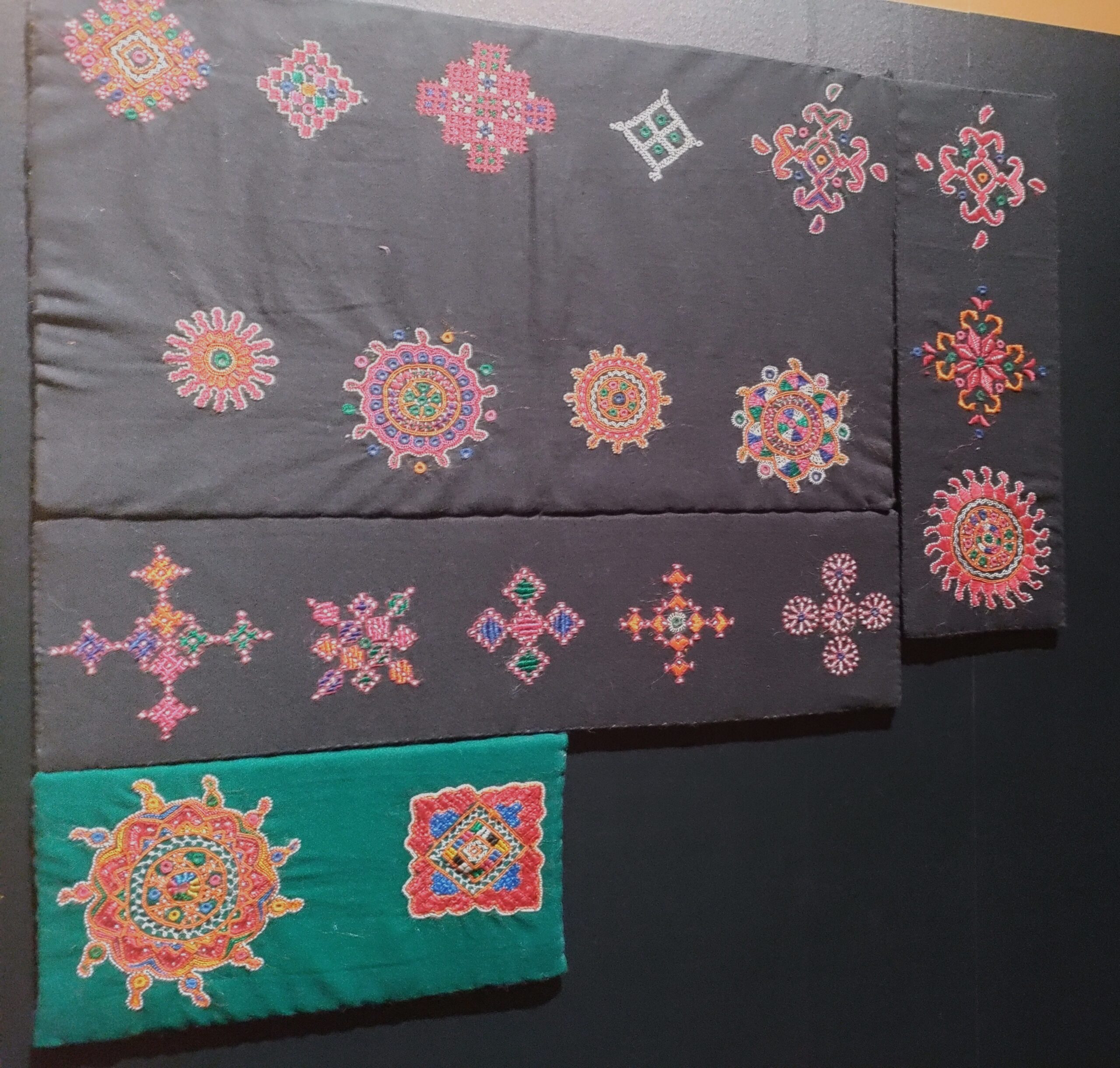
The node embroidery refers to a traditional embroidery method popular in Gujarat and Kutch, characterized by decorative knot stitches. This embroidery involves making knots or loops on the fabric, hence giving the embroidery a 3-D look. Node embroidery can be done alone but is often made together with other embroidery techniques, including mirror work embroidery, chain stitch embroidery, and patchwork embroidery.
Conventionally, Node embroidery is done on either cotton or silk fabrics using brightly colored cotton or silk threads, including colors like red, yellow, green, blue, orange, black, and white, often contrasting the dark background fabrics. Some of the common designs are floral designs, geometric patterns, creepers, dots, among others. The node embroidery gives a raised effect to any design on clothing items, wall hangings, bags, cushion covers, and other textiles. Currently, node embroidery is used in various modern applications in clothing and interior décor.
Abla or Abhala
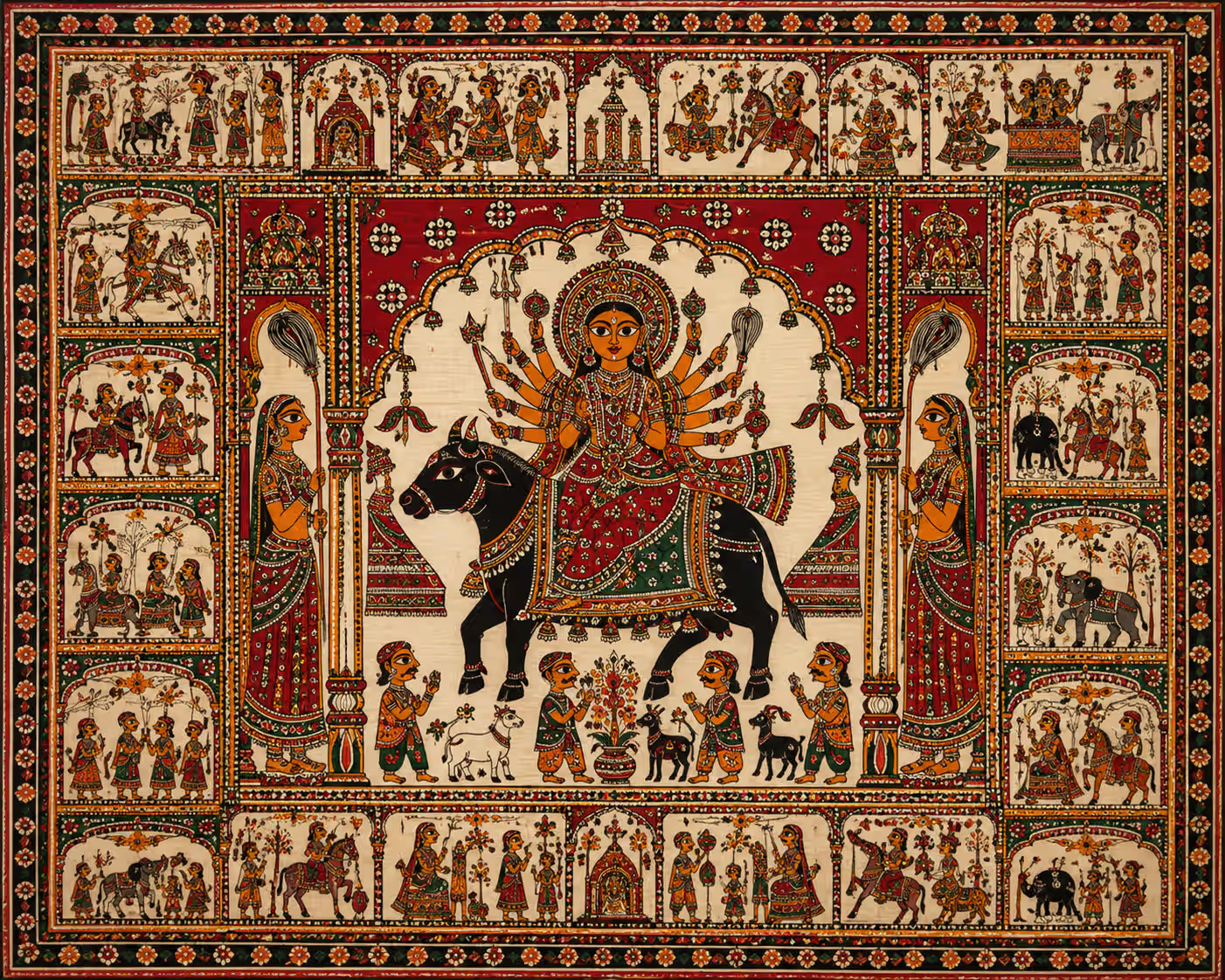
Abla work embroidery,presented by the Banjara community, is also called mirror work embroidery. It is an indigenous embroidery style prevalent in Gujarat and Rajasthan, and which reflects its close resemblance to Kathiawar and Kutch embroidery styles. Abla work embroidery features the application of small mirrors sewn onto cloth using glossy thread, producing a shiny embroidery pattern. Chain stitch and herringbone stitches are frequently used around mirrors as a result of inspiration from the Kutch style of embroidery. Abla work embroidery is usually applied to clothing and domestic items including ghagra cholis, blouses, odhanis, chaklas, bags, and wall hangings. The choice of colors in this type of embroidery involves bold color combinations with dark backgrounds of indigo or dark blue complemented by red, pink, yellow, green, and orange threads.
Rabari
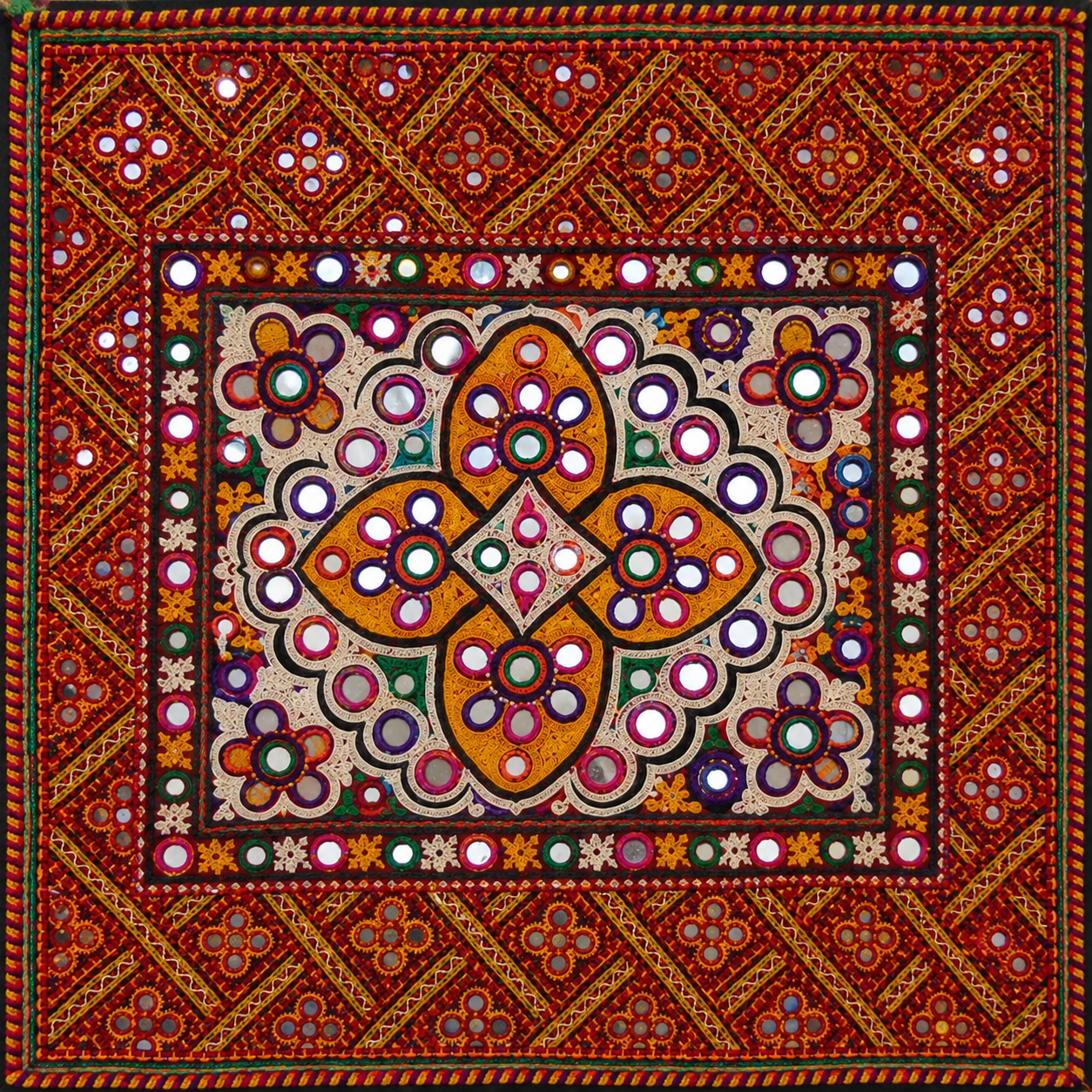
Rabari embroidery refers to a style of embroidery that is unique to the Rabari people of Gujarat and Rajasthan. Traditionally, young girls belonging to the Rabari community would embroider fabrics for themselves in preparation for their trousseau, thus revealing their skills and creativity as well as their status within the family. Known for its bold graphic designs, heavy lines, and extensive mirror work, this type of embroidery symbolizes the fierce beauty and the stark conditions of the environment of the semi-nomadic pastoralists. Primarily performed in Kutch and Saurashtra, the craft involves a lot of travel and interaction with the animal kingdom.
Rabari embroidery involves the use of coarse fabric made of natural cotton. The thread used is either natural cotton or silk in vivid colors such as red, black, blue, green, and white, which each has their significance in culture. Designs used in this embroidery include camels, peacocks, elephants, scorpions, temple designs, and stylized human figures in combination with mirrors used for warding off evil spirits. Some common stitching techniques in this embroidery are the backstitch, the herringbone stitch, and the running stitch. Today, Rabari embroidery has been adopted into making bags, cushion covers, and other household textiles.
Khaarek
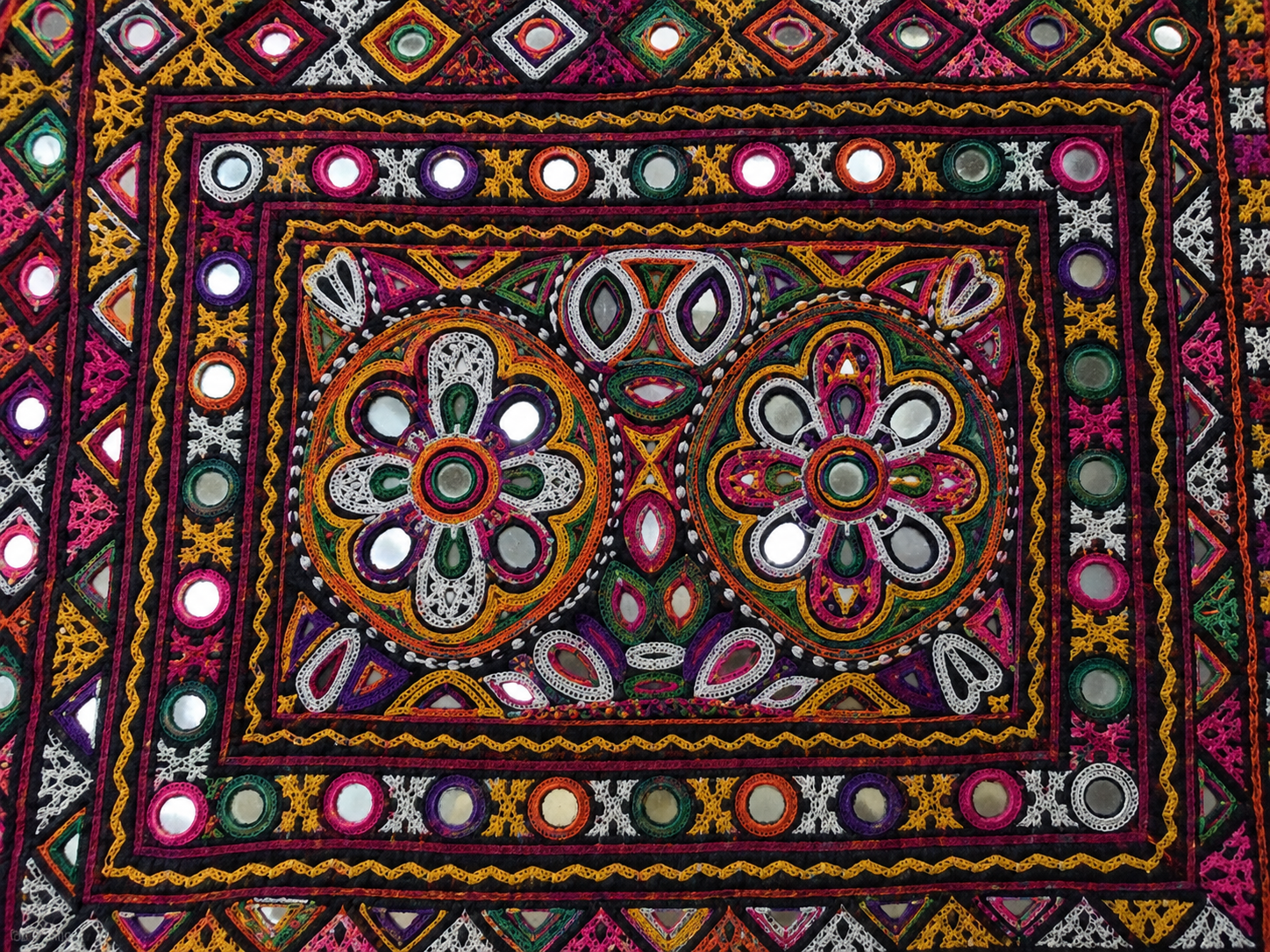
Khaarek embroidery is one of the most famous types of embroidery belonging to the Kutch region of Gujarat. The term “Khaarek” means the use of geometrical shapes in a rectangle and steps pattern forming the basic design of embroidery. It is among the oldest counted thread embroidery techniques of the Kutch region and similar to Soof embroidery, though having a bolder and sharper appearance. The technique requires precision, rigor, and symmetrical designs formed entirely with counted warp and weft threads of the fabric.
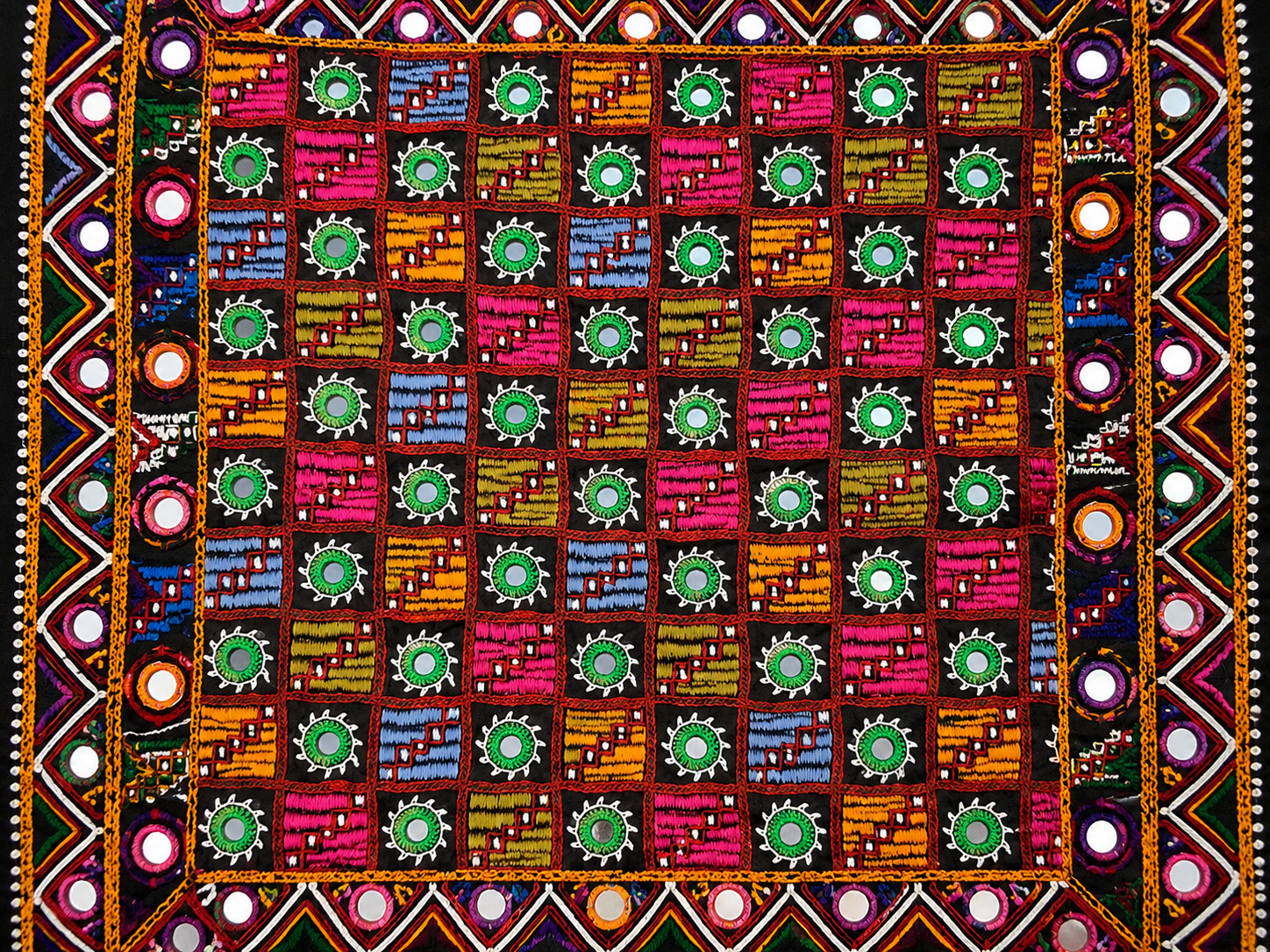
The traditional material for Khaarek embroidery was hand-woven cotton fabric, while for making embroidery itself silk or cotton colorful threads were used. Vibrant colors used for the embroidery include red, yellow, green, orange, black, and white ones. As for designs, geometric figures are typical, such as rectangles, blocks, ladders, and steps designed according to a repeating pattern. The Khaarak embroidery stitches are based on a counted satin stitch technique forming raised and textured patterns. The embroidered pieces have less mirror decorations than other heavily decorated types of embroidery. The technique was traditionally used on dowry fabrics, odhanis, and traditional clothing. Today, it is also applied to fashion accessories, handbags, cushion coverings, and other home decors.
Jat
Jat embroidery is a unique type of embroidery that is practiced by the Jat tribes of Kutch, Gujarat. It comprises the Garasia Jats and Fakirani Jats and their nomadic and pastoral culture. It is known for exquisite geometrical patterns, precision, and elegance of design. Originally, Jat embroidery was created by women and was used for garments, veils, and dowries of women. It shows significant influences from Sindh due to the cultural exchanges between these regions.
It is mostly worked on dark-colored cotton cloth using silk or cotton threads in bright colors like red, yellow, green, white, and orange. What makes this embroidery distinct from other styles in Kutch are tiny designs in geometrical shapes, patterns done in counted threads, and stitch work without any mirrors unlike in other styles in Kutch embroidery. Diamond, triangle, grids, lines, and geometrical forms were used in symmetrically patterned designs to create Jat embroidery. Satin stitch, counted cross stitch, interlaced and many other techniques were used in creating these designs. Now, Jat embroidery is being adapted to create garments, bags, wall hangings, cushion covers and many other fashionable items.