KATHIWARI EMBROIDERIES
Sindhi Tarupa
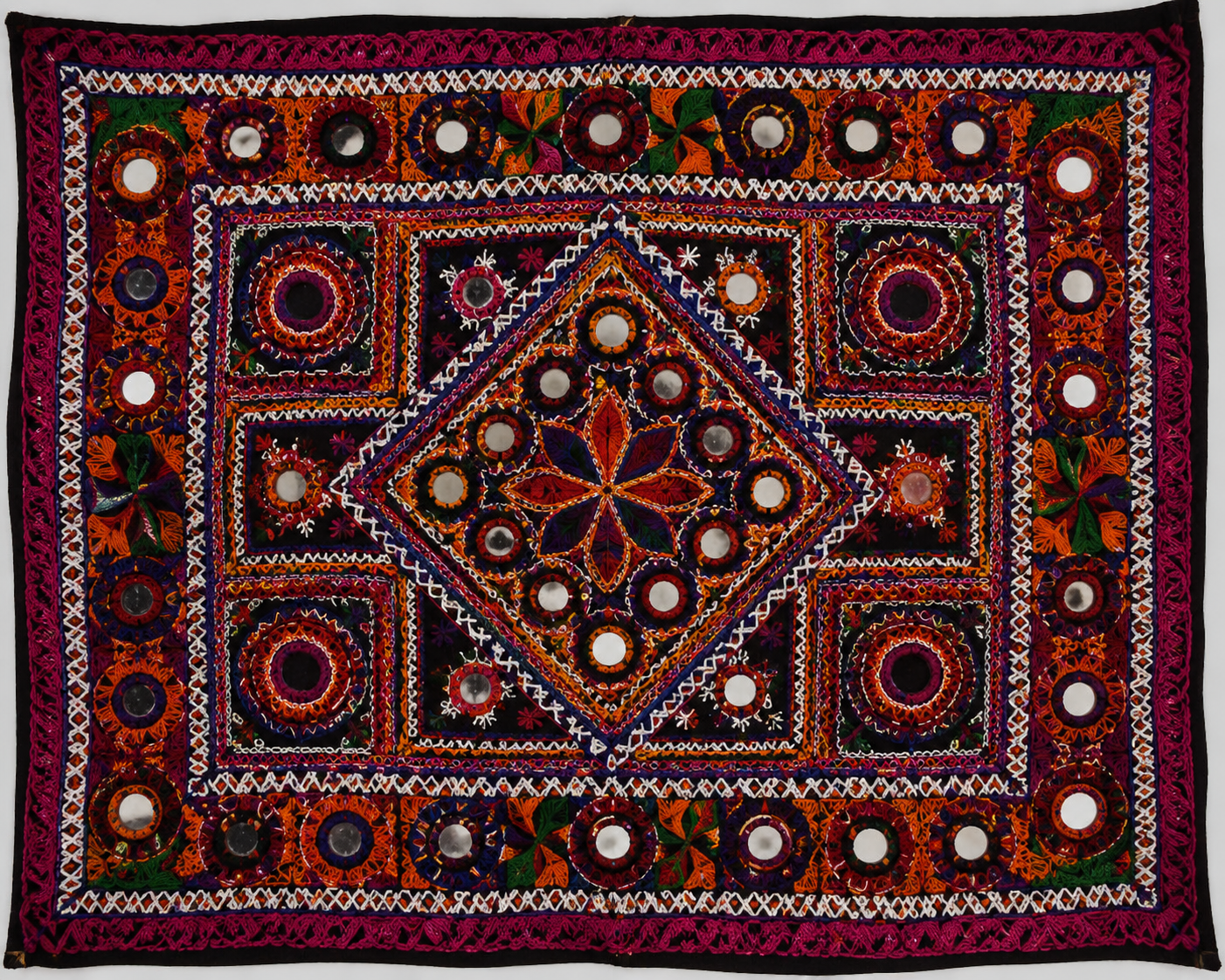
Sindhi embroidery is a traditional craft art form, which is derived from the region of Sindh, and whose history dates back to Balochistan and subsequently Afghanistan, and also to some regions of Germany. This embroidery style employs an exclusive Kaur Stitch or braided stitch embroidery, which can also be categorized under the interlacement or square knot embroidery technique. The entire process starts with the skeleton stitching, followed by weaving it into bold geometric patterns. Sindhi embroidery is also executed with the addition of Abla (Mirror Work), which is created by outlining mirrors with the herringbone stitch. Some of the prominent features of Sindhi embroidery include the use of big motifs along with bold colors such as black, maroon, golden yellow, and red.
Katab or Applique work
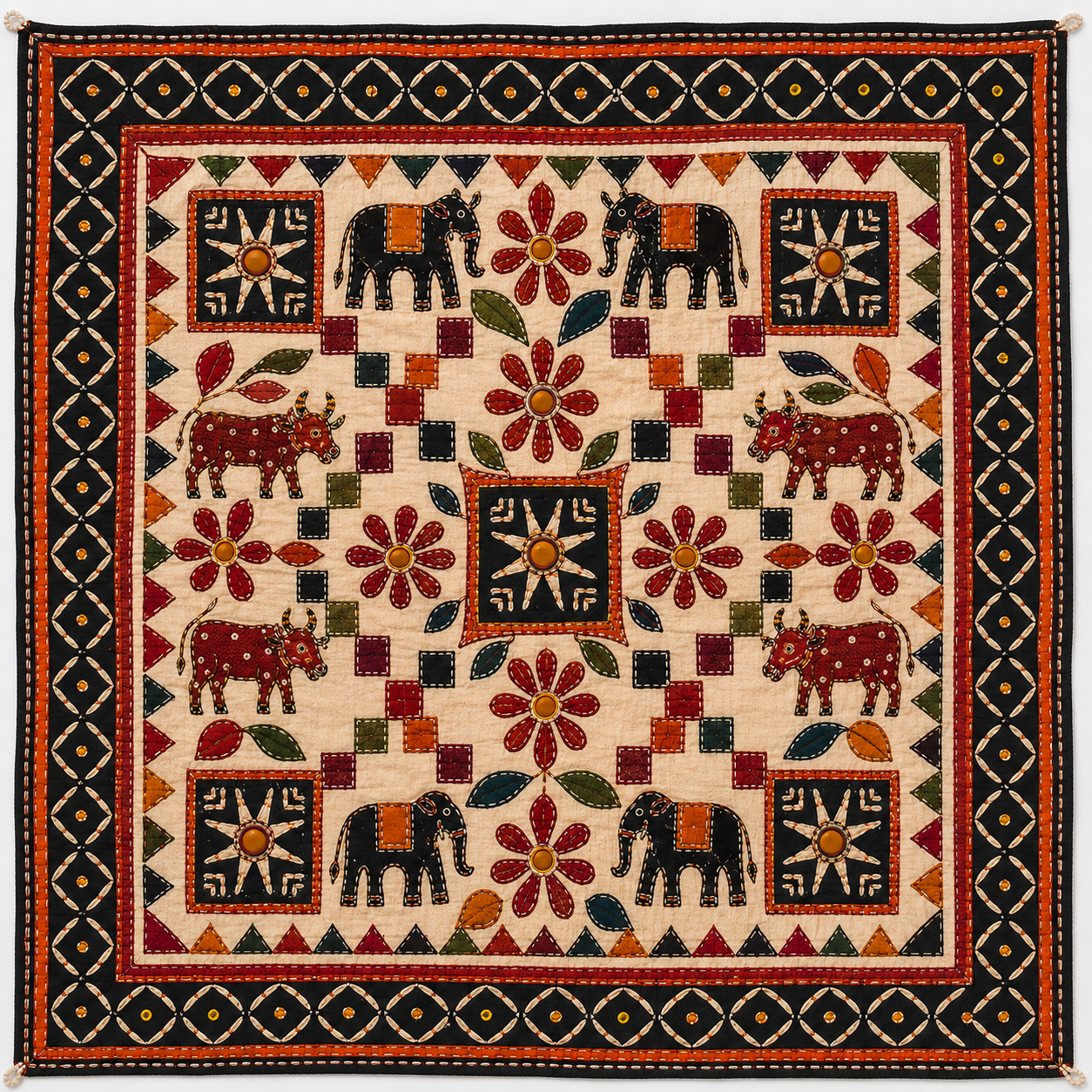
The origin of appliqué embroidery lies in the French word *appliquer*, which translates to “put on.” As an ornamental textile work method, appliqué embroidery requires the use of two types of fabrics, with one being used as the base fabric, while the other fabric is cut and sewn on it as patches or ornaments. Cotton and satin fabric are commonly used as the base fabric, and the design is first outlined on it. The same design is later outlined again on another fabric, with a margin left for sewing. Appliqué work can be seen done on traditional wear such as Ghagra Cholis and is characterized by large patchworks decorated with small chain stitch designs. Some appliqué designs also incorporate mirror work. Traditional items made through appliqué techniques include the Chakla triangular or inverted wall hanging and the Torran, which are door or ceiling hangings with appliqué and chain stitches.
Heer Bharat
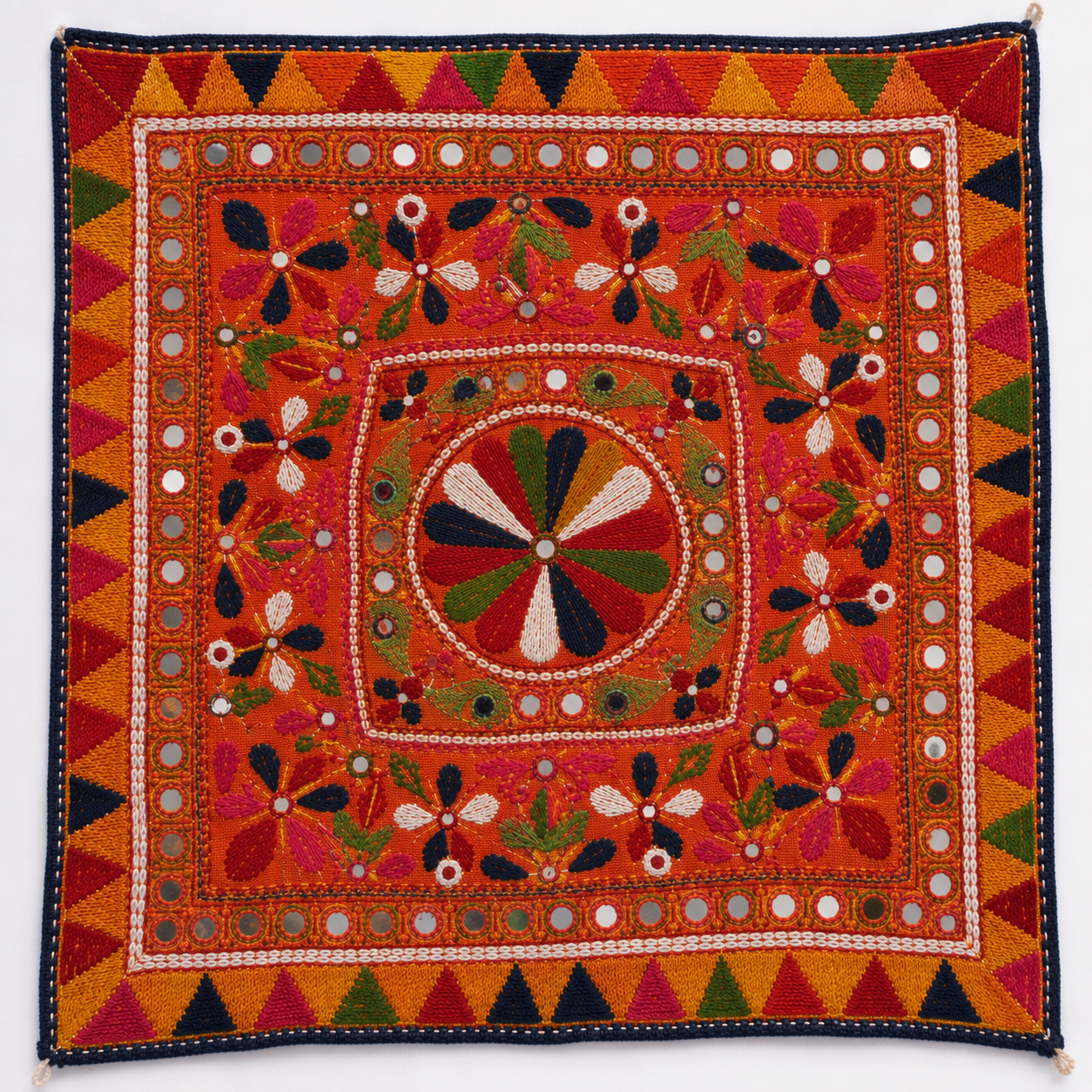
Heer Bharat is a style of embroidery from Gujarat that bears a striking resemblance to Phulkari embroidery owing to the long and tight stitching done in it. This kind of embroidery is created using silk floss or untwisted silk threads through darning stitches. The long stitches can be up to one inch in length and are laid both vertically and horizontally for creating patterns like square, rectangle, and triangle shapes. This arrangement of stitching makes for a balanced design by providing a slight shadow to the pattern created. Mirror work can also be incorporated in order to create a certain emphasis on specific areas of the motif. Colors used in Heer Bharat embroidery are often deep blue and crimson.
Moti Bharat or Bead Work
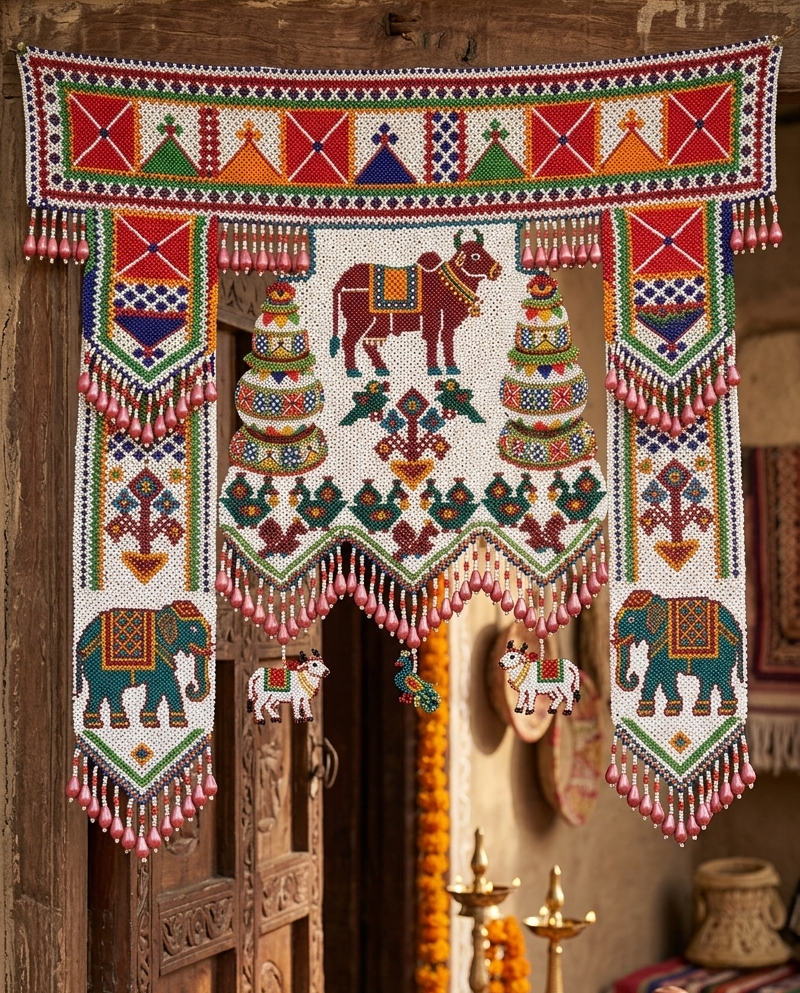
Moti Bharat is another name for Bead Work Embroidery, which is an ancient craft that has been primarily practiced by the Kathi tribe in Gujarat. In contrast to embroidered work, Moti Bharat involves the arrangement of colors on a piece of cloth through beads without the need for any elaborate embroidery in the background of the material. Common motifs in Moti Bharat include symbols and cultural motifs such as the swastika, kalash, elephant, calf, doll, grain, and festival lamps, especially during Diwali and marriage ceremonies. White beads form the background in the process while green and red beads accentuate the motifs and designs. Moti Bharat finds use in decorating torans (hanging on doors), wall decorations, jewelry, weddings accessories, and six feet high partition on the entrance door.
Meghwal
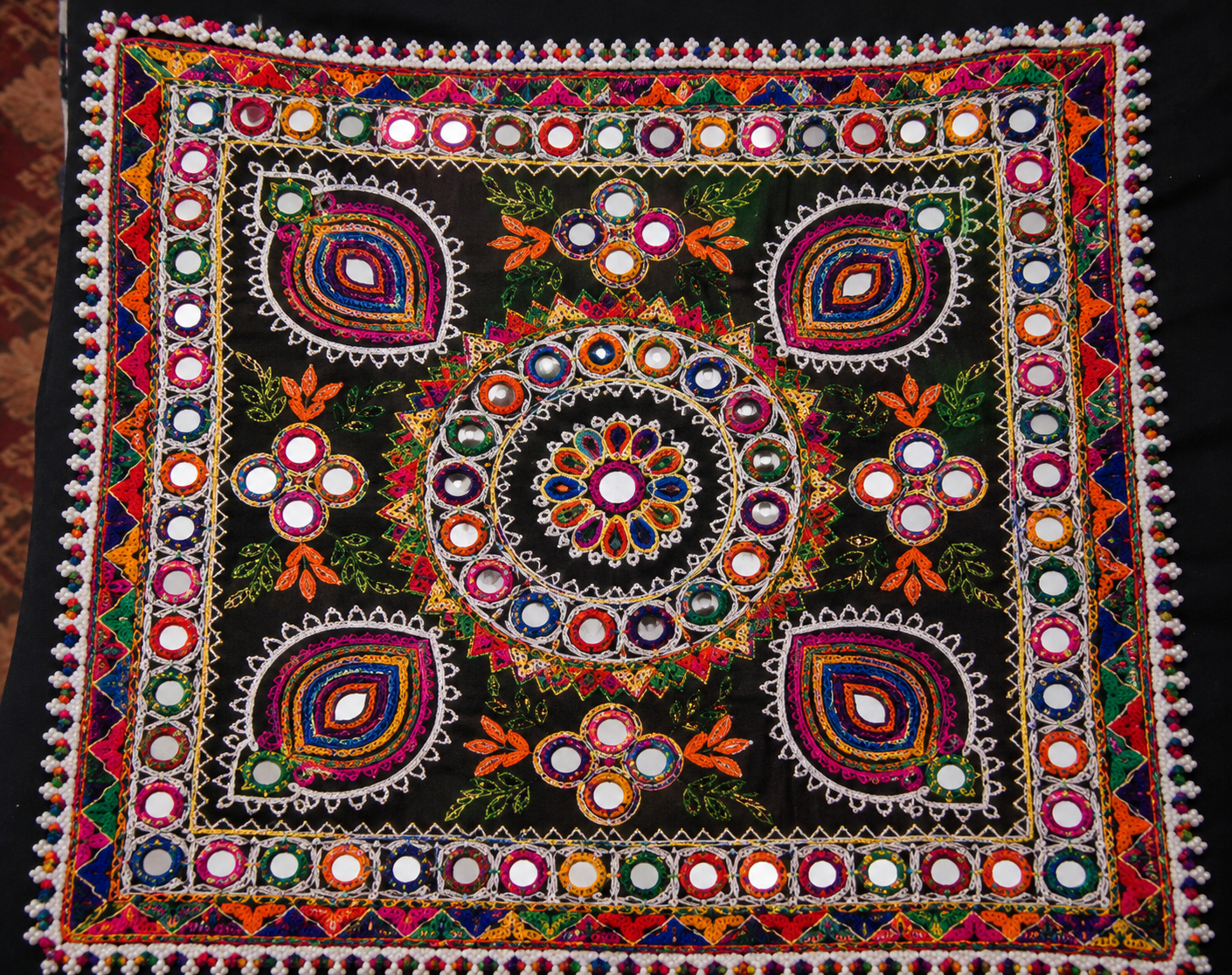
The Meghwal embroidery is an art form that has been done since times immemorial by the Meghwal community of Gujarat and Rajasthan, who trace their descent from Megh Rishi. Mahatma Gandhi called the community members as *Harijan* which translates into “God’s own people.” This particular community is well-known for having brightly decorated mud homes as well as exquisite embroidery techniques. In the case of the Meghwal embroidery, use of colorful threads, intricate geometric and floral motifs along with embellishments of mirrors is common practice in order to make the embroidery more bright and beautiful. In fact, mirrors have been extensively used in decorating the interior parts of their mud huts, wherein there is decoration of walls with mud reliefs along with mirror work.
It is usually carried out using bold colors like red, yellow, black, green, and white with contrasting light colored fabrics and cotton or silk thread. Soof embroidery involves counting and stitching the threads on the wrong side of the fabrics, resulting in geometrical patterns like diamonds, chevron, and stepped shapes with a raised texture. Initially, it was mainly used for creating ornamental designs on traditional clothing and religious purposes but now it is used for decorating cushions, bags, wall hangings, and fashion wear, amongst other products.
Zari Aari
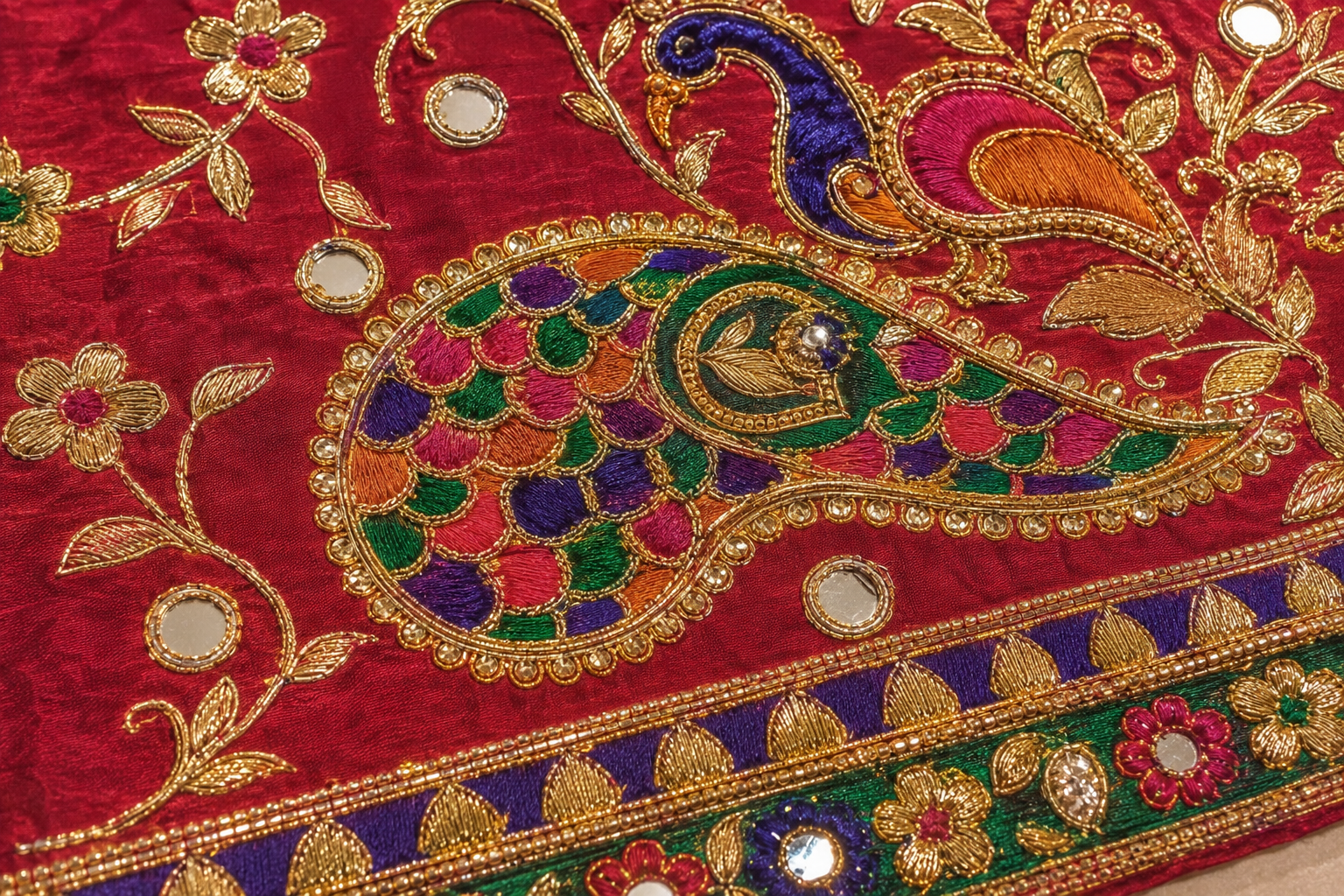
Zari embroidery is among the most ancient and famous traditional crafts of Gujarat, particularly prevalent in the city of Surat, known for its significant zari output since the Mughal era over three centuries ago. Today, Surat continues to be one of the largest and most prominent centers for manufacturing zari yarns and embroidery items in India. The process primarily comprises the use of actual gold and silver threads, as well as synthetic metallic threads, in designing embroidered fabrics. Items like Dabka (metallic threads coated on silk threads), Badla wires, sequins, salama, kangali, tikki, chalak, and katori are frequently utilized to produce ornate patterns. Flowers are often featured in the embroidery styles of Aari and zari. Zari embroidery is also commonly combined with Bandhani dyed fabrics to improve their appearance, and Bandhani work in Gujarat, including cities like Jamnagar, Mandvi, and Bhuj, is globally recognized.