
Maharashtra
Paithani Saree
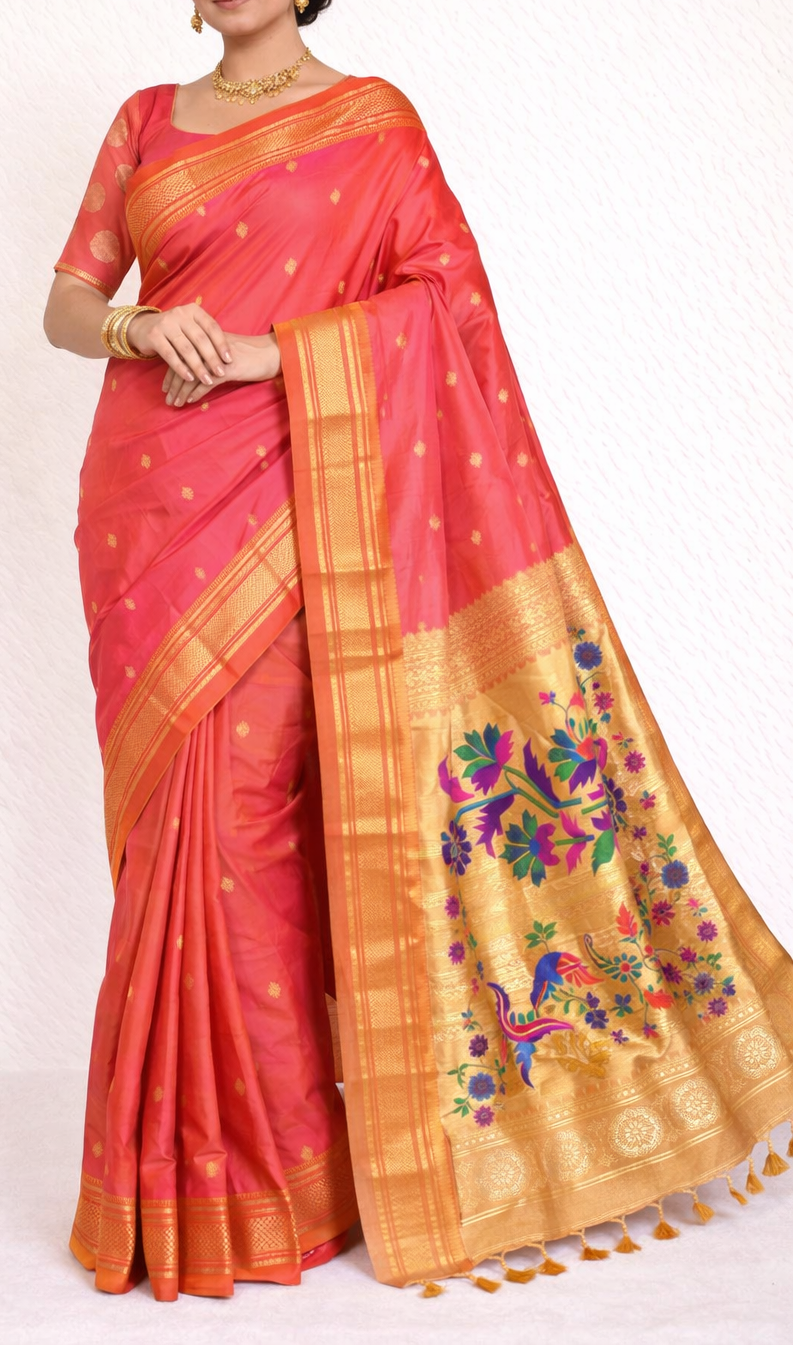
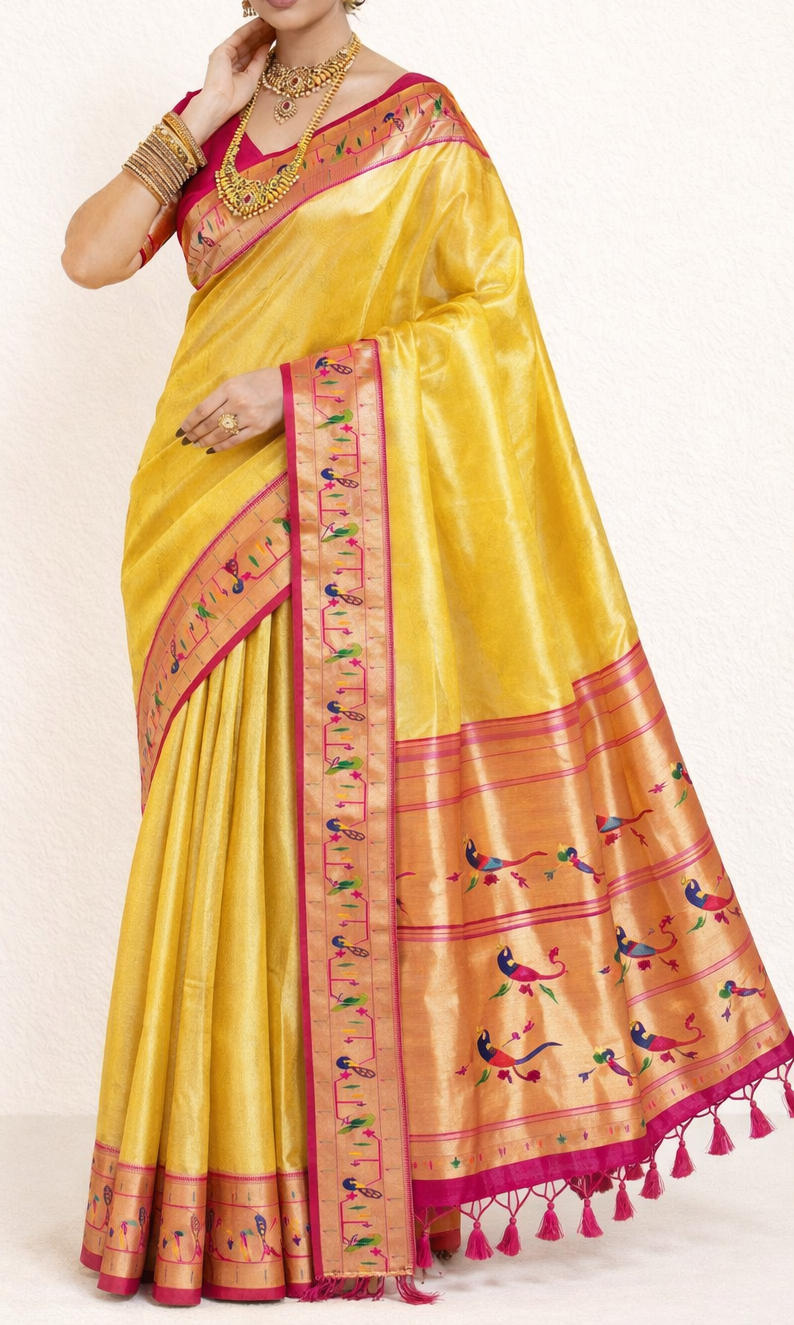
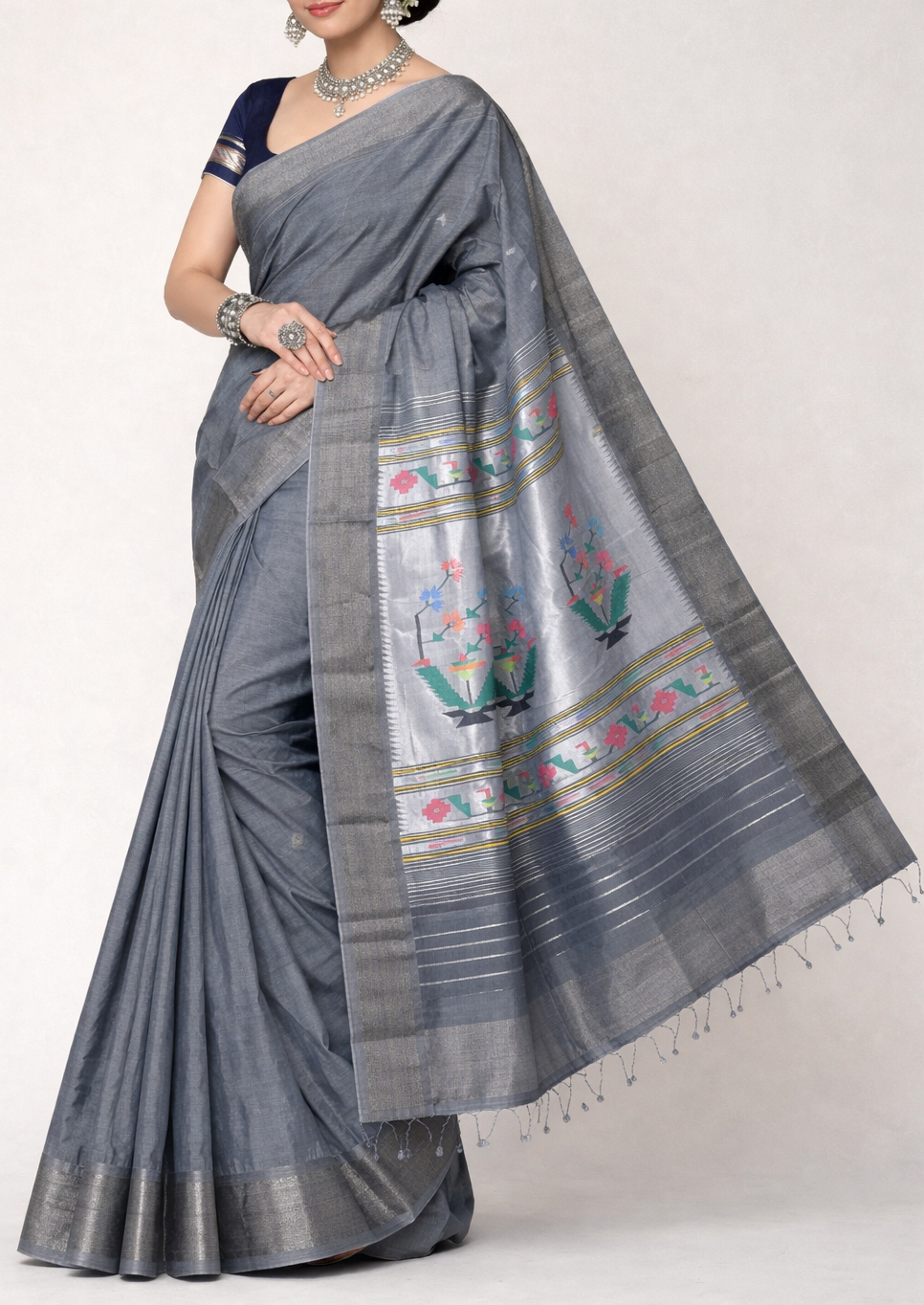
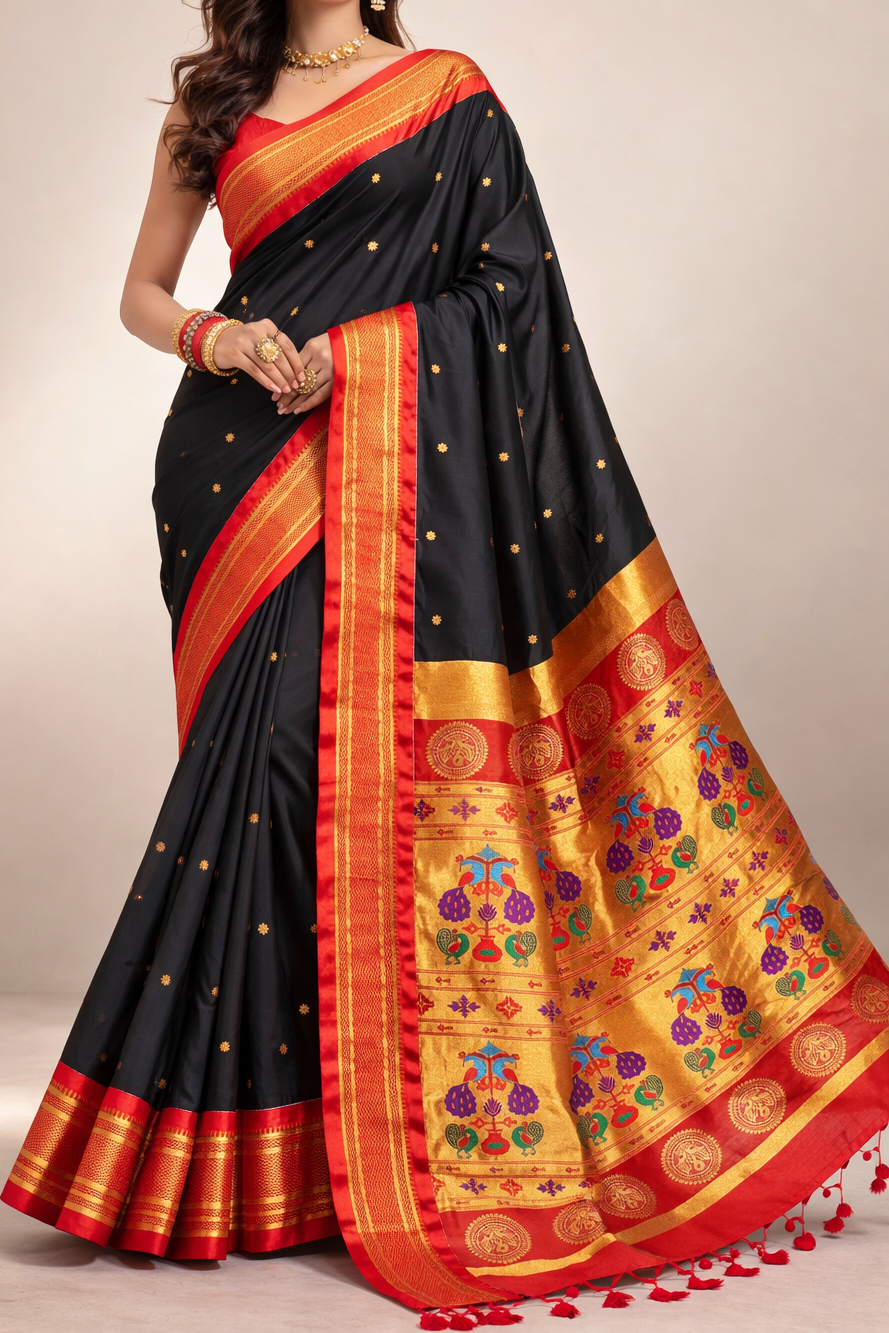
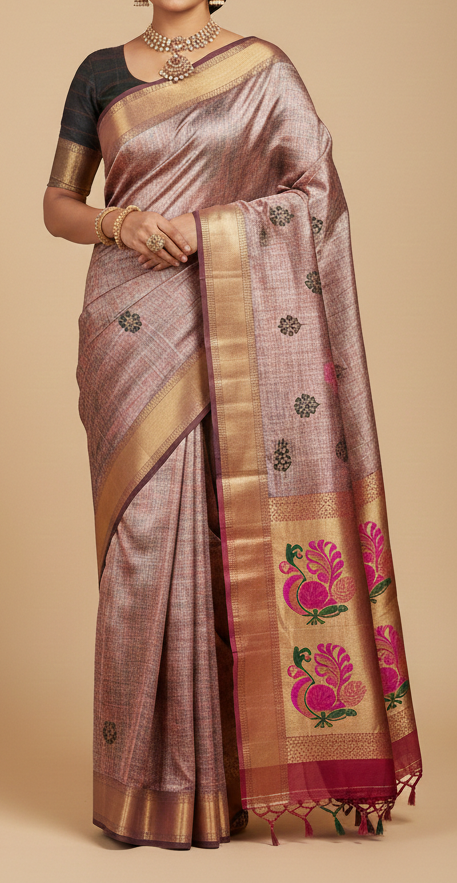
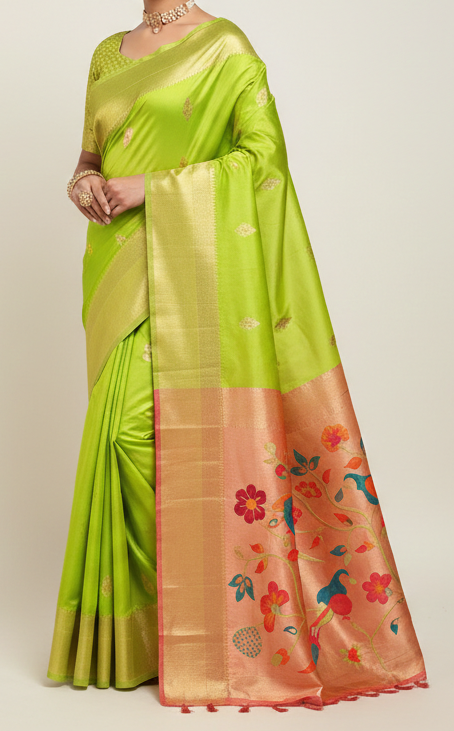
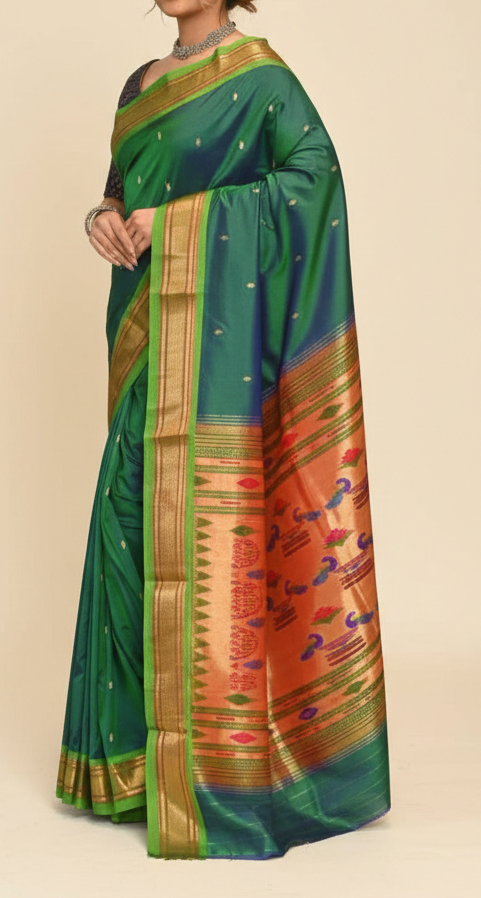
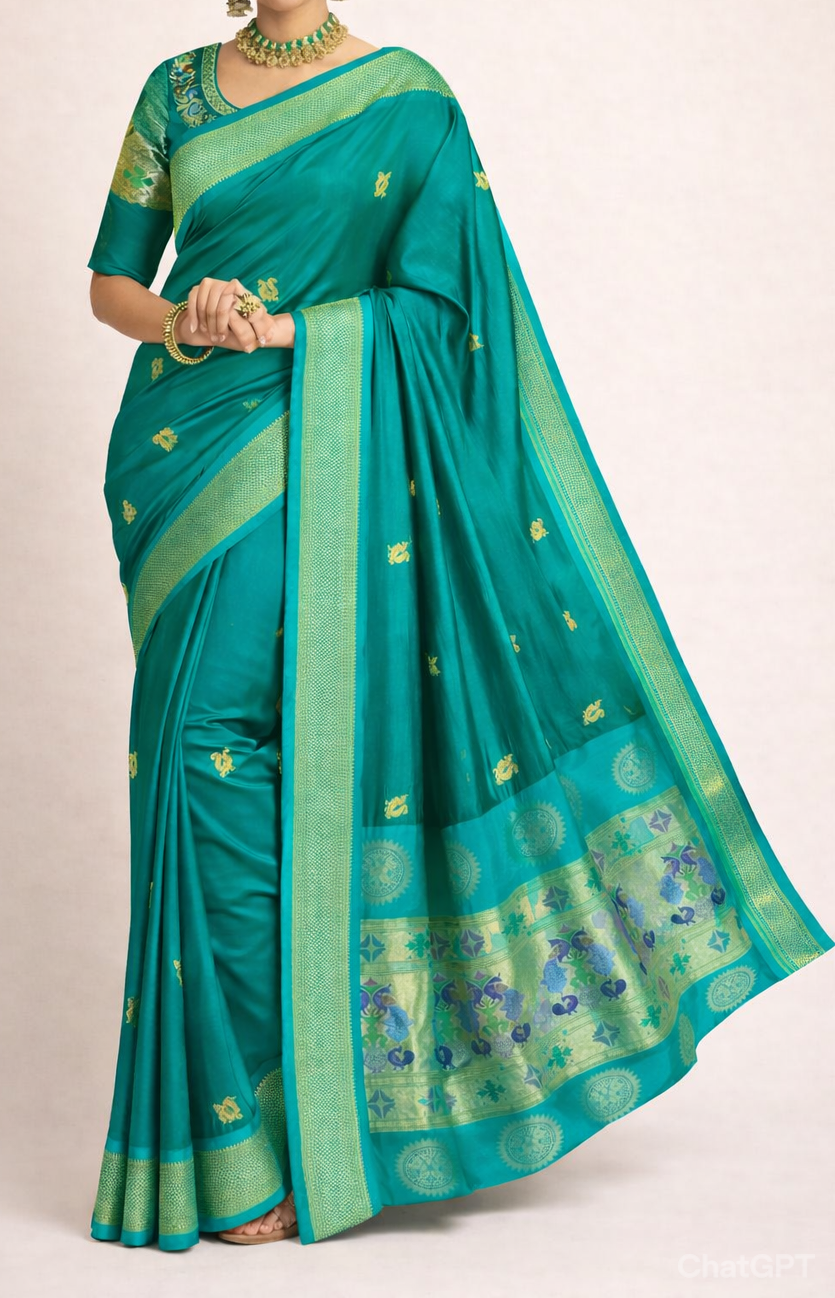
Paithani saree is renowned for its luxurious feel and intricate craftsmanship. It is handwoven using pure silk threads for the body and real gold or silver zari for the borders and pallu, giving it a rich, lustrous appearance. The saree is lightweight yet grand, making it ideal for weddings and special occasions.
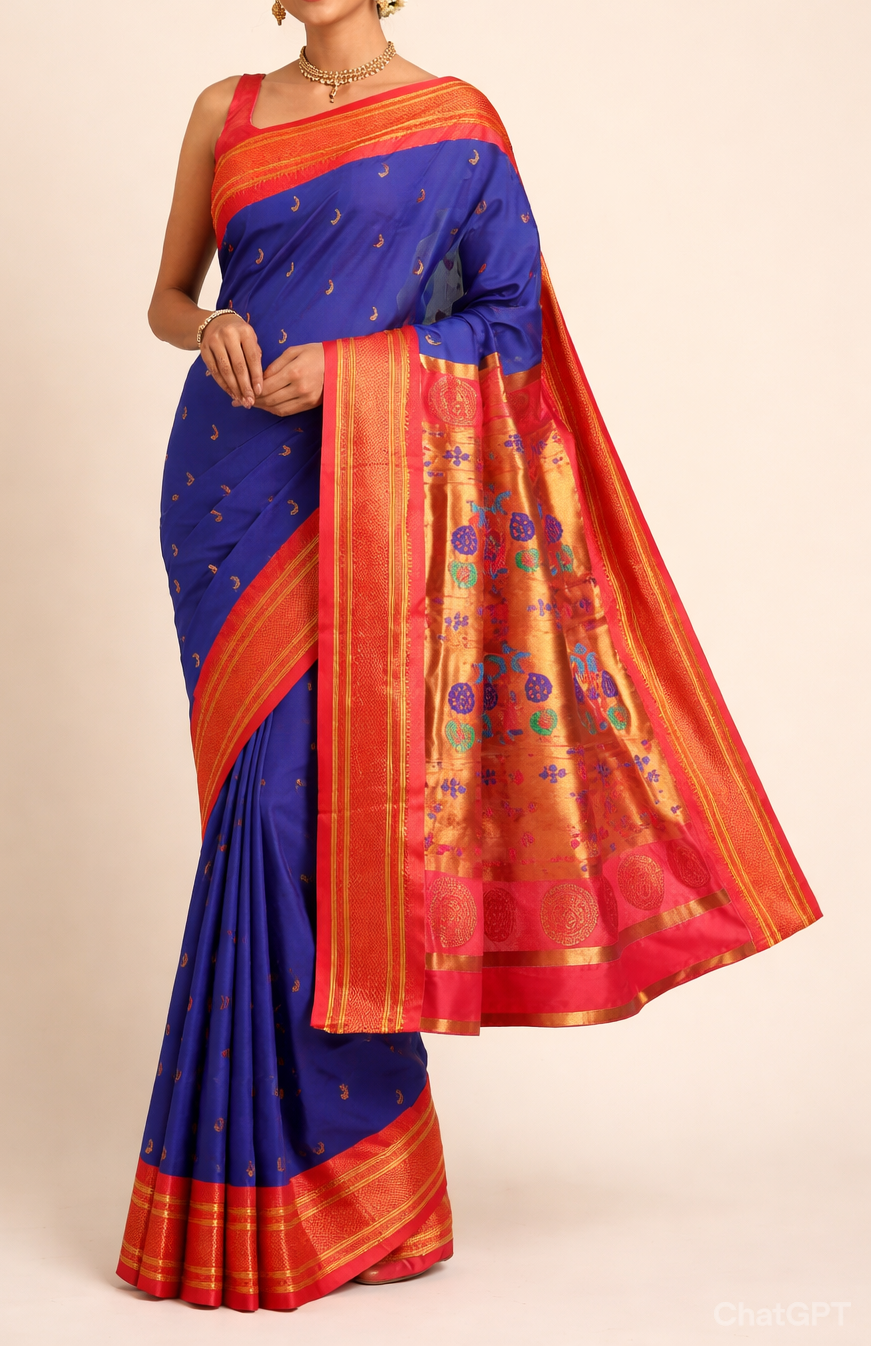
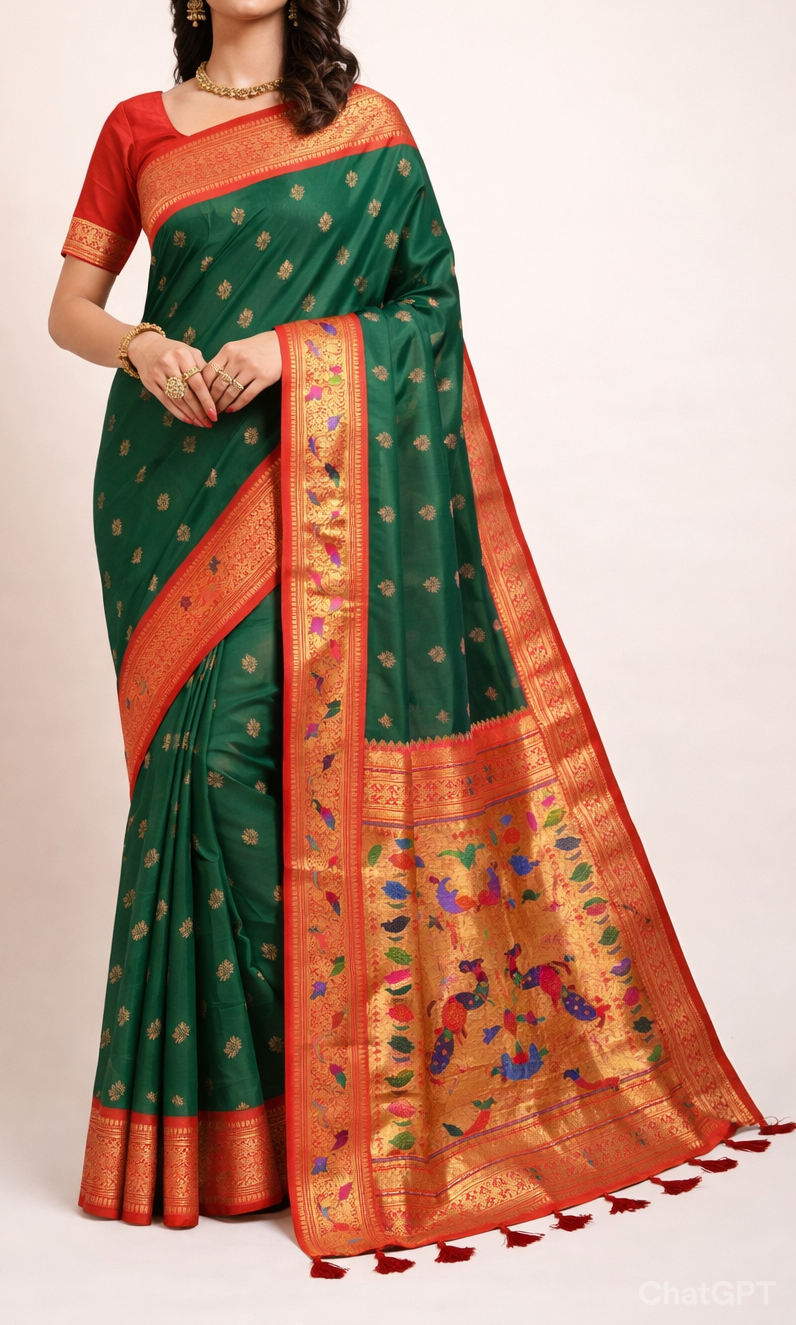
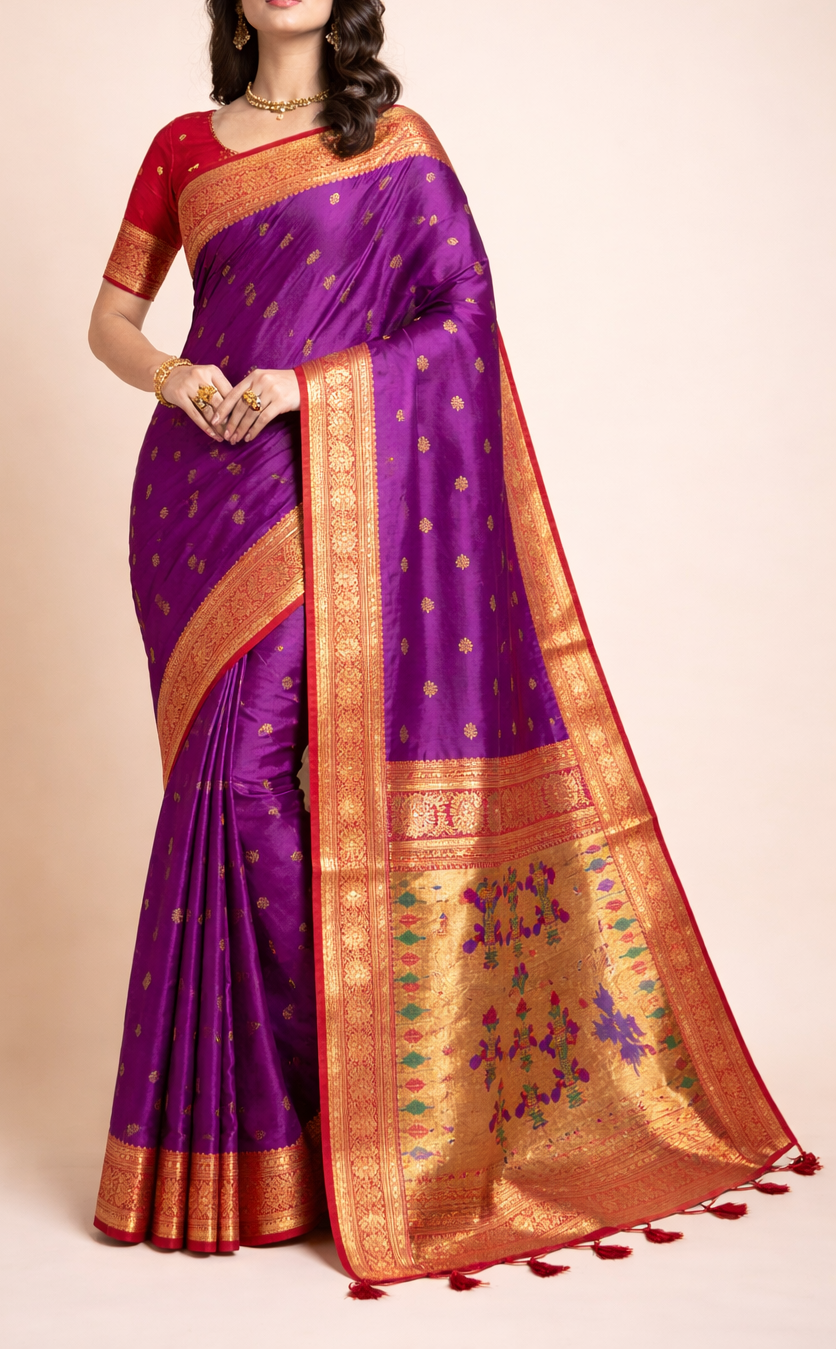
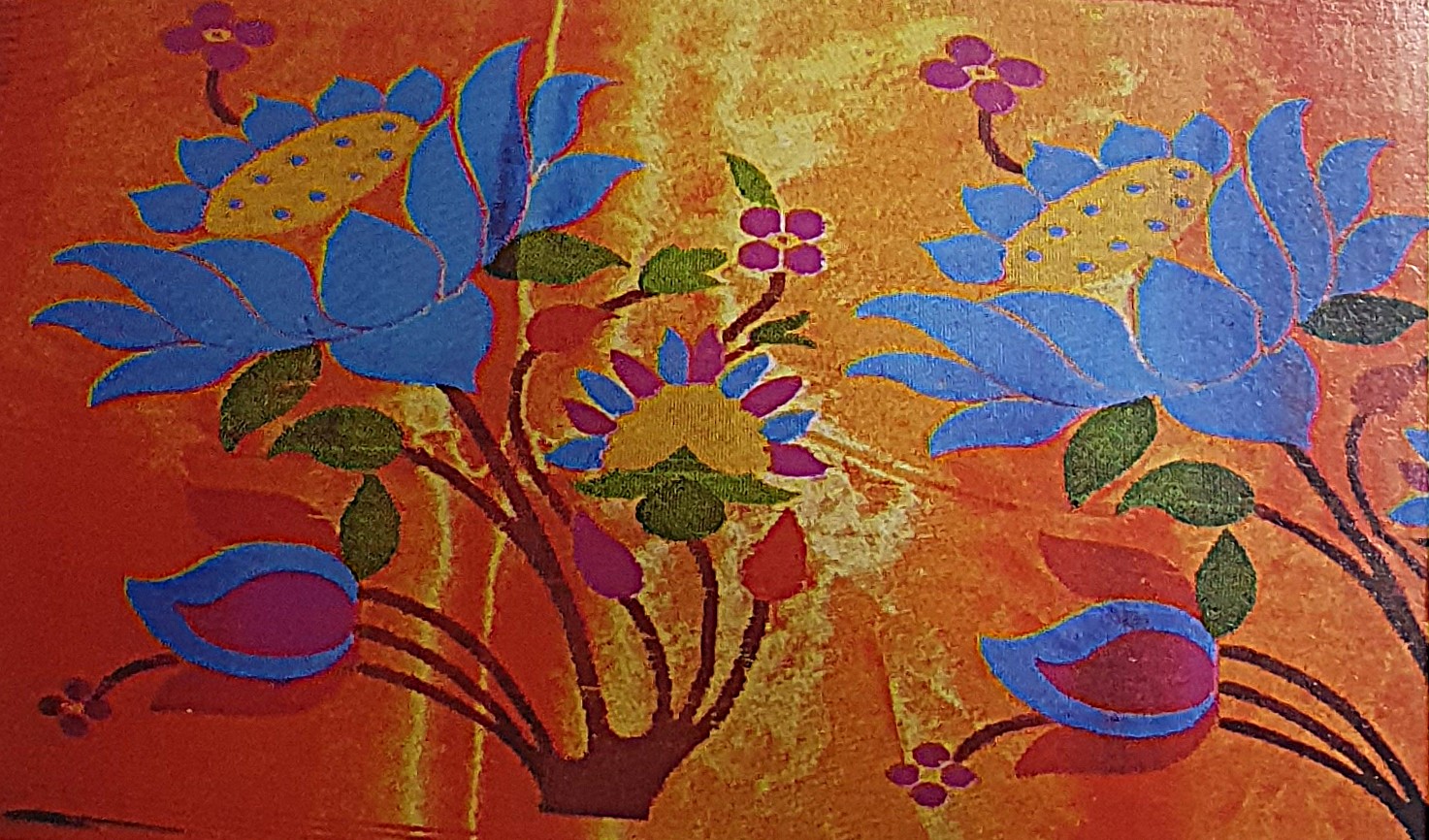
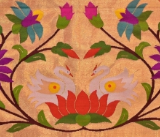
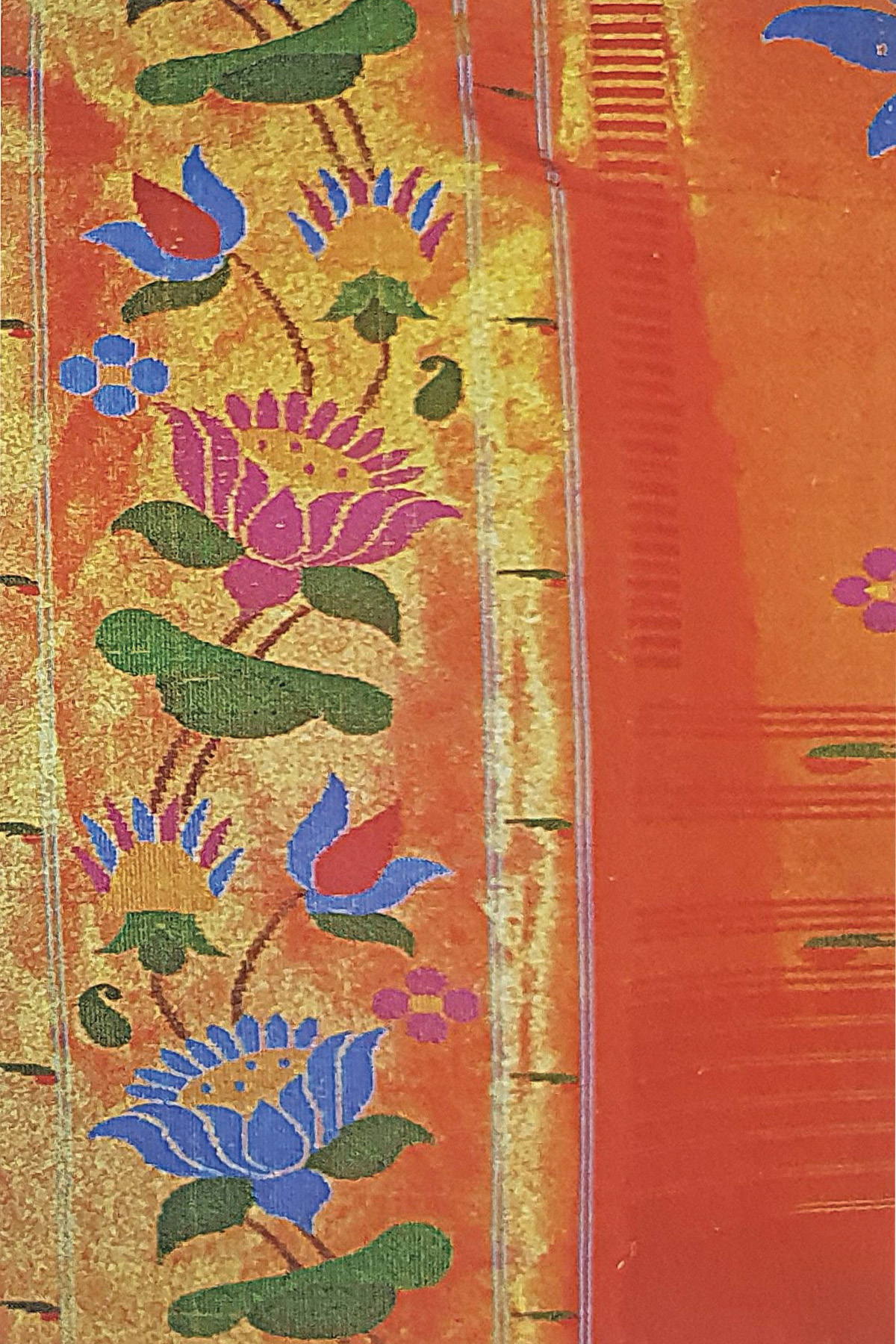
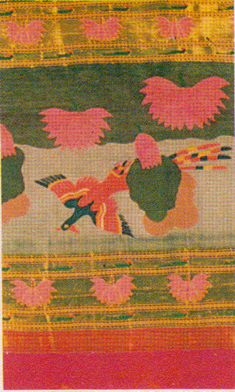
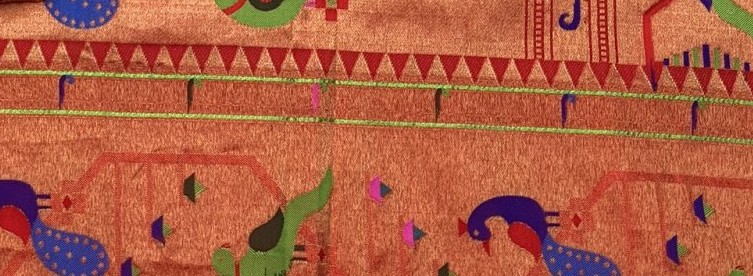
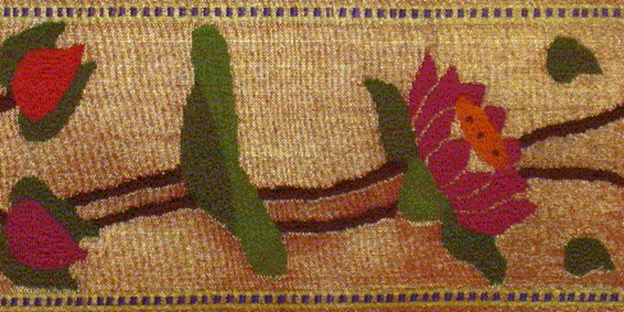
Paithani has been mentioned in Buddhist Literature since the 3rd century B.C. The Peshwas patronized the weavers of the paithani, and it was referred to as the “Golden Age of Paithani”. As the location is near to the Ajanta caves, the Kamal or Lotus motif “Ajanta motif” has been found in the sarees. Another recurring motif is the Hans motif (Swan) and coin motif.
Style of the saree:
- Padar (Pallu) – ½ yard to 1 yard with an extension at two corners.
- Border- 3 or 9 inches wider.
History and Origin
The Paithani sari, originating from the ancient town of Paithan in Maharashtra, has a rich history dating back over 2,500 years. Paithan, once known as Pratishthan, was an important trade center connected with the Satvahana dynasty and later mentioned during the Gupta period. Paithan is 350kms away from Mumbai and is located in Aurangabad district, only 50km away from Aurangabad on the banks of the river Godavari. The craft continues to evolve with changing fashion demands, especially in towns like Yeola.
The sarees are made in Paithan village, and now it is also produced in Yeola near Nashik.
- Paithan
- Yeola
Types of Paithani
- Traditional Paithani
- Brocade Paithani
- The traditional type with a 28-inch pallu design takes comparatively less time to weave since the work is less complex.
- The brocade Paithani saree, however, contains a complex pallu design of 40 inches.
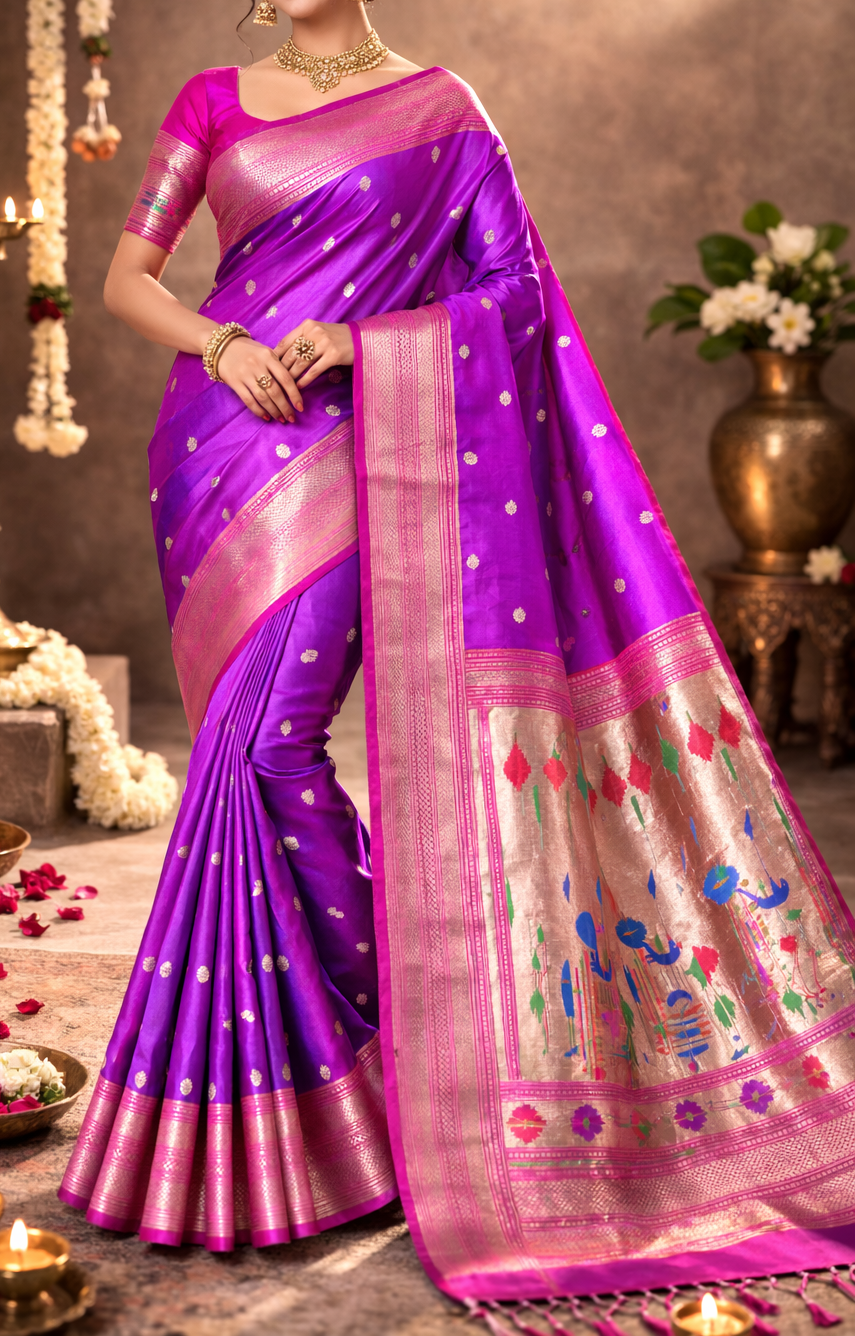
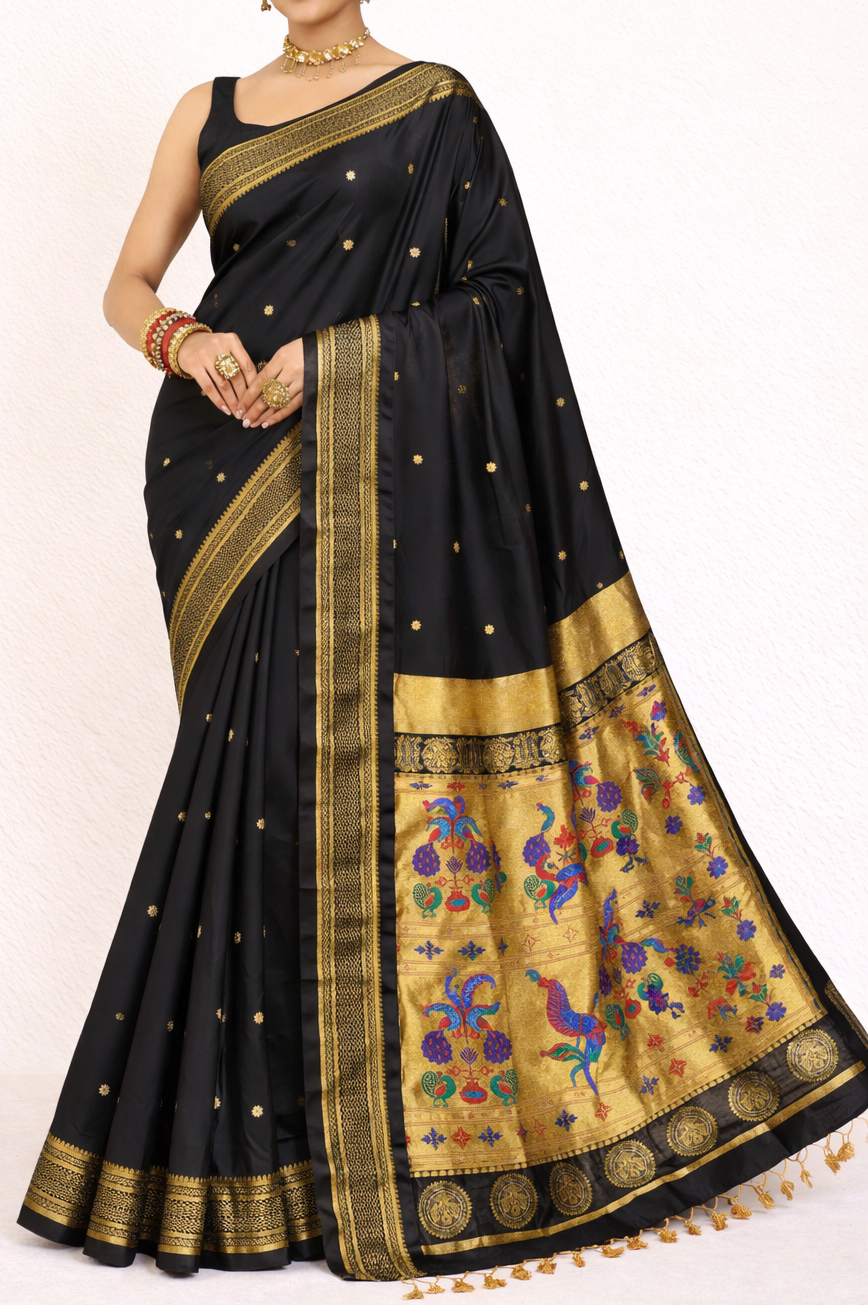
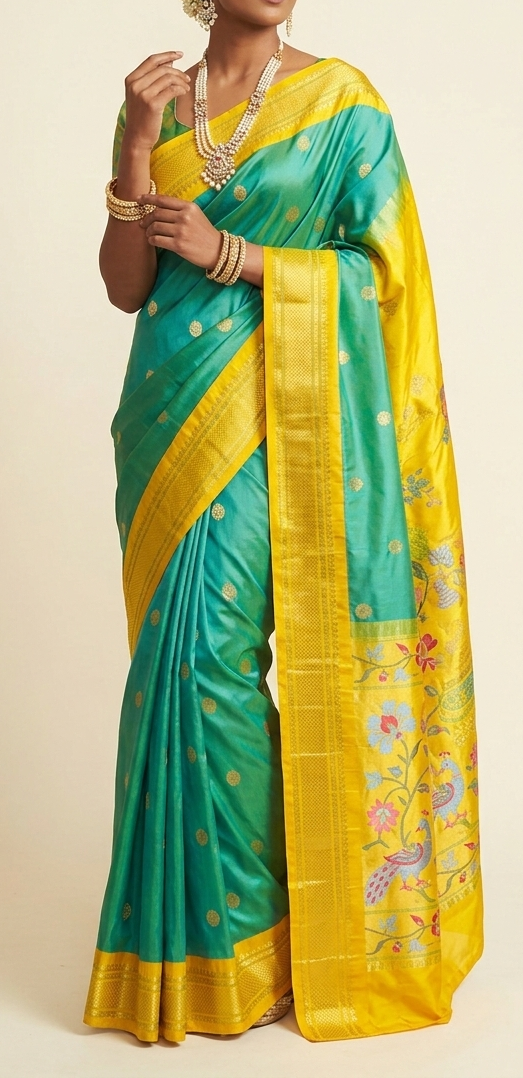
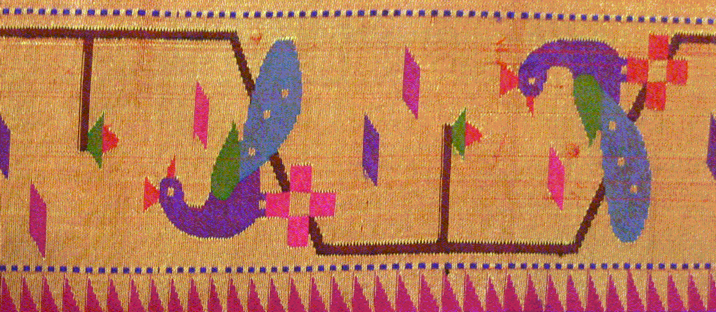
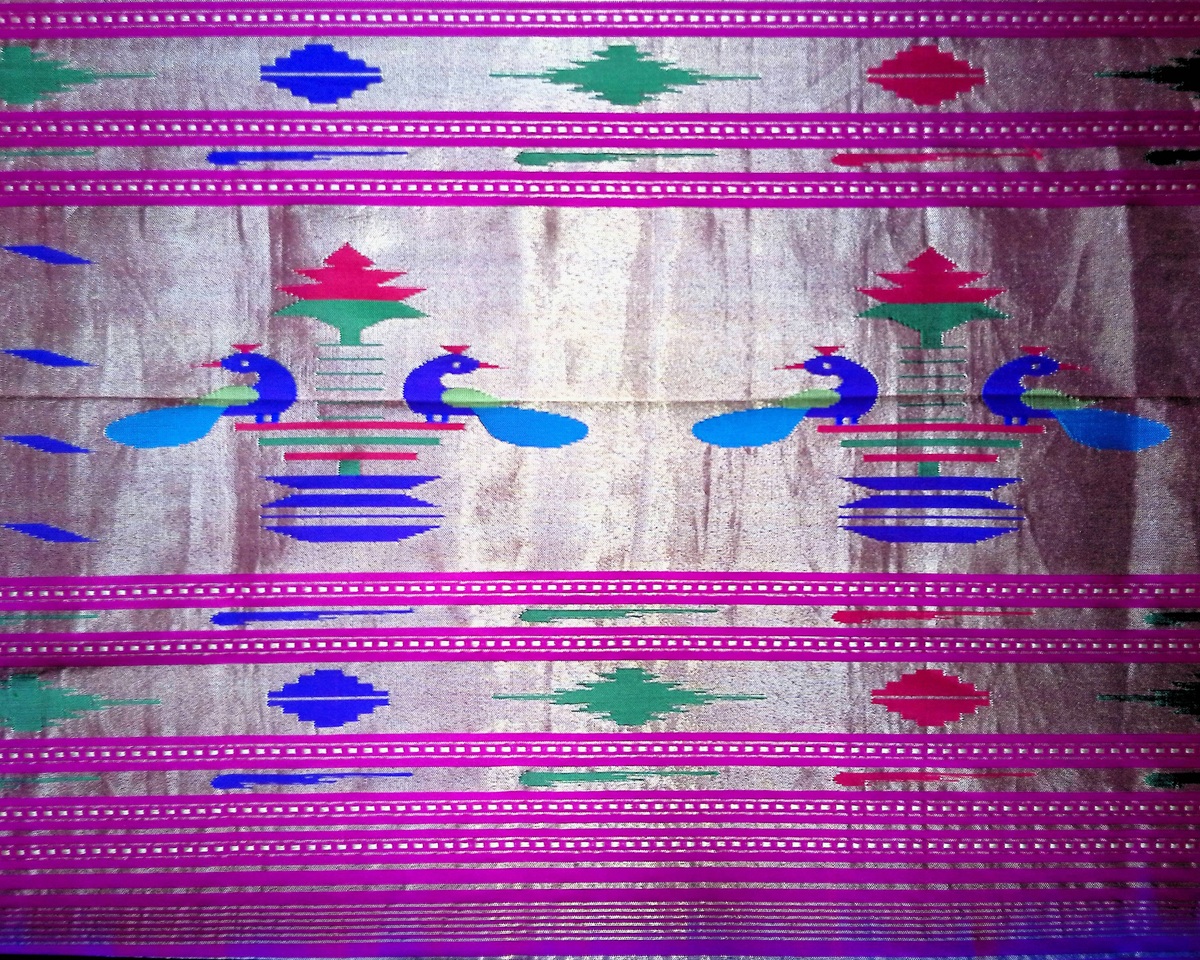
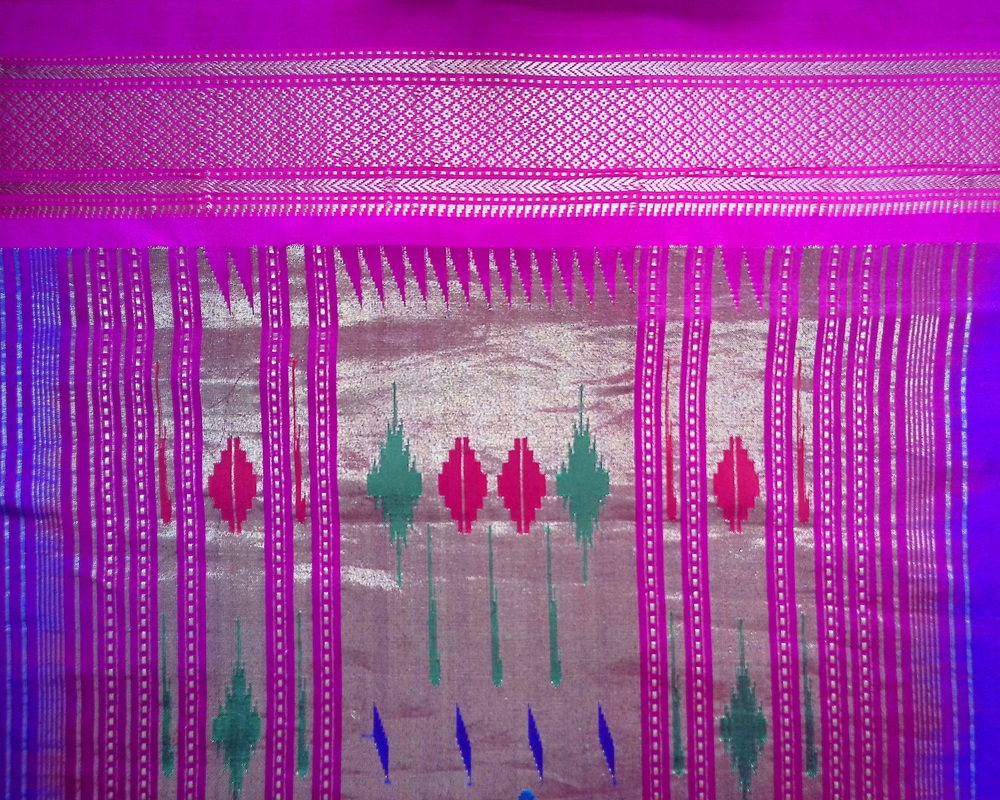
- Paithani with a symmetrical border has a conventional pattern on the border, while the pallu contains differently designed motifs such as Parrot, Peacock, Asavali (flower), Ajanta Lotus, Raj Hanse, and Mango. The brocade Paithani is also completely hand woven with borders.
- This dress has a royal aura to it primarily because it is woven in the same way as tapestry weaving, as compared to employing conventional weaves.
Fibres & Materials used
Originally this technique of weaving that is used in Paithani was made using cotton yarns. But cotton was not so durable so it was replaced by a better option of silk yarns.
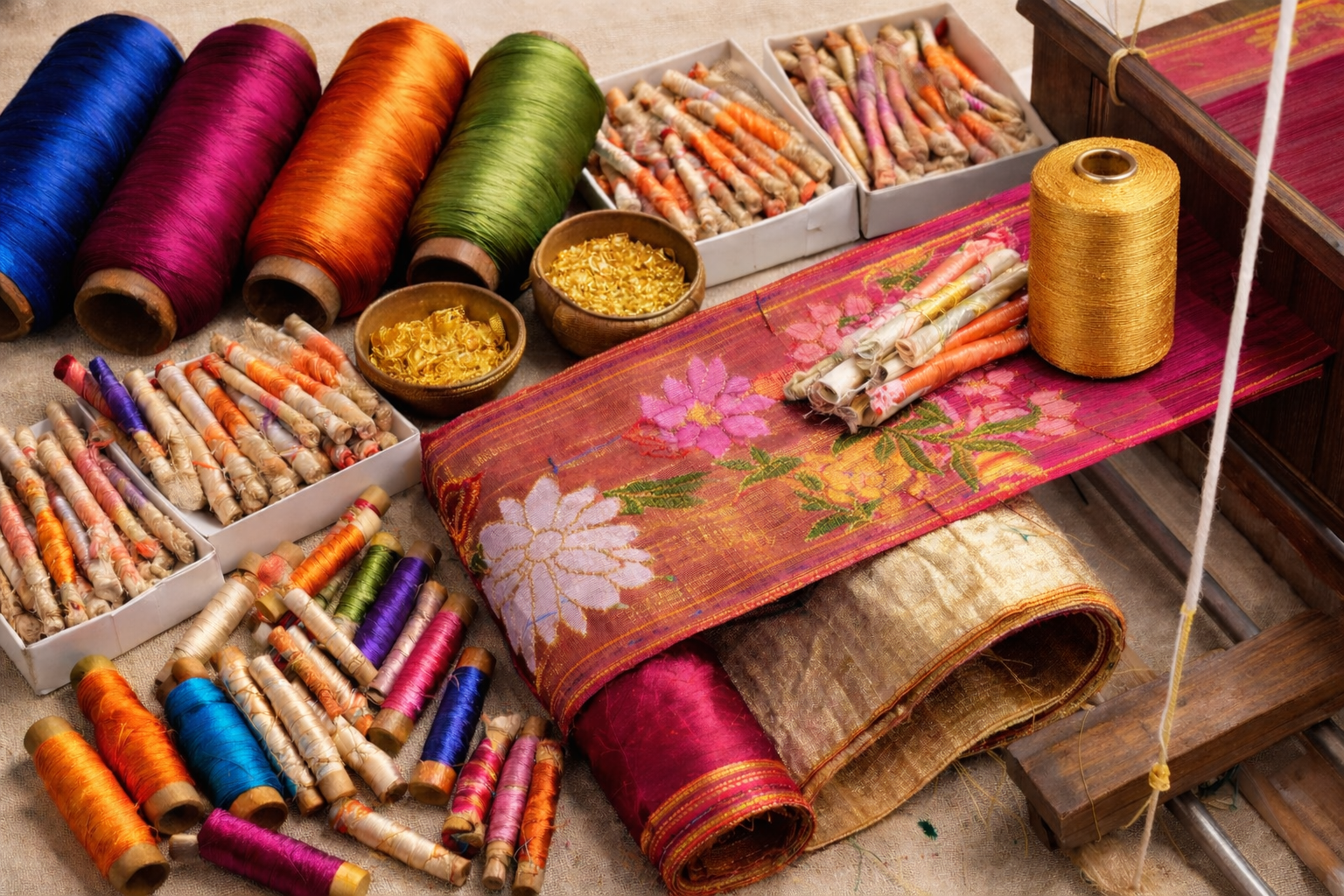
Paithani sarees contain use of pure mulberry silk and zari which originally had pure gold wires but later replaced by silver wires coated with gold polish.
There are three types of silk threads used:
- Charkha: This is widely used. It is cheap, dull and uneven.
- Ciddle-Gatta: Fine quality silk, thin shear, shiny, smooth and even.
- China silk: Very expensive to use.
This raw silk is cleansed with caustic soda, dyed in the requisite shades, the threads carefully separated.
Zari is the metallic yarn, made of pure silver. Originally, zari was manufactured in Yeola; Surat now being another zari-producing center. Initially, zari used in making Paithani was drawn from pure gold. However, silver is an affordable substitute today. Traditionally the goldsmiths in Paithan use to produce zari. They used to first coat silver foils with gold. Then thin wires are extracted from these foils. Then with the help of a wheel they make the wires pass through a shield with very tiny holes so as to make wires stretch become thinner and finer. Then the thread like gold wires that is zari is wound on the bobbins.
Loom
Loom
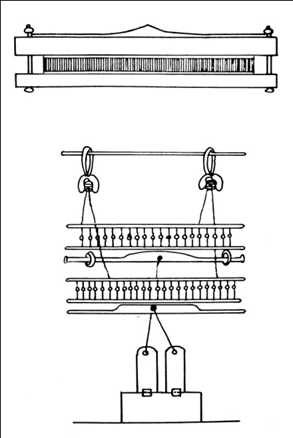
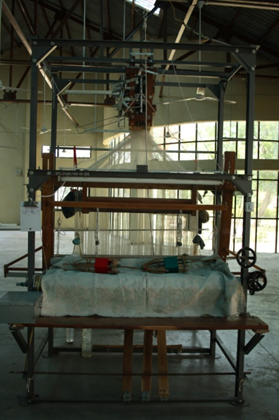
It takes approximately 1 day to set the silk threads on the loom. “Tansal” is used to put the “wagi”. The “pavda” works like the paddle to speed up the weaving. The “jhatka” is used to push the “kandi” from one side to the other. “Pushthe” is used in designing the border of Paithani in which it is punched according to design application. “Pagey” are tied to the loom. The threads are then passed through “fani”.
There are two types of motion
Primary motions:
- Shedding – dividing the warp sheet or shed into two layers, one above the other for the passage of the shuttle with the weft threads.
- Picking – passing a pick of weft from one selvedge of a cloth through the warp threads.
- Beating – dividing the last pick through the fell of cloth with the help of slay fixed on the reel.
Secondary motions:
- Take up motion – taking up the cloth when being woven and winding it on the roller.
- Let off motion – letting the warp wound on a warp beam, when the cloth is taken up on the cloth roller beam. Taking up and letting off the warp are done simultaneously.
Weaving
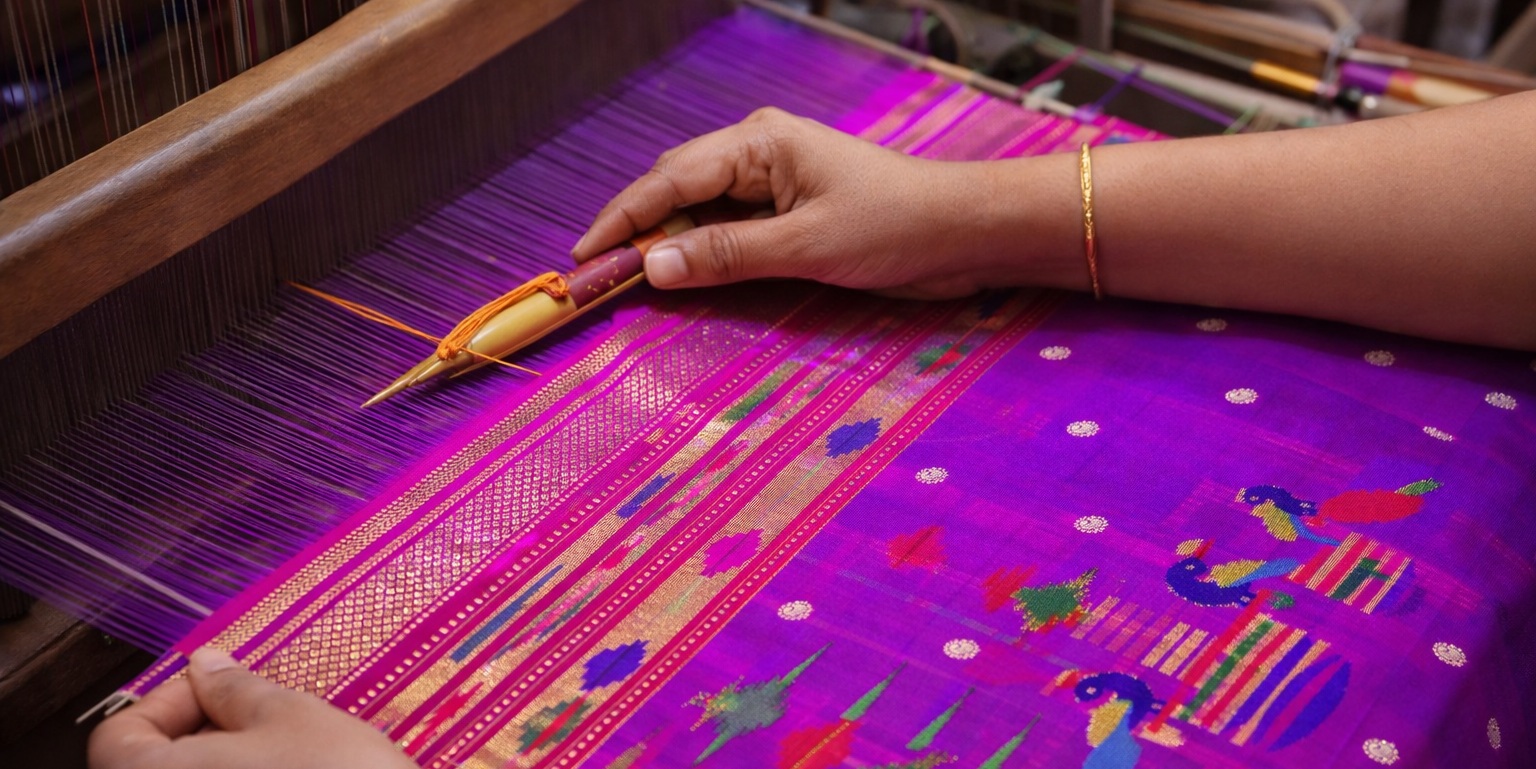
Paithani saris are silks in which there are no extra weft forming figures. The figuring weave was obtained by a plain tapestry technique. There are three techniques of weaving;
- Split tapestry weave – the simplest weave where two weft threads are woven up to adjacent warp threads and then reversed. The warp threads are then cut and retied to a different colour.
- Interlocking method – two wefts are interlocked with each other where the colour change is required. The figuring weft is made of a number of coloured threads, weaving plain with warp threads and interlocked on either side with the grounds weft threads are invariably gold threads which interlock with the figure weft threads, thus forming the figure. This system of interlocking weaves, known as kadiyal, is done so that there are no extra floats on the back of the motif thus making the design nearly reversible.
- Dobe-tailing method – two threads go around the same warp, one above the other, creating a dobe-tailing or tooth-comb effect.
Weaving could take between 18 to 24 months, depending upon the complexity of the design. Today there are many weavers who are working for the revival of this treasured weave.
Past and Present Practices
Aspect | Past Practices (Traditional) | Present Practices (Modern) |
Materials |
|
|
Weaving Process |
|
|
Designs |
|
|
Challenges and Future Focus
- Diminishing Artisan Skills: A significant challenge is the declining number of skilled artisans, as the craft is labor-intensive.
- Need for Professional Designers: There is a call for professional designers to blend contemporary trends with traditional techniques to maintain the market relevance of Paithani weaving.
- Maintaining Authenticity: Efforts are being made to promote and use authentic, organic methods for dyeing and preparing silk, while ensuring that the core traditional techniques, motifs, and colors are retained.
- Government Revitalization: The Maharashtra government and the Maharashtra Small-Scale Industries Development Corporation (MSSIDC) have revived the art, initiating training programs for new weavers and ensuring the preservation of the craft, notes this YouTube video.
- Increased Women’s Participation: Training programs have attracted women from non-weaving communities, providing them with opportunities for employment and financial independence.
- Diversification of Products: The Paithani Weavers Association has diversified beyond sarees into products like throws, stoles, fabric pouches, and salwar suits to cater to broader market demands, says this YouTube video.
- E-commerce and Global Reach: The growth of e-commerce platforms has connected weavers directly with customers, increasing accessibility and allowing them to sell products online globally.



Motifs
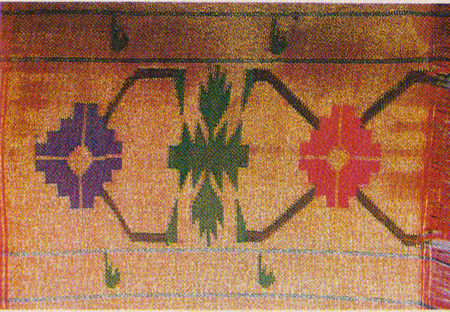
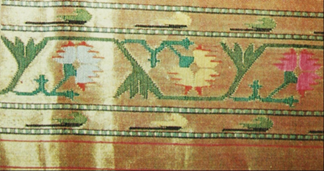
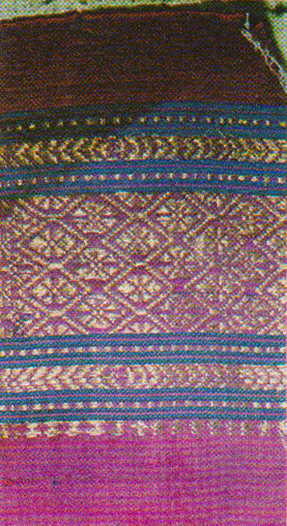
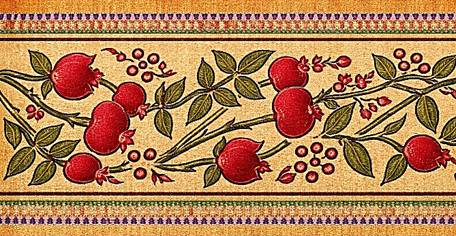
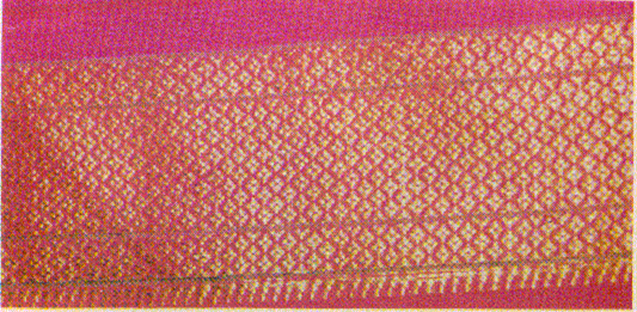
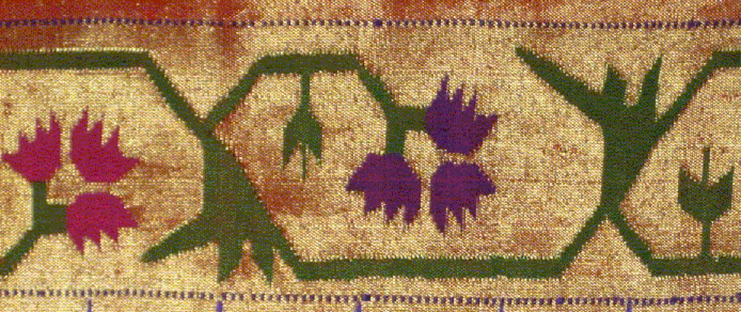
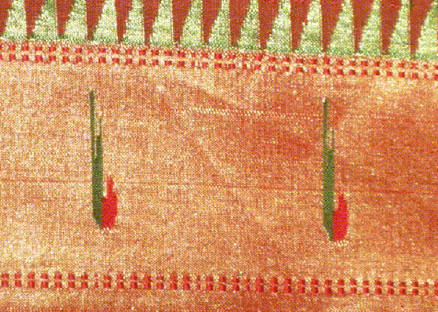
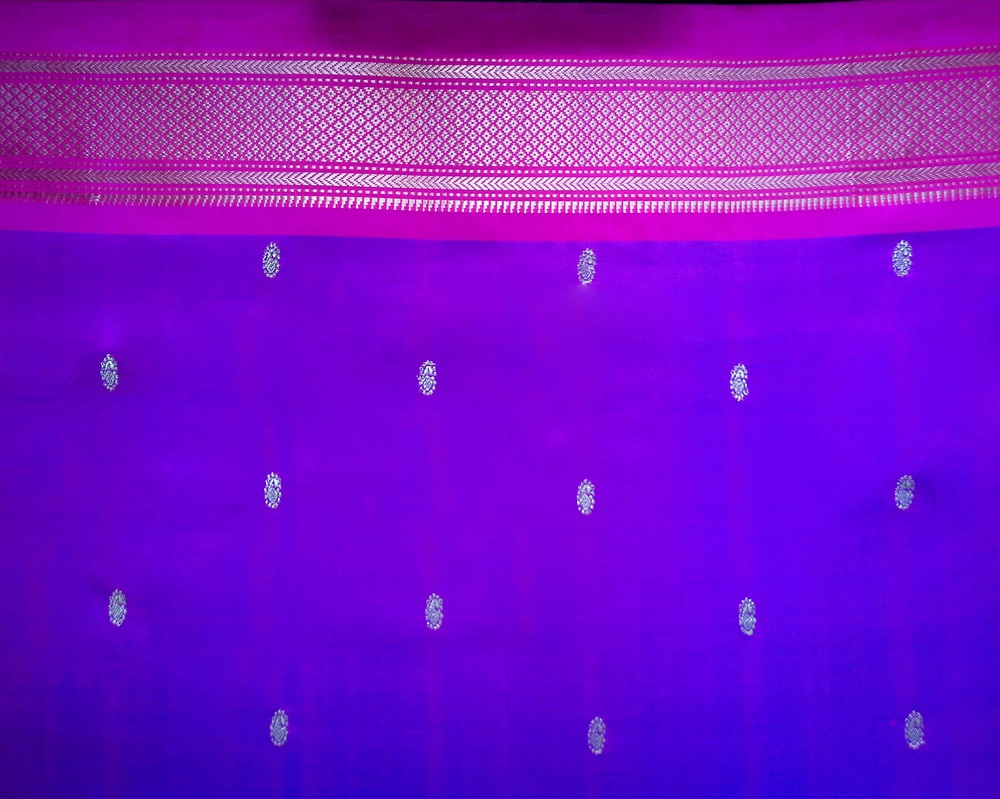
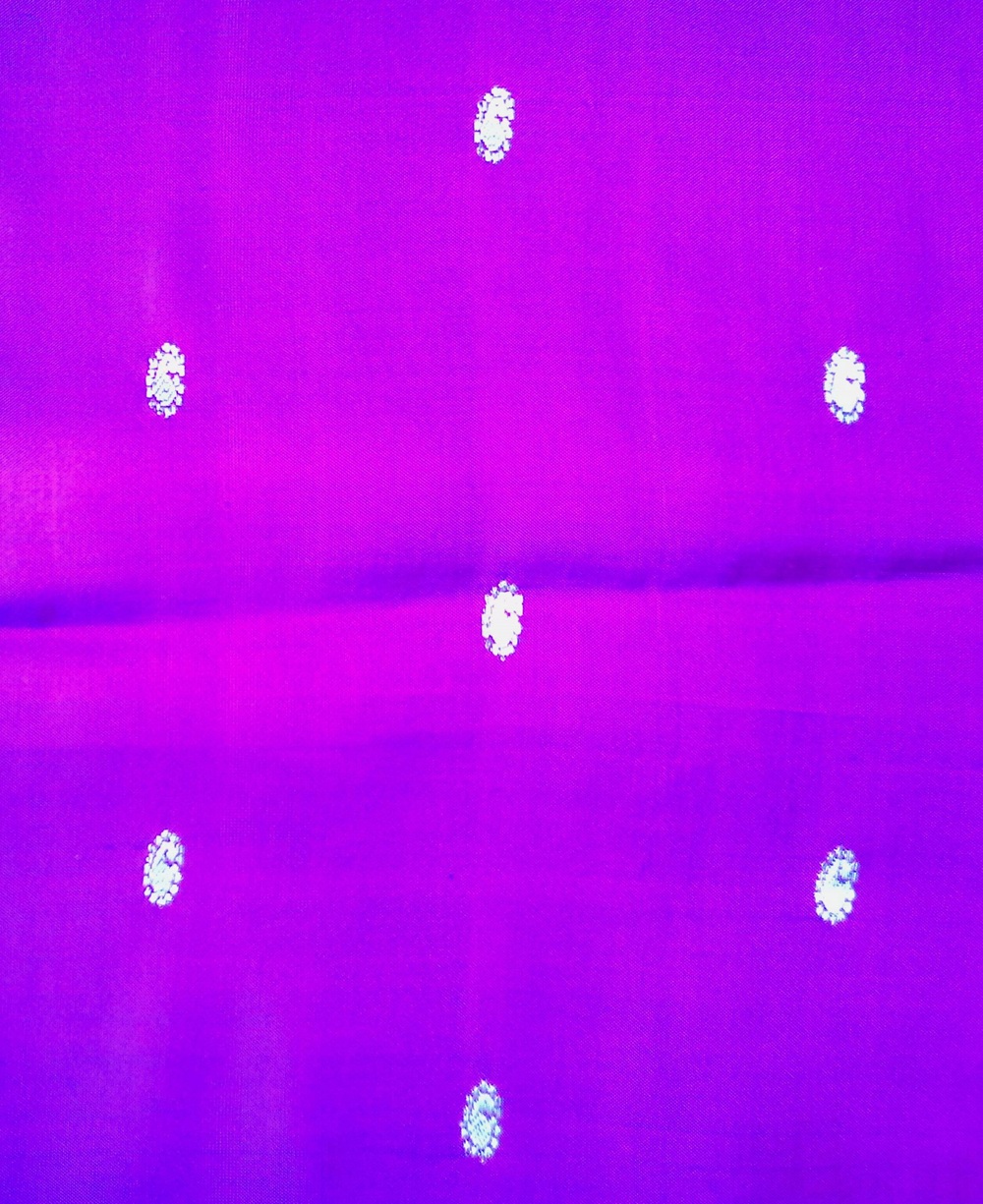
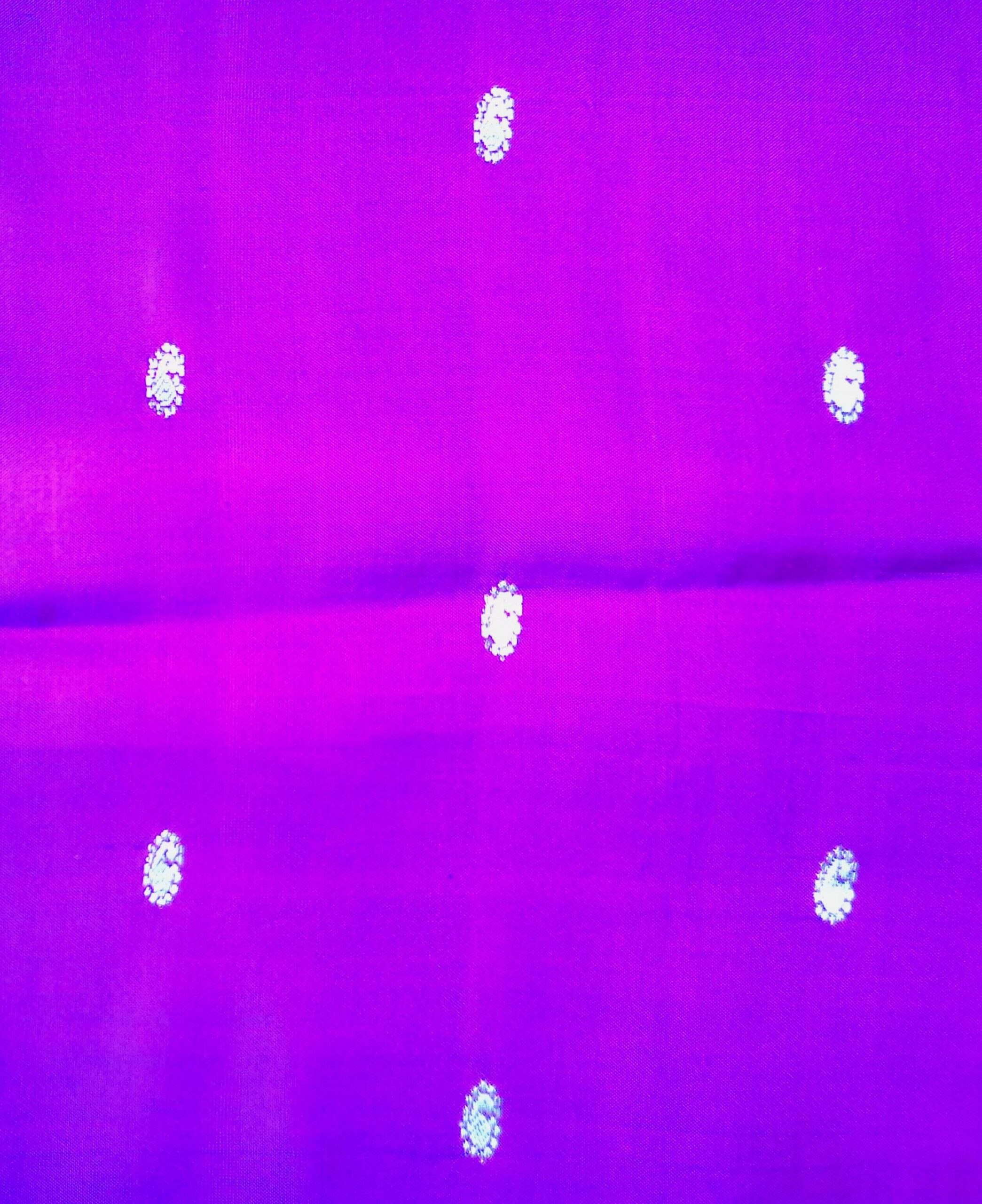
The motifs woven into a Paithani sari are far more than mere decoration; they are deeply rooted in spiritual, cultural, and artistic traditions, reflecting stories, beliefs, and customs. They showcase geometric precision and often carry spiritual symbolism.
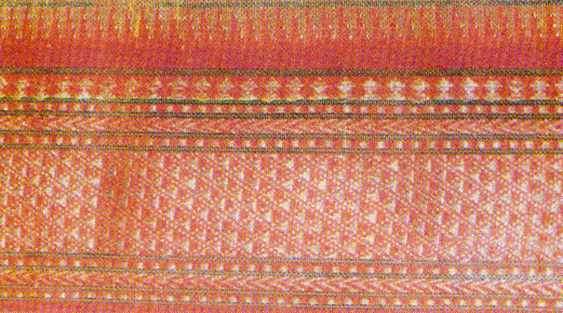
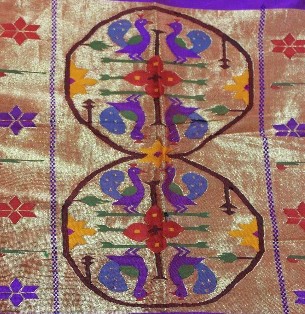
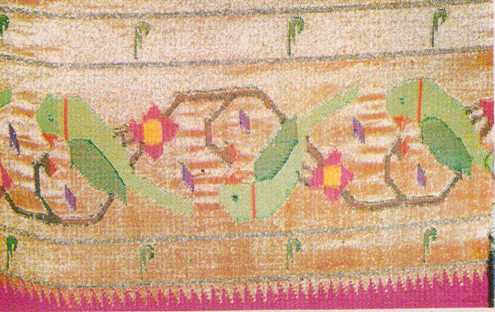
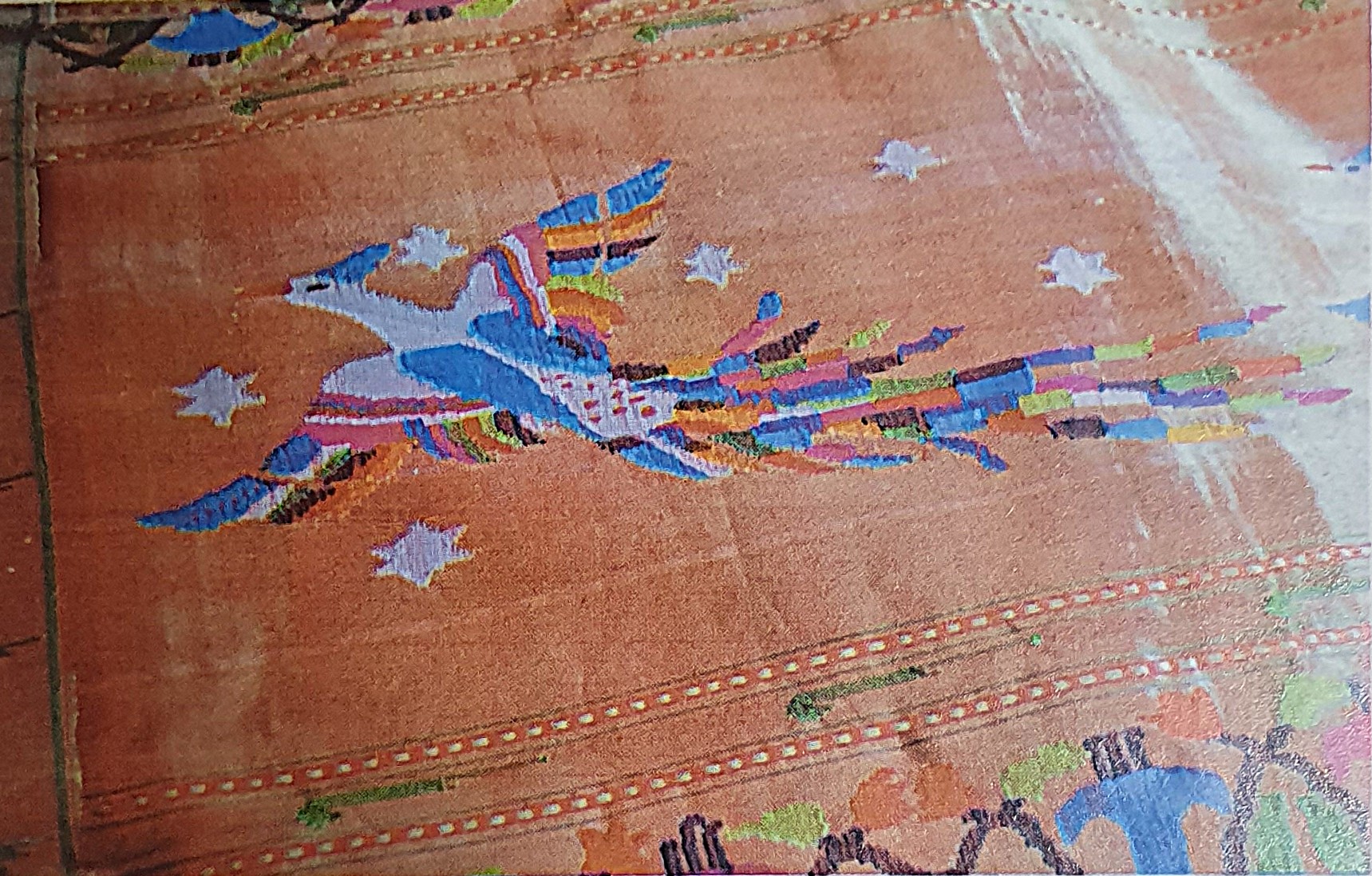
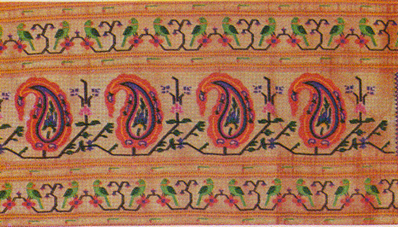
Modern Motifs

Puneri Saree
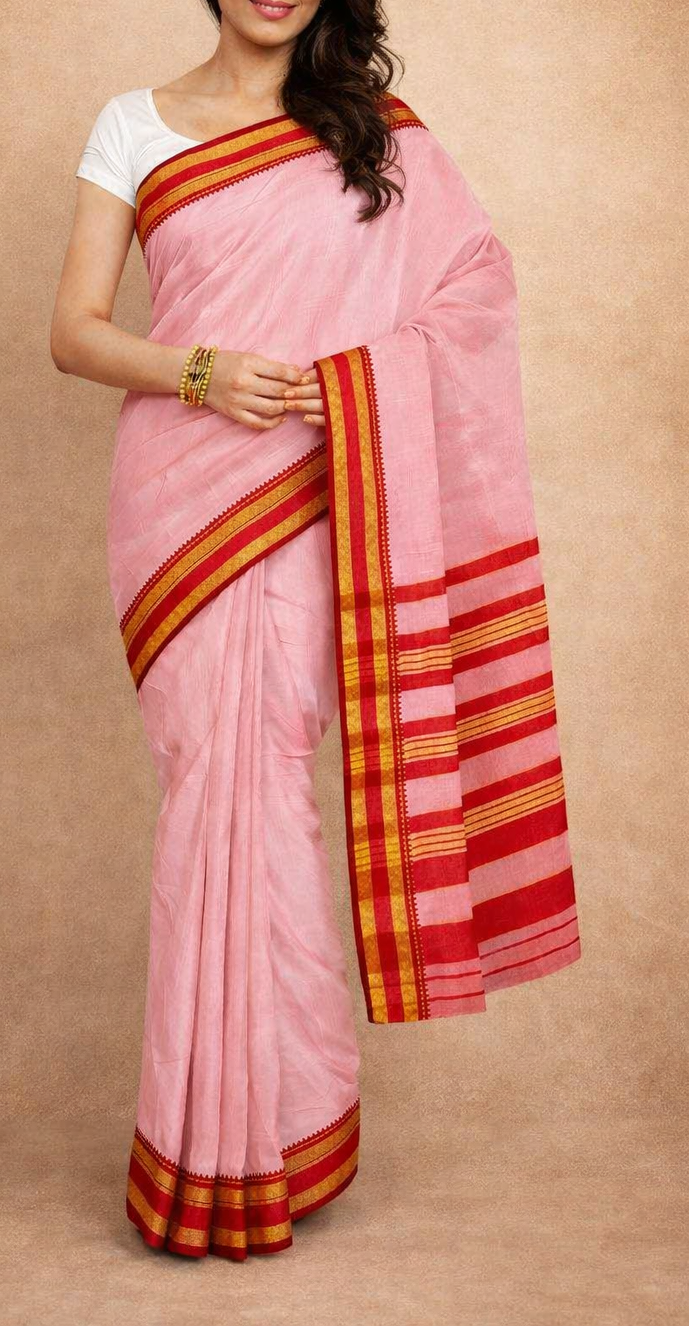
One of Maharashtra’s most well-known traditional weaves, the Puneri (Pune Induri) saree is a representation of Pune and dates back to the time of the Maratha and Peshwa Empires. It represented modest elegance during the Peshwa era and was frequently worn on special occasions by women from royal houses.
History and Origin
The talented Padmasali weaving group, who immigrated from Karnataka and Andhra Pradesh and gained notoriety for weaving exquisite Puneri cotton and other local textiles, continues its tradition. Even though power-loom weaving is competing with traditional handloom production, the Puneri saree is still a popular choice for everyday use, formal wear, and wedding gifts.
The Maratha and Peshwa eras are when the Puneri saree first appeared in and around Pune. It evolved into a delicate cotton weave that reflected understated elegance, durability, and simplicity and was appropriate for the climatic and cultural preferences of the area. In the past, women in royal and affluent homes wore it, and it progressively gained popularity among the general public.
Pune district is home to a large concentration of traditional weaving communities, especially in the areas surrounding Induri village in Talegaon, where these sarees are woven. The Padmasali weaving group, who settled in Maharashtra and carried on their handloom traditions, are primarily responsible for maintaining the craft.
Fibres and Materials used
100% cotton is the base fabric, often woven with a yarn count of 100s.
Historically, the saree was sometimes delicately woven with silk for royal occasions.Starch is applied to strengthen the yarn.
The saree is accentuated by a Zari border (metallic-colored). This border is highly significant and is often created using the extra-warp technique.
The body of the saree is typically plain or has a checkered pattern, providing a modest and elegant canvas.
It often features a tok padar, a pallu woven with vertical lines. The pallu is sometimes adorned with elaborate designs.
Traditional Colours
Puneri sarees are known for a vibrant yet often austere colour palette, with traditional shades reflecting the cultural heritage:
- Pink
- Red (including vibrant reds and maroons)
- Orange
- Blue (including serene whites and pastels)
- Green
- Earthy shades such as bottle green, maroon, and brown were also common for authentic Puneri saris.
Motifs
The hallmark of the Puneri saree is the intricate border design, which speaks of immense cultural significance and often features the following variants:
- Triangular motifs: Dainty motifs, often inspired by the complex temple architecture of Pune (resembling temple tops).
- Gomi
- Nav Bharat: A border that often uses earthy tones and consists of nine rows with dots, geometric, and paisley motifs.
- Jijamata: A variety of thin Zari borders.
- Rudraksh: A border featuring the motif of a rudraksha.
Manufacturing method
Weaving method: Traditionally woven on handlooms, now through powerlooms.
Past and Present Practices
Past and Present Practices
Aspect | Past Practices (Traditional) | Present Practices (Modern) |
Materials |
|
|
Weaving Process |
|
|
Designs |
|
|
Challenges and Future Focus
- Decline in Weavers: The most significant issue is the decline in the number of skilled weavers, as younger generations are not taking up the craft, a problem pervasive across the handloom sector.
- Power Loom Competition: Like all handlooms, it faces intense competition from power looms and mass-produced fashion, which offer cheaper and faster alternatives that threaten the livelihood of artisans.
- Economic Viability: Weavers struggle with low wages and the difficulty of competing in a market dominated by price-conscious consumers who may not appreciate the time-intensive process of hand-weaving.
- Future Focus: The future depends on direct engagement models that ensure fair compensation and consistent income for weavers. This, combined with innovation in design and market expansion via e-commerce, will help preserve the craft as a self-sustaining enterprise.
- Product Range: Beyond the traditional six-yard saree, the textile is now used to produce ladies’ dress material, ensuring the craft’s relevance in contemporary apparel.
- Market Positioning: The saree has gained popularity as a daily wear and formal office attire option, which is a significant adaptation from strictly traditional or festive wear.
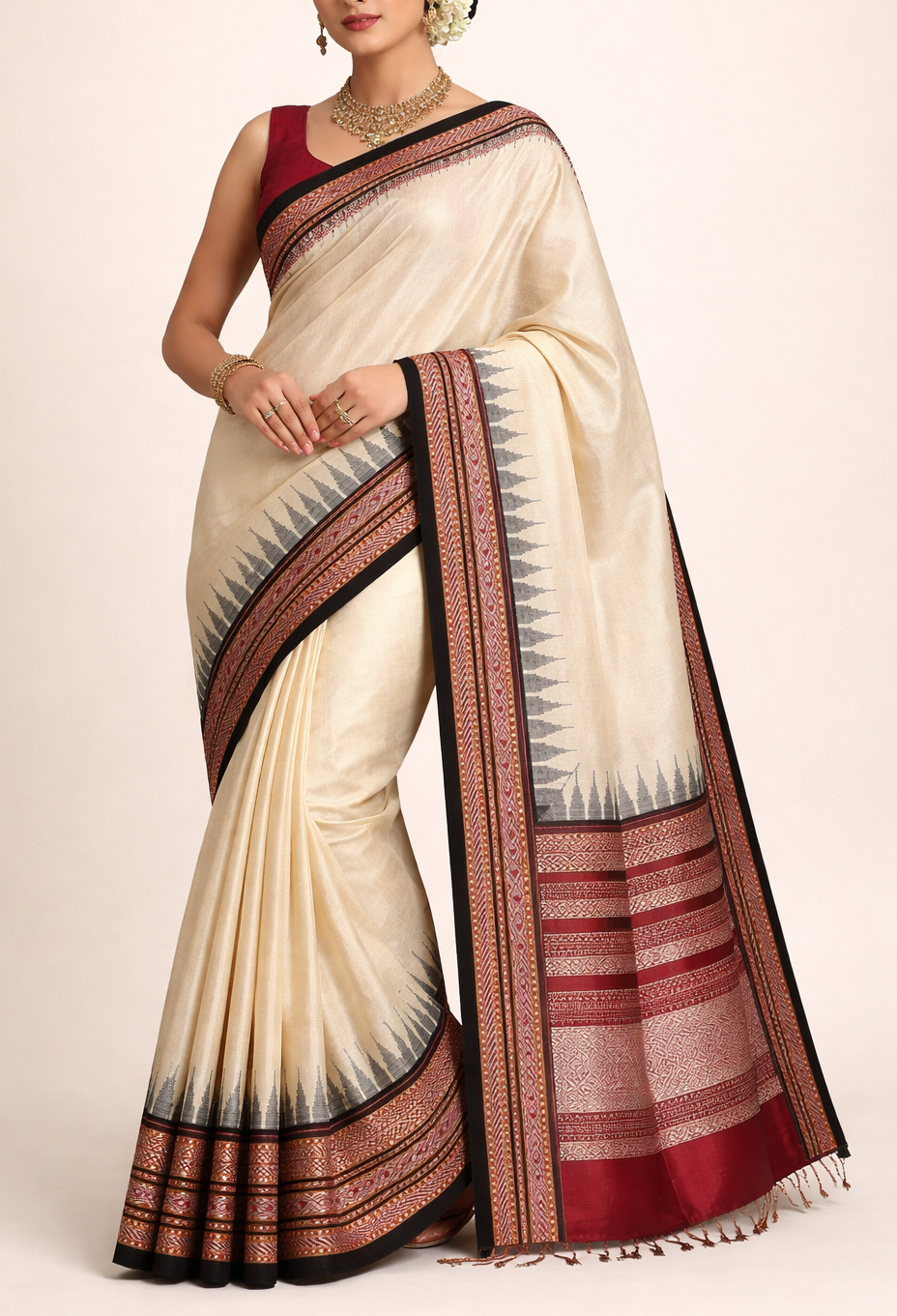
Karvathkati
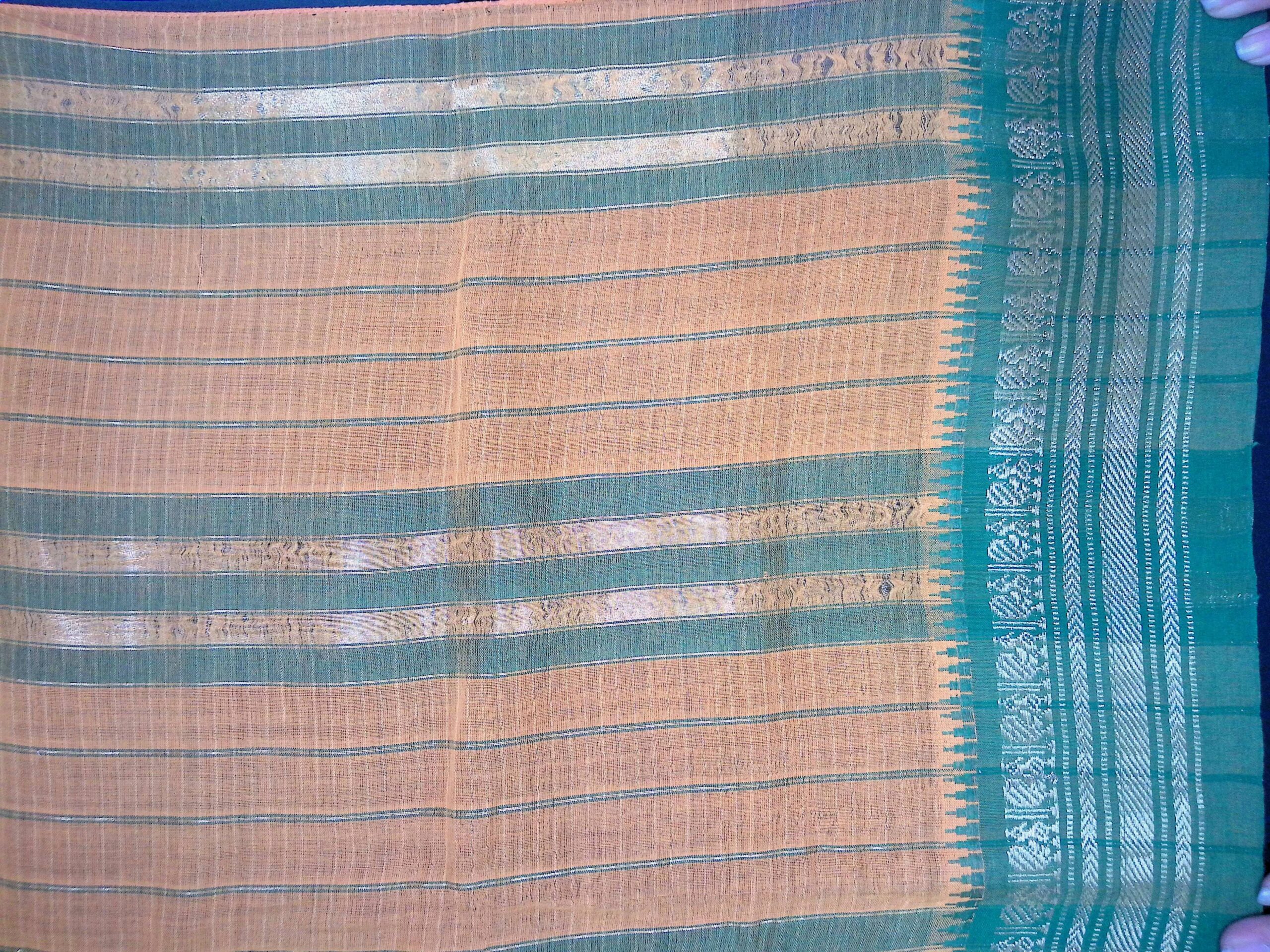
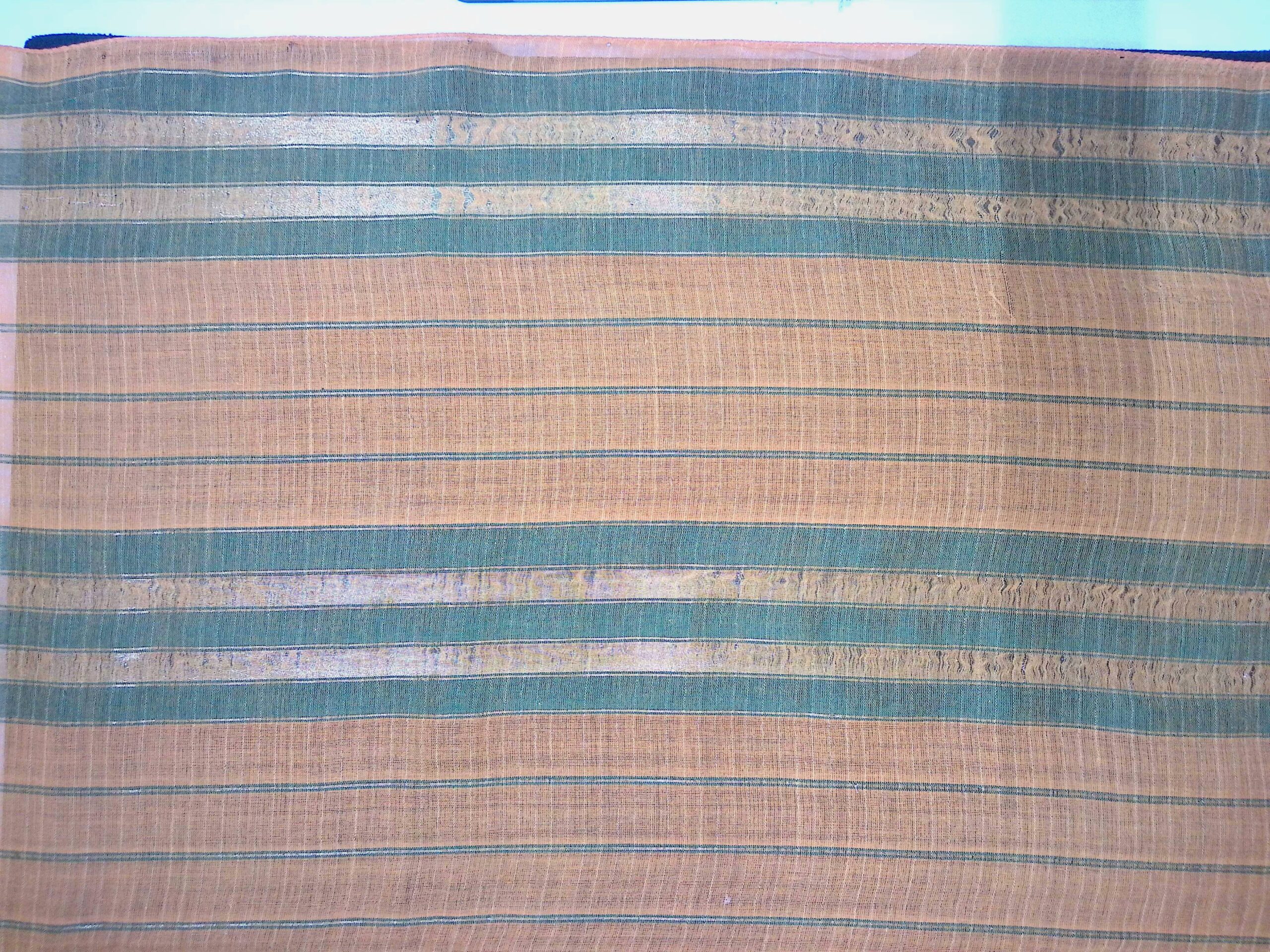
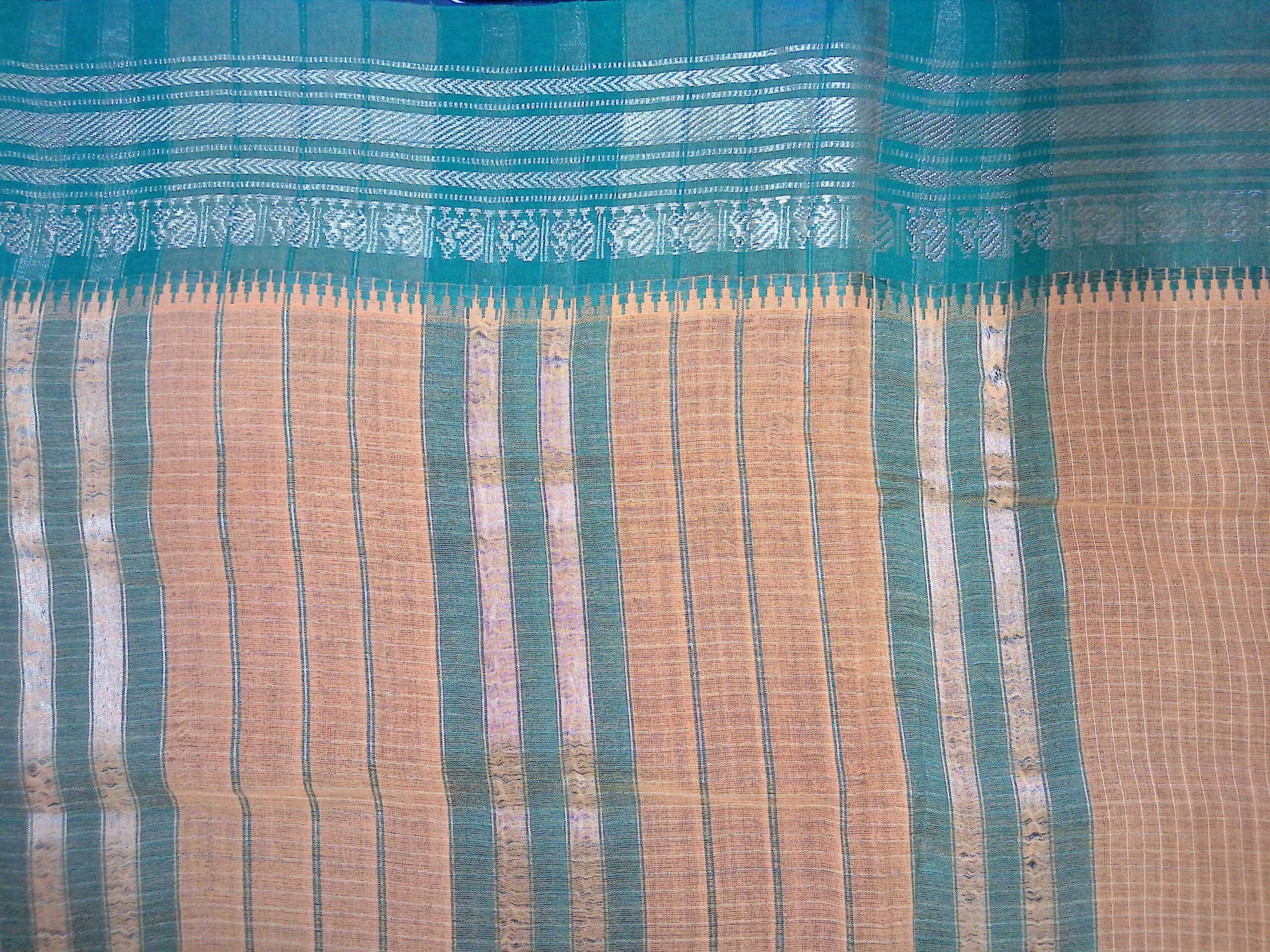
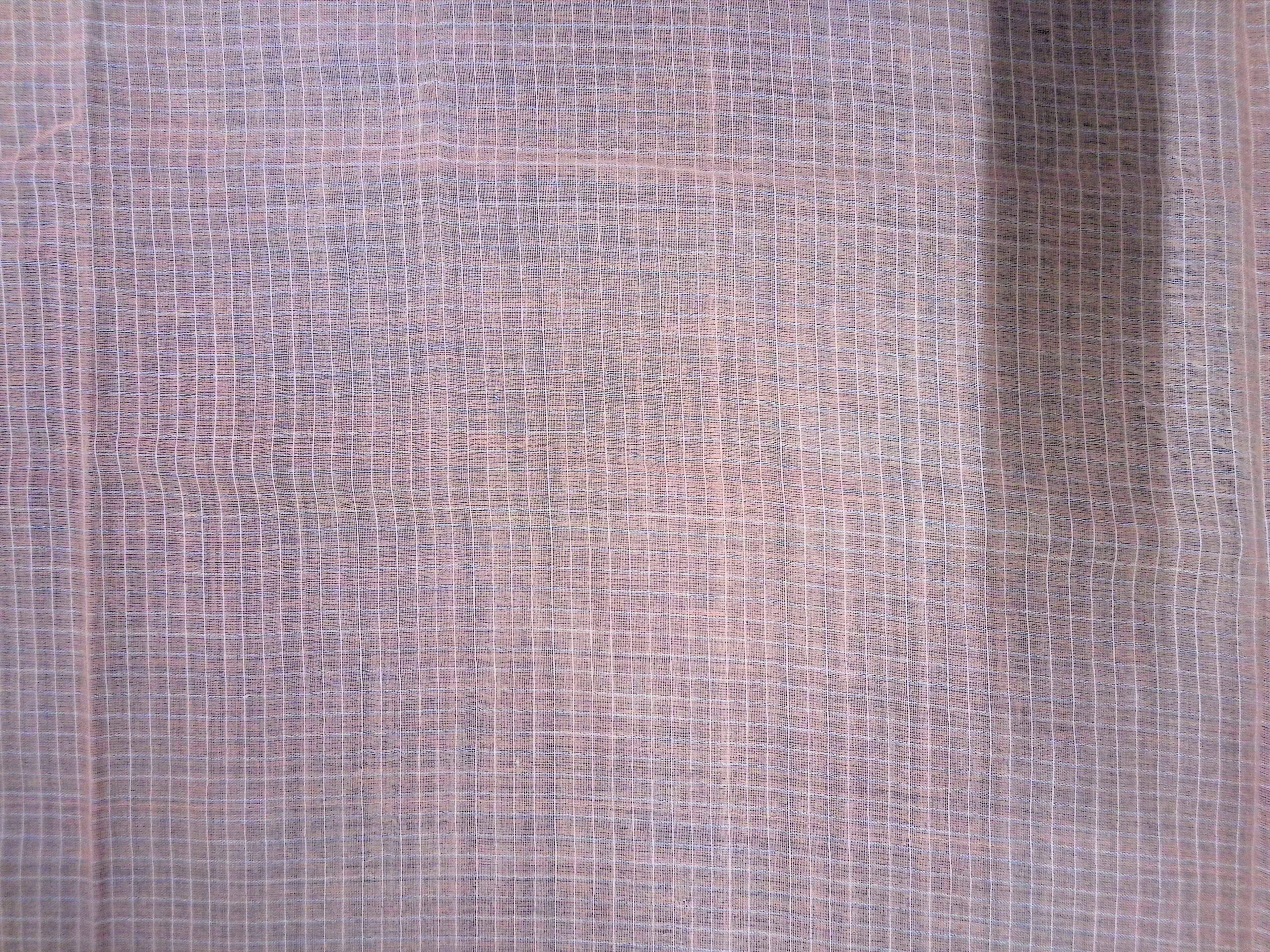
The Karvatkati saree is a beautiful handwoven fabric that is famous for its unique saw-toothed (serrated) border, which gives it its name, as ‘karvat’ means ‘saw’ in Marathi. This saree is a symbol of prosperity and good luck and is worn on special occasions. It is especially important as a bridal saree. The Karvat Kati saree is famous for its body made of Tussar silk and its textured borders, which give it a unique design and a lot of cultural significance.
History and Origin
The Karvat Kati saree is a textile that symbolises celebration and prosperity in the Vidarbha region. It is traditionally worn at auspicious ceremonies and is the customary attire for the Vidarbha bride. The name Karvat Kati (or Karvatkati) is derived from the Marathi word karvat, meaning “saw.” This refers to its most distinctive feature: the saw-edged or serrated design on the border. Weavers reportedly borrowed these patterns from the sculptures found at the renowned Ramtek temple in the area.
Types of Karvathkati
There is no standardized list of types of Karvatkati sarees in the way there is for other sari traditions. However, there are categories based on the pallu (decorative end) design, which effectively serve as the main traditional variants
Jala Pallu
- The designs have elaborate elements which create rich and detailed patterns.
- The design elements use complex handwork techniques together with intricate patterns which create detailed designs.
.Devdi Pallu
- The work shows a medium level of detail through its execution.
- The design showcases traditional elements which include temple motifs.
Tekri Pallu
- The design elements of this category display greater simplicity through their minimalist approach.
- The design concentrates its backing on floral designs and geometric patterns which create attractive designs.
Fibres & Materials used
The traditional Karvat Kati saree uses Tussar silk as its main material because the fabric needs this silk for both its textured surface and its natural golden appearance. The saree designers use cotton yarn to create borders to provide strength and structure, while making the saree easy to wear. Some designs incorporate a silk-cotton combination to create a fabric that combines luxuriousness with everyday comfort. The decorative versions of the festive pieces use zari metallic thread to create elegant pallu and border designs which enhance their festive appearance. The traditional handloom saree obtains its deep earthy and vibrant colors through the use of both natural dyes and azo-free synthetic dyes.
Traditional Colours
- Natural Tussar Beige/Golden – The undyed silk shade, highlighting the fabric’s natural texture and sheen.
- Brick Red & Deep Maroon – Classic and auspicious shades commonly used for traditional and festive wear.
- Rust & Burnt Orange – Earthy tones reflecting the regional aesthetic of Vidarbha.
- Mustard Yellow – Warm and traditional, often paired with contrasting borders.
Other deep, earthy tones are also common.
Motifs
Saw-Tooth (Karvat) Border Motif
- The signature motif of this saree.
- Resembles the sharp zigzag of a saw blade.
- Symbolic of precision, craftsmanship, and local identity.
- Appears on the border and sometimes as repeated lines near the body of the saree.
Temple Motifs
- Inspired by temple architecture and local shrines.
- Includes small temple spire-like patterns woven into the pallu or borders.
- Reflects sacred geometry and spiritual inspiration.
Floral and Nature-Inspired Motifs
- Stylized flowers, vines, and occasionally birds or animals.
- Often found in the pallu (decorated end) or along the border.
- Represents beauty, fertility, and connection to nature.
Geometric Motifs
- Triangles, diamonds, zigzags, and lines.
- Creates balance and rhythm in the design.
- Used to break visual monotony and enhance symmetry.
Pallu Styles with Motif Variations
- Jala Pallu: Rich, complex motifs woven tightly—luxurious look.
- Devdi Pallu: Medium-density motifs—often temple-themed.
- Tekri Pallu: Simpler layout with minimal motifs.
Manufacturing Method
This saree is woven using a complex and highly skilled three-fly shuttle weaving (a tapestry-like technique) on pit looms, which achieves the solid color border and body, and remains the uncompromised method.
Past and Present Practices
Aspect | Past Practices (Traditional) | Present Practices (Modern) |
Materials |
|
|
Weaving Process |
|
|
Designs |
|
|
Challenges and Future Focus
- Unsustainable Wages: The most urgent challenge is extremely low wages (often less than ₹5,000 per month for a week or more of work), making it economically impossible for the younger generation to continue.
- Physical Strain: The use of the traditional pit loom requires the weaver to sit stiffly with legs hanging down for 8-10 hours a day, causing severe joint and shoulder pain, which deters new entrants.
- Slow Production: Traditionally, weaving one saree took seven to ten days, although new innovations like the ‘catch-cord’ system and fly-shuttle technology can speed up production to one saree a day for those who adapt.
- Market Duplication: The market is threatened by power loom imitations and private parties who compromise on the design essence and quality of the original Karvat Kati to cut costs and earn larger margins.
- Future Focus: The survival requires an immediate increase in weaver wages, coupled with efforts to popularize the authentic product to consumers who appreciate its quality and history as a piece of formal wear.
- Product Diversification: To ensure economic viability and market relevance, weavers have expanded their repertoire beyond the traditional saree form. The Karvat Kati pattern is now featured on shirting material, dress materials, and dupattas.
- Artisan Support: The craft is benefitting from support aimed at handloom revival and market linkages, helping artisans develop new skills and ensuring the preservation of the essence of the tradition.
Khann
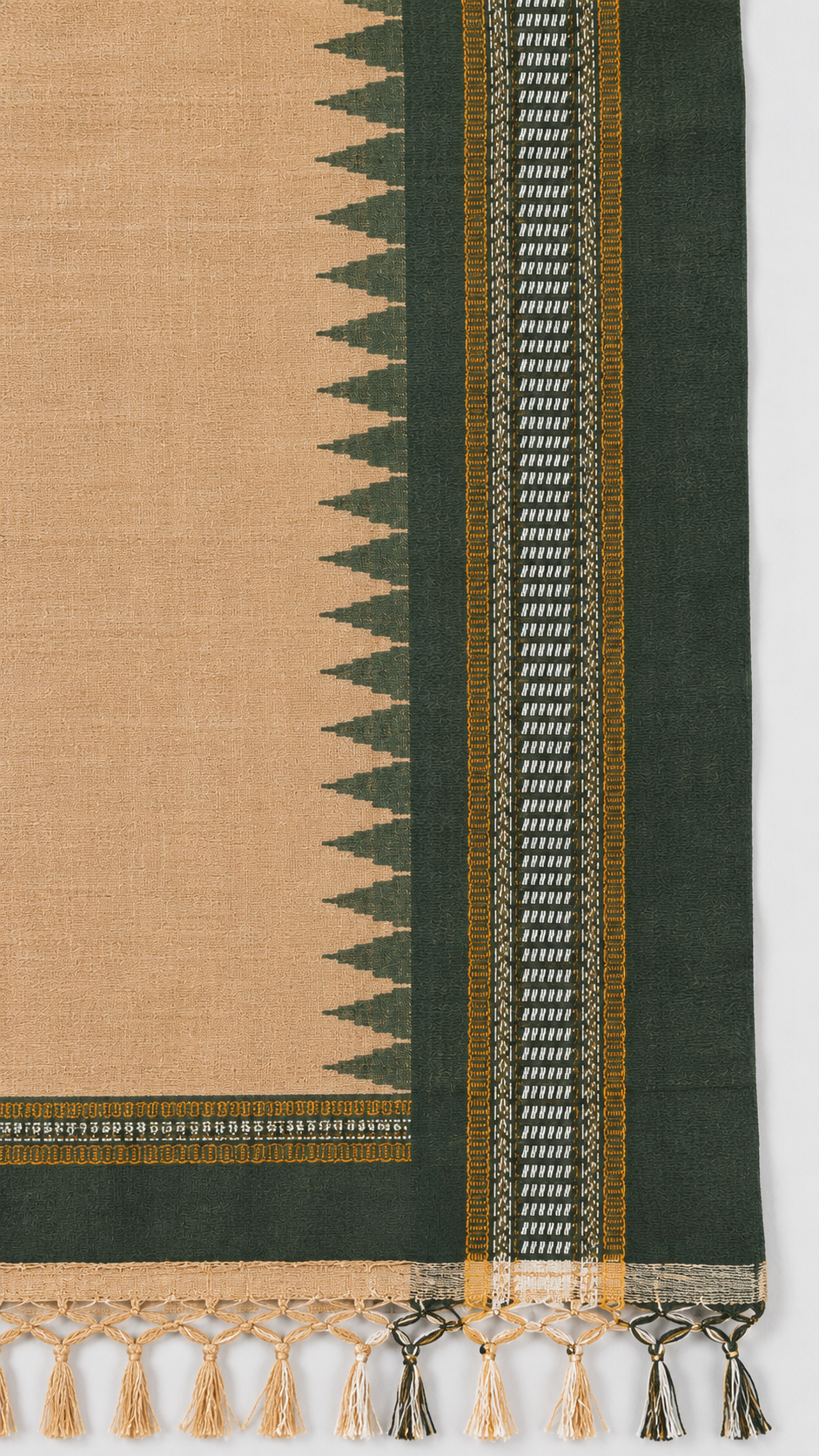
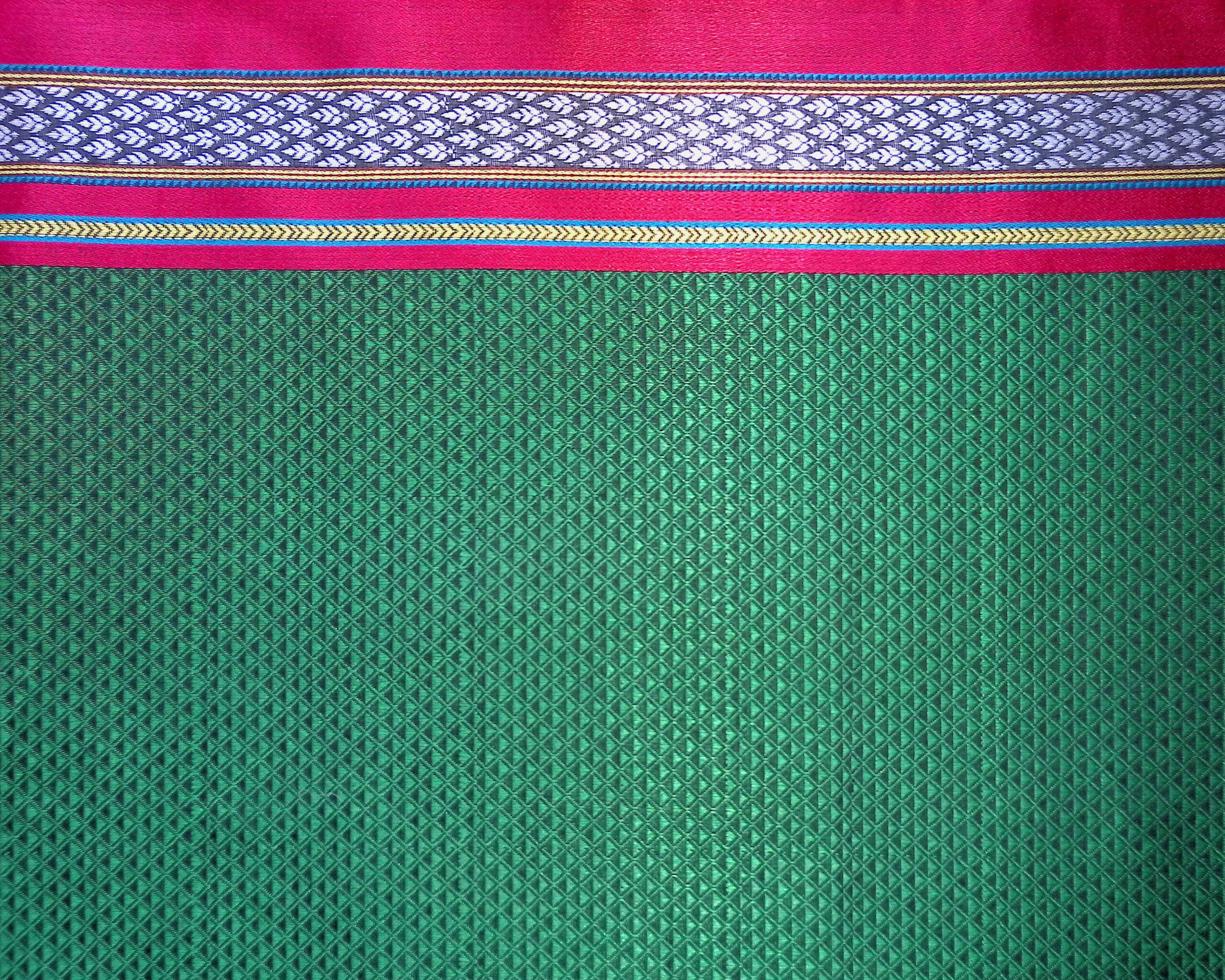
This textile, often called Khann, is a dense and stiff fabric traditionally used specifically for weaving saree blouses (choli). Its thickness and intricate design make it ideal for this purpose. The name Khun is sometimes related to the triangular pattern the fabric forms when it is folded and offered during religious ceremonies.
History and Origin
The fabric is primarily associated with and made in the Solapur district of Maharashtra, and is popular across the region, including parts of Karnataka.
Types of Khann fabric
- Plain Khann – This type showcases a single, uninterrupted color, keeping motifs to a bare minimum or omitting them entirely. The focus is on the natural sheen of the silk-cotton blend, making it a popular choice for uncomplicated blouses.
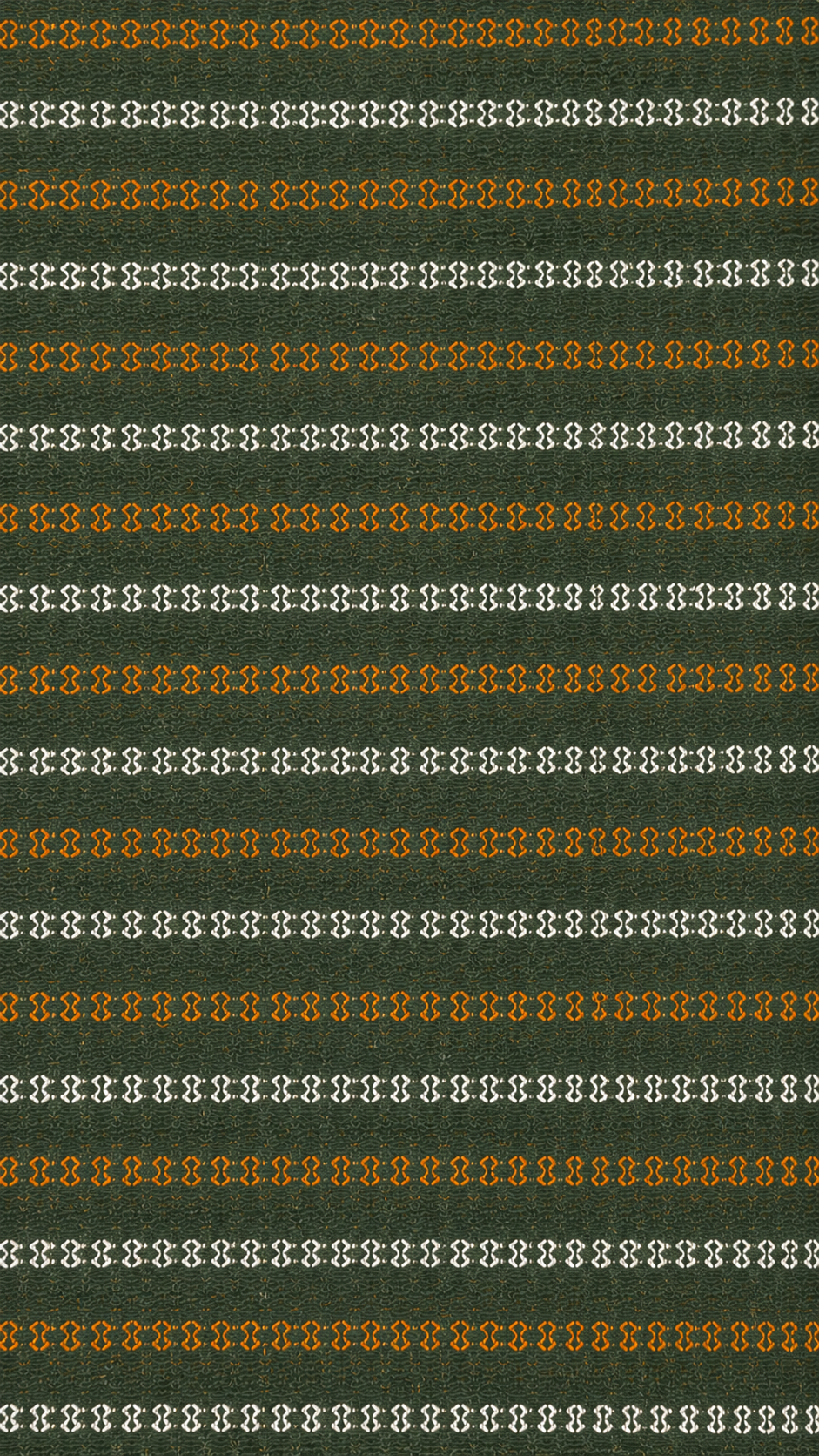
- Butti (Buti) Khann – These are adorned with tiny, repeating woven designs (buttis) like dots, flowers, or geometric shapes. It’s a classic and well-loved style.
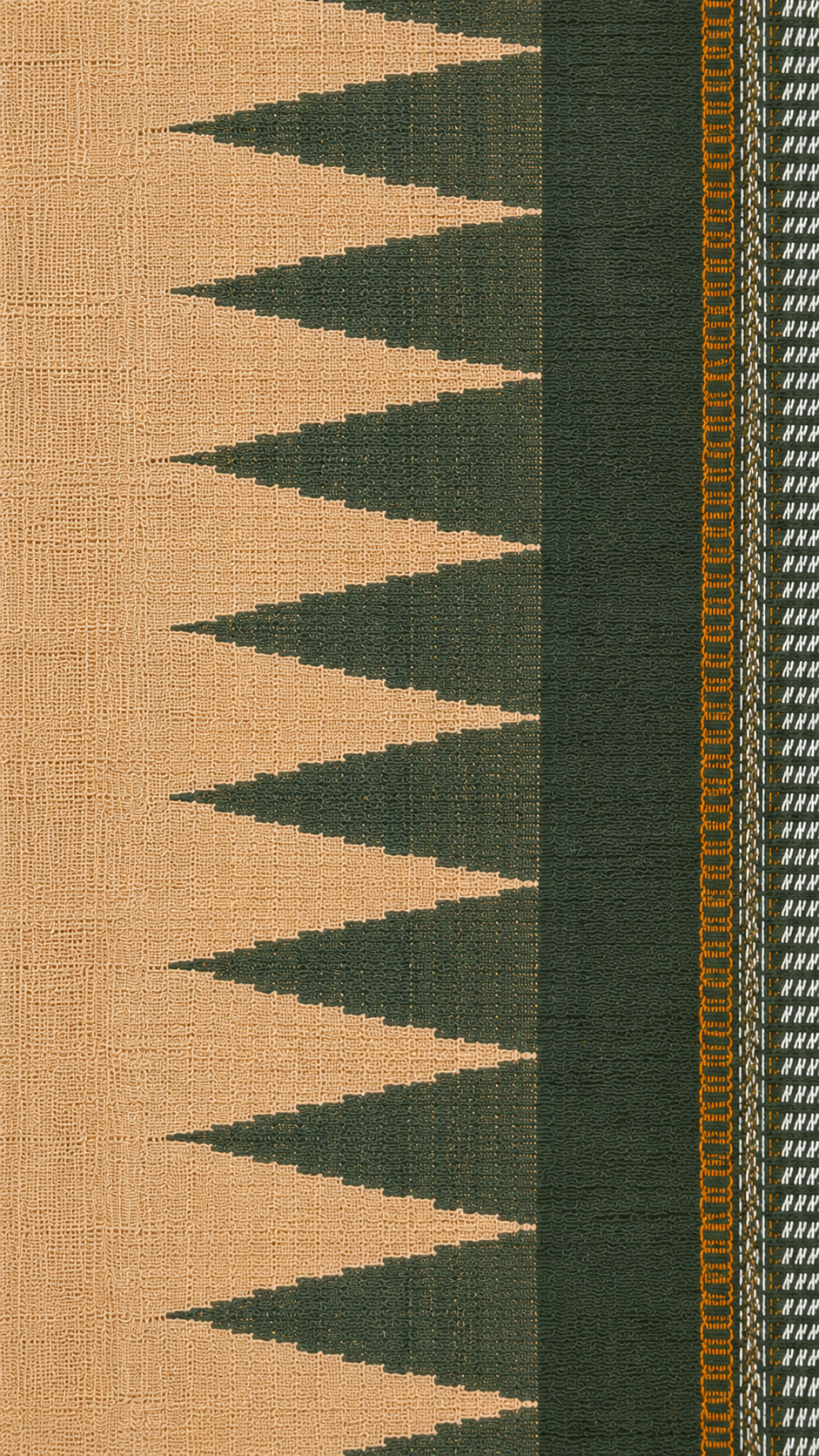
- Temple Border Khann – You can spot these by their characteristic temple (triangular) border design, frequently woven in contrasting shades.
- Striped Khann – These feature vertical or horizontal woven stripes mixed with small motifs, offering a touch of modern flair while still honoring tradition.
- Checkered Khann – These display woven checks alongside traditional butti motifs and are often seen in blouse pieces made for celebrations.
Zari Khann – These incorporate zari (metallic thread) in the motifs or borders, giving them a more luxurious and celebratory feel.
Fibers Used
The fabric is typically woven with a blend of materials for a rich look and texture:
- Art silk
Cotton silk (or pure cotton/silk in some high-end traditional versions).
Traditional Colours
- Deep Red & Maroon– Symbolic of tradition and commonly worn for festive and religious occasions.
- Rani Pink– Bright and vibrant, often used in celebratory attire.
- Purple- A rich and royal shade traditionally preferred for special events.
- Parrot Green- A lively and auspicious colour frequently paired with contrasting borders.
- Peacock Blue- Deep blue tones inspired by nature and temple aesthetics.
- Mustard Yellow- Earthy yet bright, associated with rituals and haldi ceremonies.
- Black- Traditionally accepted in Maharashtra and often combined with bright contrasting borders.
Contrasting Borders- Common combinations include red–green, purple–mustard, pink–orange, and green–yellow, often highlighted with gold accents.
Motifs
The Khana fabric is dense with woven designs:
- Body: Small motifs are woven using extra warp yarns to fill the entire surface of the fabric.
- Common Motifs: Floral (flowers and creepers), geometrical, surajmukhi (sunflower), tilpatta, and chanabutta.
Border: The border is distinct and features two lines of woven designs, often repeating motifs like floral or the narali border (coconut-like or geometric line design). The border typically has a maroon background color, though sometimes a black background is used. The woven motifs are in contrasting colours such as blue, green, grey, golden yellow, yellow, or magenta.
Manufacturing method
Designs are created using a Dobby loom and an additional warp yarn technique. This extra-warp inlay technique allows for the creation of intricate patterns within the weave.
Width: The fabric is purely designed for saree blouses, thus it is woven in a narrow width of 27 or 31 inches.
Past and Present Practices
Aspect | Past Practices (Traditional) | Present Practices (Modern) |
Materials |
|
|
Weaving Process |
|
|
Designs |
|
|
Challenges and Future Focus
- Decline of Tradition: Khun weaving is a falling handloom tradition that was largely lost in the world of modernity and faced a severe market loss, requiring extensive efforts to bring it back.
- Competition from Mechanization: It faces tough competition from power looms and mill industries, which produce cheaper alternatives, pressuring weavers to set up machinery to cut costs.
- Economic Hurdles: Like much of the handloom sector, it faces drawbacks such as antiquated technology, low wages, and limited marketing ability, making it difficult to sustain the craft traditionally.
- Future Focus: The future relies on integrating the fabric into contemporary retail and fast fashion to broaden its appeal beyond its traditional regional base and strictly enforcing protective acts against imitations.
- Revival Strategy: A core contemporary strategy involves moving beyond its niche use in blouses and borders to transform the fabric into versatile accessories and lifestyle products (like bags, pouches, and fashion jewelry).
- Fabric Composition: The fabric remains a traditional handloom textile known for its soft texture, often a silk-cotton blend, with an emphasis on its distinct, intricate brocade patterns.
- Market Relevance: This diversification ensures the craft’s survival and relevance by incorporating its essence into contemporary designs and catering to environmentally conscious consumers.
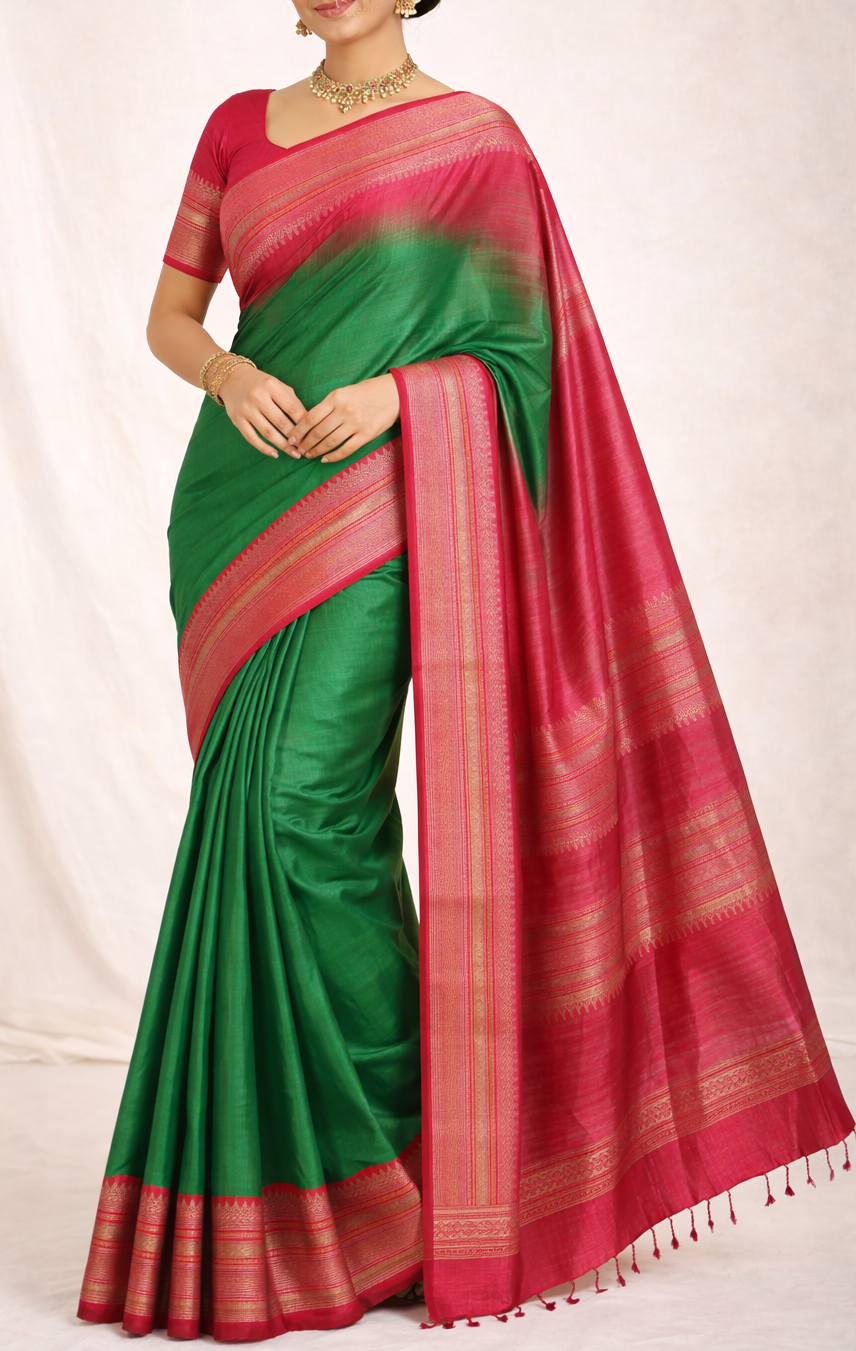
Narayan Peth
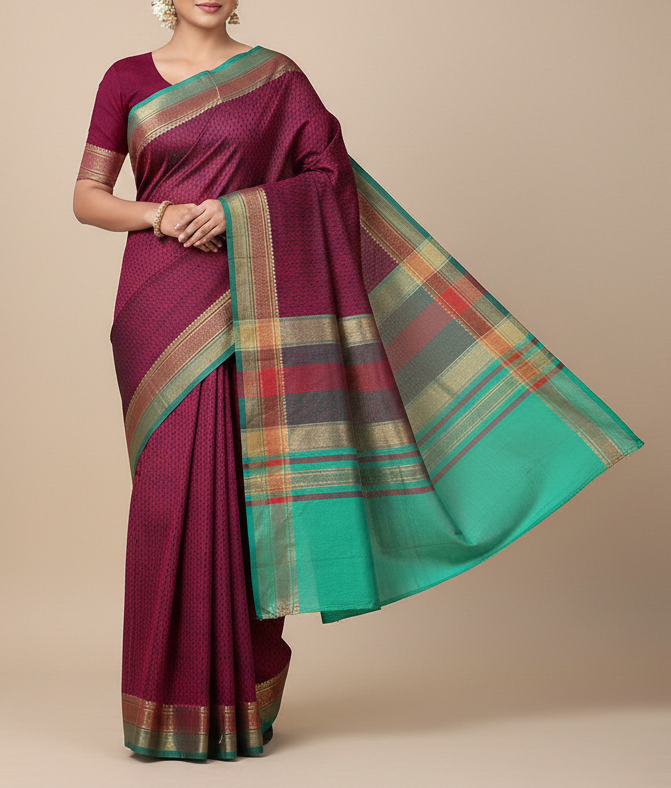
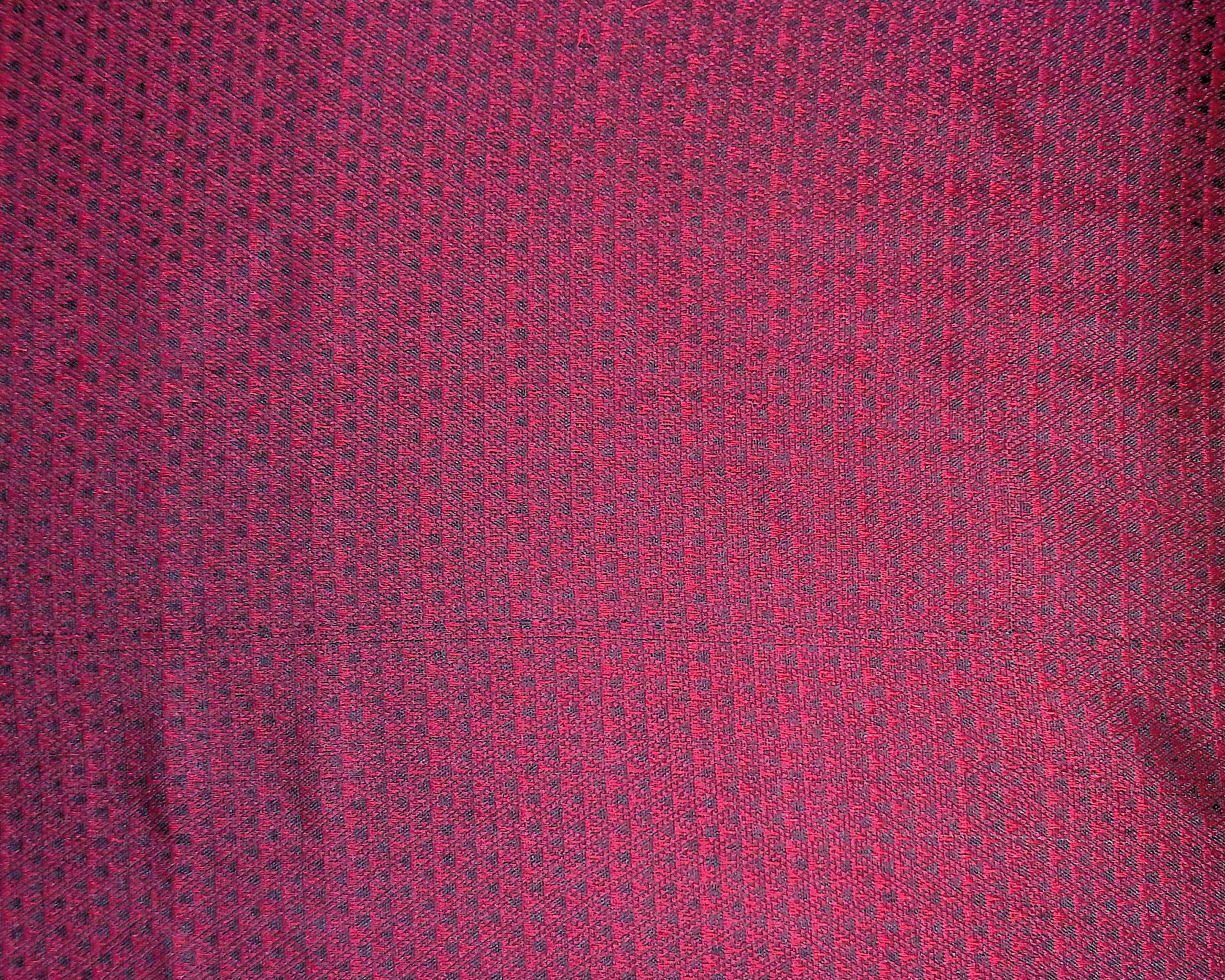
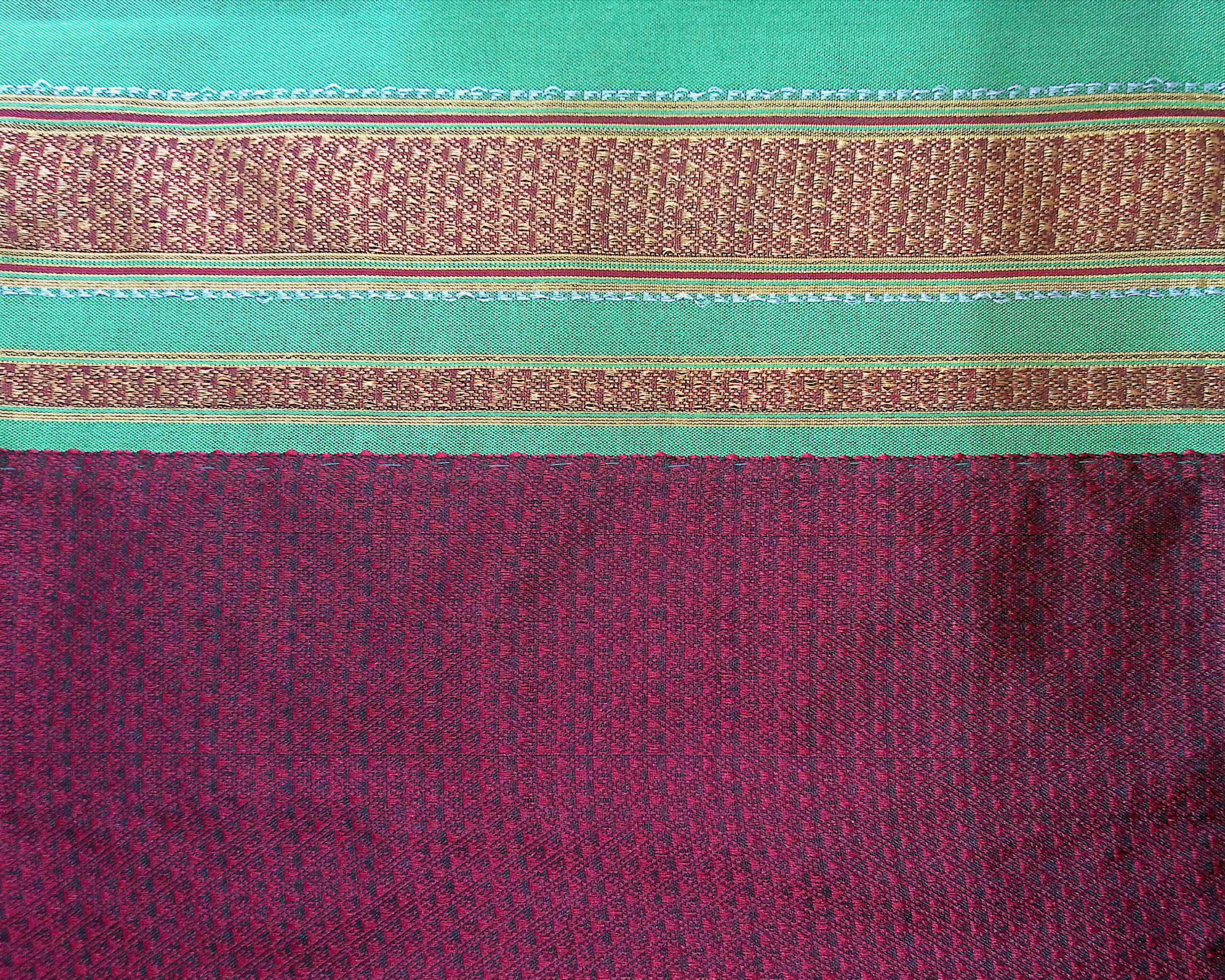
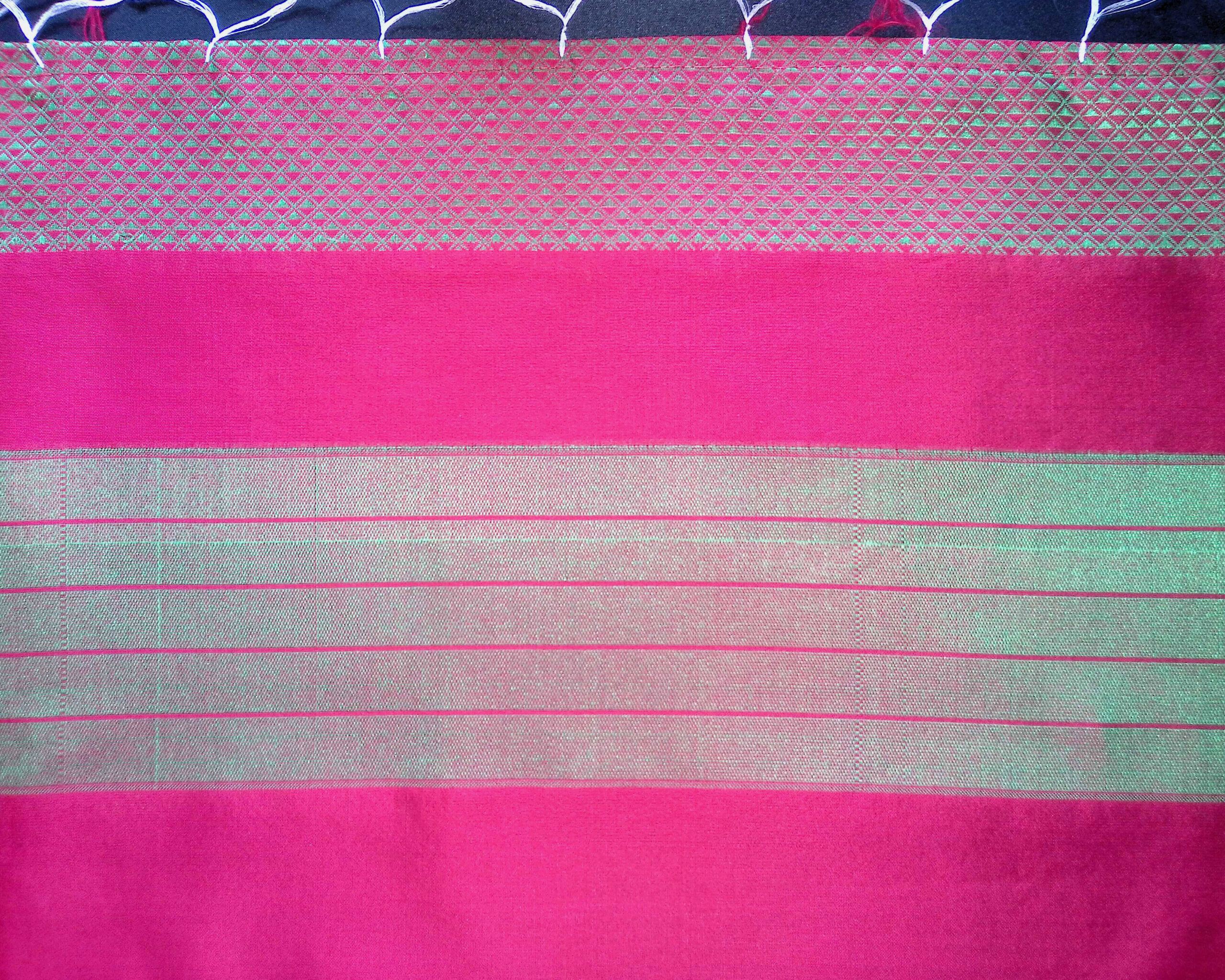
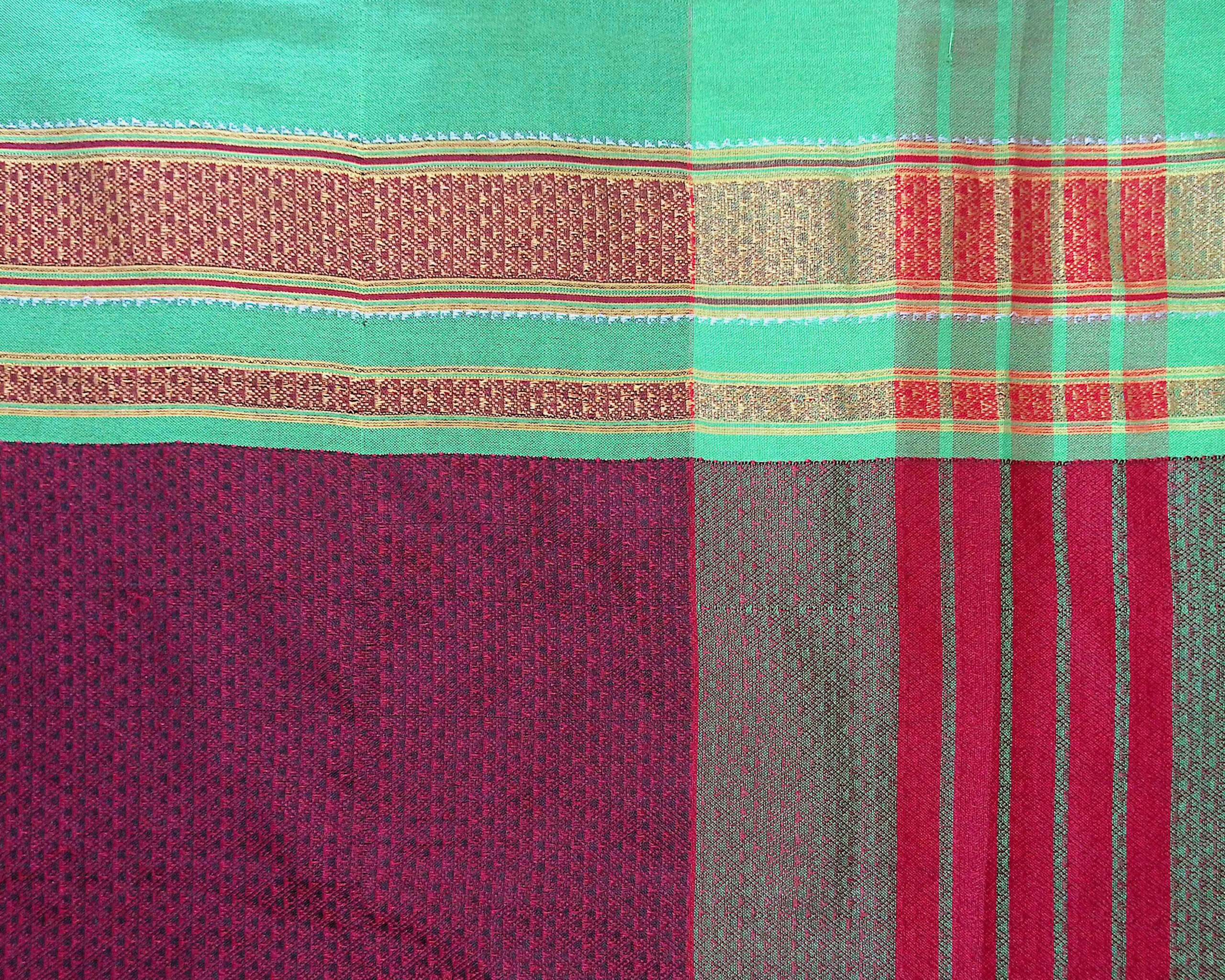
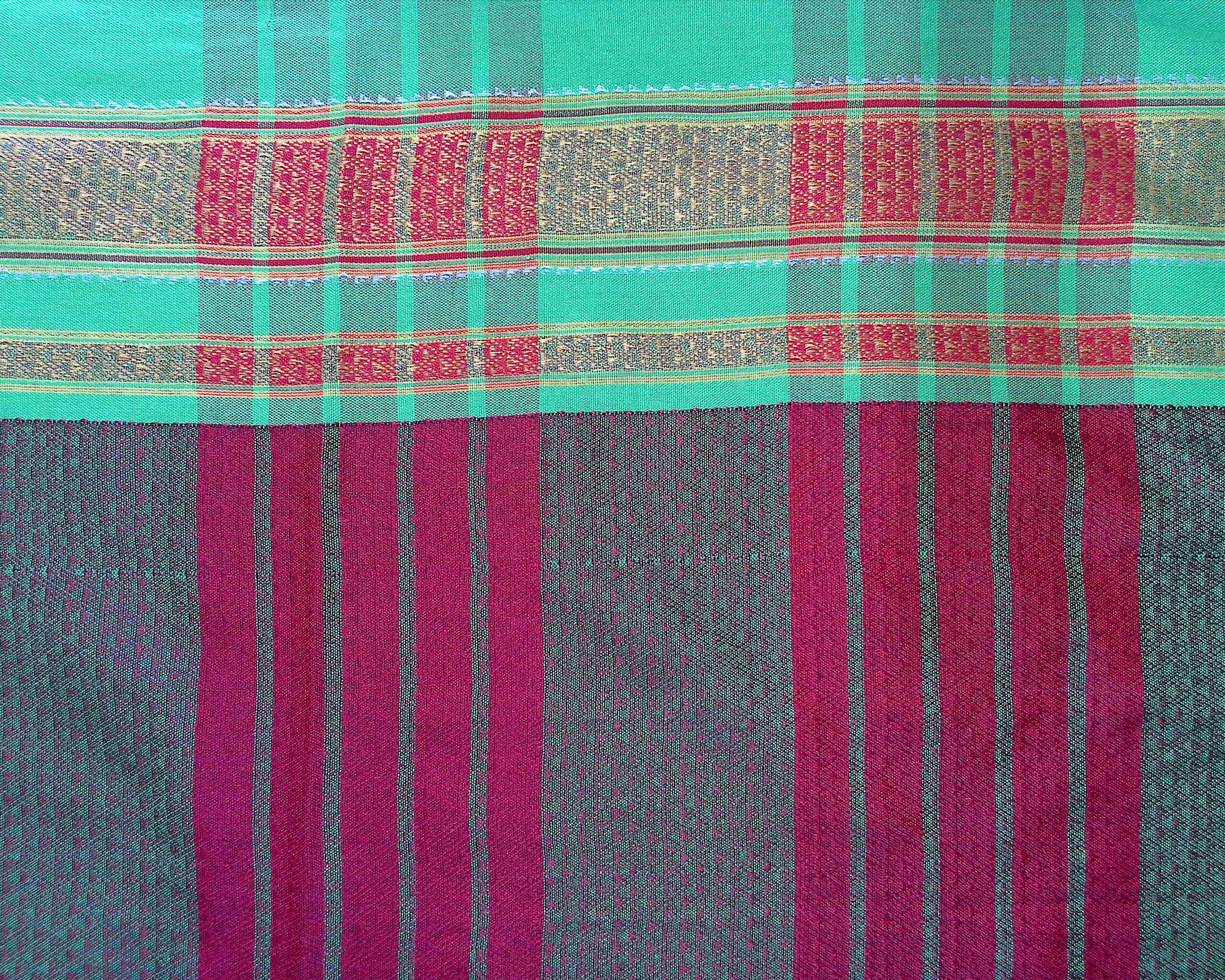
The Narayan Peth Saree, a handloom craft with historical ties to the Maratha empire, is evolving from a pure traditional piece to a modern, wearable fashion statement. While the core weaving technique, the distinctive Korvai (interlocking weft) used to seamlessly join the contrasting cotton body and silk border, remains preserved, the design and market have seen significant contemporary changes to ensure the craft’s relevance.
History and Origin
The Narayan Peth Saree is a distinctive weave that received a Geographical Indicator (GI) status in 2012. The saree has a unique historical manufacturing process: a special technique is used where eight sarees (approximately 56 yards of silk) are produced simultaneously on the loom. Traditionally, these sarees were produced using vegetable dyes.
Historically located in the region between Maharashtra and Andhra Pradesh (specifically associated with the town of Narayanpet in present-day Telangana, and popular in Solapur and other parts of Maharashtra).
Types of Narayan peth
- Cotton Narayan Peth (Traditional) – These sarees are mostly crafted from fine cotton and have small checks or stripes with temple (rekh) borders in a contrasting color. They’re light and comfy, perfect for wearing every day.
- Silk Narayan Peth – Made with silk or silk blends, these sarees have a lovely, rich feel and a beautiful shine. The borders are often wider and more decorative, making them a great choice for celebrations and special events.
- Silk-Cotton Blend Narayan Peth – These sarees mix the comfort of cotton with the elegance of silk. They’re versatile and often picked for cultural events and more casual get-togethers.
- Narayan Peth with a Broad Border (Wide Pallu) – These sarees stand out with their wide, contrasting borders and detailed pallu, often featuring zari work,
- Narayan Peth with a Narrow Border – These have thinner borders and simpler pallus, offering a subtle, understated look that’s perfect for everyday wear.
Fibres and Materials used
The saree is known for using both silk and cotton, often in combination:
- Silk
- Cotton
- Garbha Reshmi: Silk is used in the warp and cotton in the weft.
- Garbha Suti: Cotton is used in the warp and silk in the weft.
Traditional Colours
The Narayan Peth saree is famous for its contrasting and vibrant colour combinations:
- Navy blue/Turkish blue with Pink
- Green with Pink/Red
- Black with Pink or Red
- Golden yellow with Red
- Orange with Brown
- Peacock green with Blue
- Green and Purple
Motifs
Temple Motifs (Gopuram Borders)
- Zigzag or triangular shapes resembling temple spires.
- Often woven with zari.
- Placed along the border or in the pallu.
Mango Motifs (Paisley)
- Stylized mango shapes symbolizing fertility and prosperity.
- Found in the pallu or border areas.
Swan / Annapakshi Motifs
- Mythical swan-like birds representing purity and grace.
- Used in decorative borders and pallus.
Leaf and Flower Motifs
- Represent nature and renewal.
- Often used as fillers or in pallu designs.
Checks and Stripes in the Body
- Small, subtle checks or striped patterns dominate the saree body.
- Give a traditional and simple aesthetic.
Geometric Shapes
- Diamonds, lines, and arrow-like designs.
- Common in pallu and border arrangements.
Topa-Tenni Pallu
- Special pallu design with pointed or arrow-shaped motifs.
- Characteristics of silk Narayanpet sarees.
Zari Borders and Motifs
- Metallic threadwork used for emphasis and richness.
- Highlights temple motifs and pallu designs.
Contrast Colour Motifs
- Sharp colour contrast between body, border, and pallu.
- Enhances visual impact of motifs.
Minimal Motif Use in Cotton Sarees
- Focus on clean lines, checks, and restrained designs.
- Simple motifs used sparingly to maintain elegance.
Manufacturing method
- Manufacturing Time: A cotton saree is typically completed in one day, while a silk saree takes 4–5 days.
- Style: Features a 4-inch wide border (kath).
- Pallu Piecing (Padar): A key feature is the piecing method of the Padar, where the warp and weft threads are always of silk, creating a rich end piece.
The body is typically Plain, woven with checks, or very rarely, with vertical stripes.
- Border detail
- Width: Measures 4 inches wide.
- Colour: The Pallu and border will always be of the same colour.
Motifs: Temple or mango motifs are typically placed on the top edge of the border.
- Pallu (Tope Padar)
- The pallu is called Tope Padar.
- It characteristically contains three Zari stripes woven between the silk padar.
- Each Zari strip ends with three or five pointed edges.
Past and Present Practices
Aspect | Past Practices (Traditional) | Present Practices (Modern) |
Materials |
|
|
Weaving Process |
|
|
Designs |
|
|
Challenges and Future Focus
- Diminishing Artisan Base: A primary challenge is the decline in the number of skilled, practicing weavers, as younger generations are reluctant to inherit a craft seen as unremunerative.
- Profit Margins and Wages: Weavers face razor-thin profit margins due to rising costs of silk and cotton and inconsistencies in yarn quality and distribution from suppliers.
- Market Competition: The craft faces intense competition from power loom imitations and mass-produced fashion, threatening the viability of the slow, hand-weaving process.
- Future Focus: The future depends on sustainable infrastructure, assured pricing, and continued youth engagement through training programs and educational campaigns to maintain the craft’s cultural and economic viability.
- Global Recognition: The award of Geographical Indication (GI) status has enhanced its international recognition, featuring the saree in global exhibitions and fashion shows.
- Empowerment: The craft has become a source of sustainable livelihood, significantly boosting women’s empowerment through intergenerational skill transfer in weaving families.
- Diversification of Products: The fabric is now used in contemporary silhouettes and products, including kurtas, jackets, fusion wear, and accessories, ensuring the craft’s relevance beyond the traditional saree form.
- E-commerce and Global Reach: Online platforms and e-commerce have been crucial, directly linking weavers to a wider, global customer base who value the saree’s authenticity and origin story.
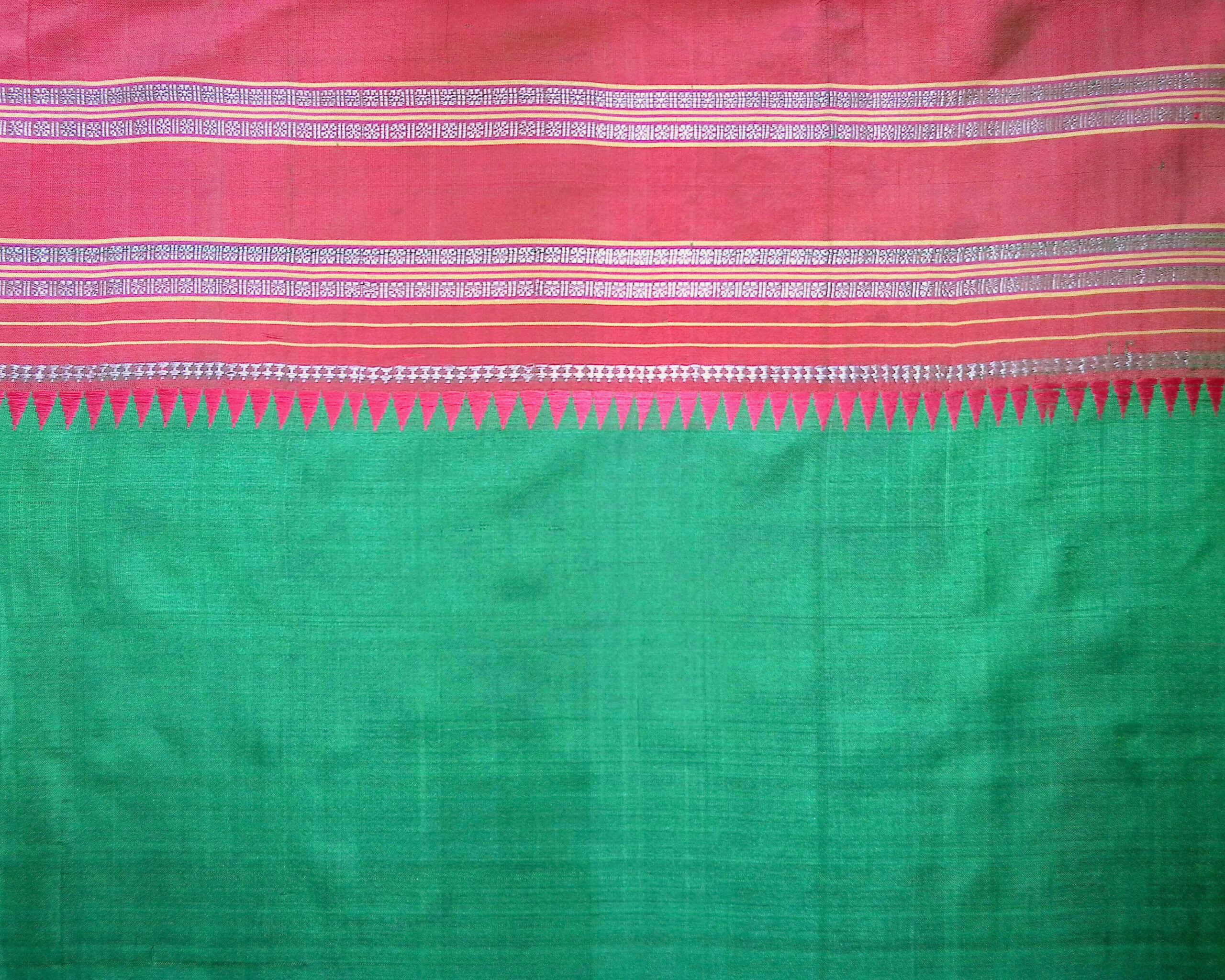
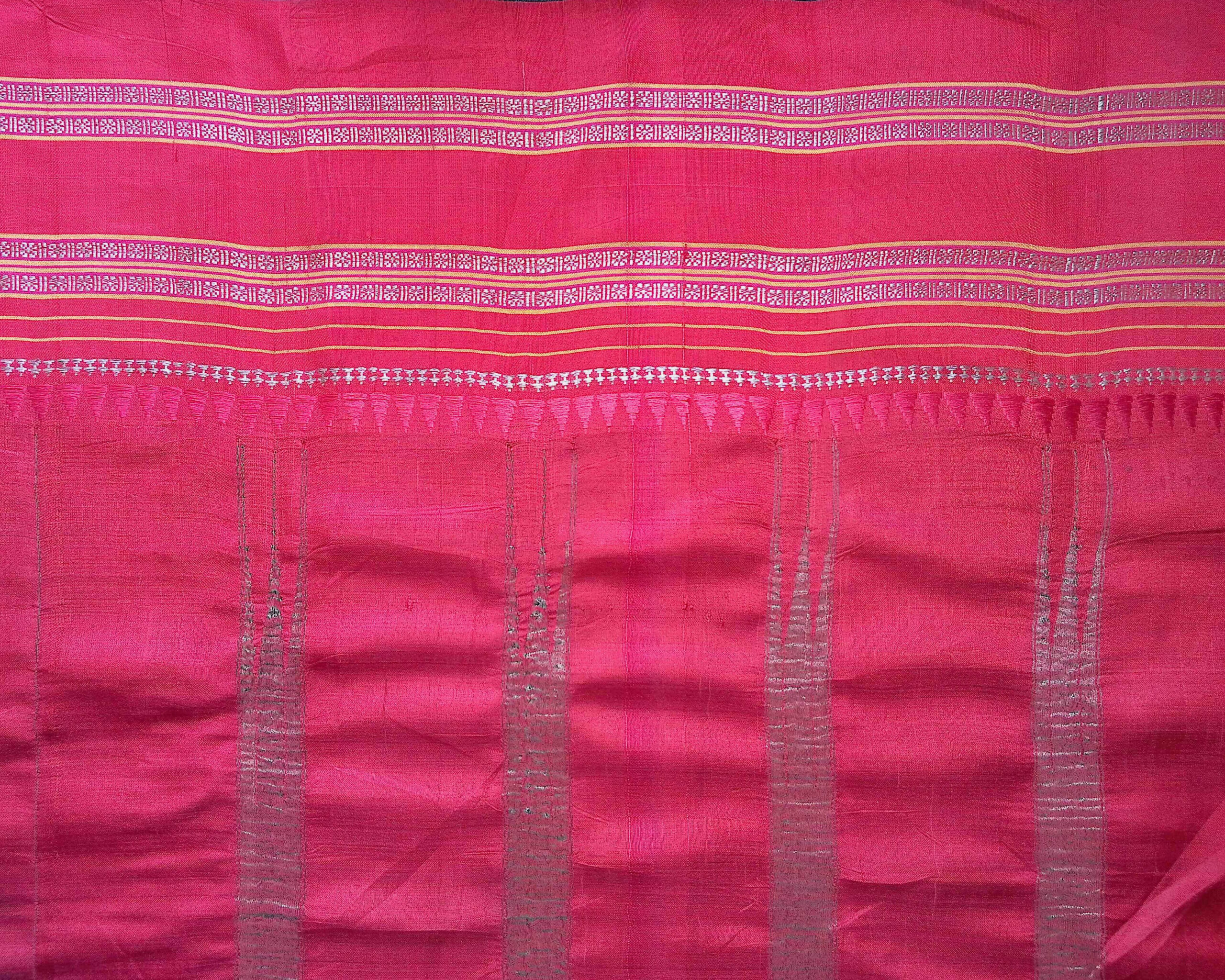
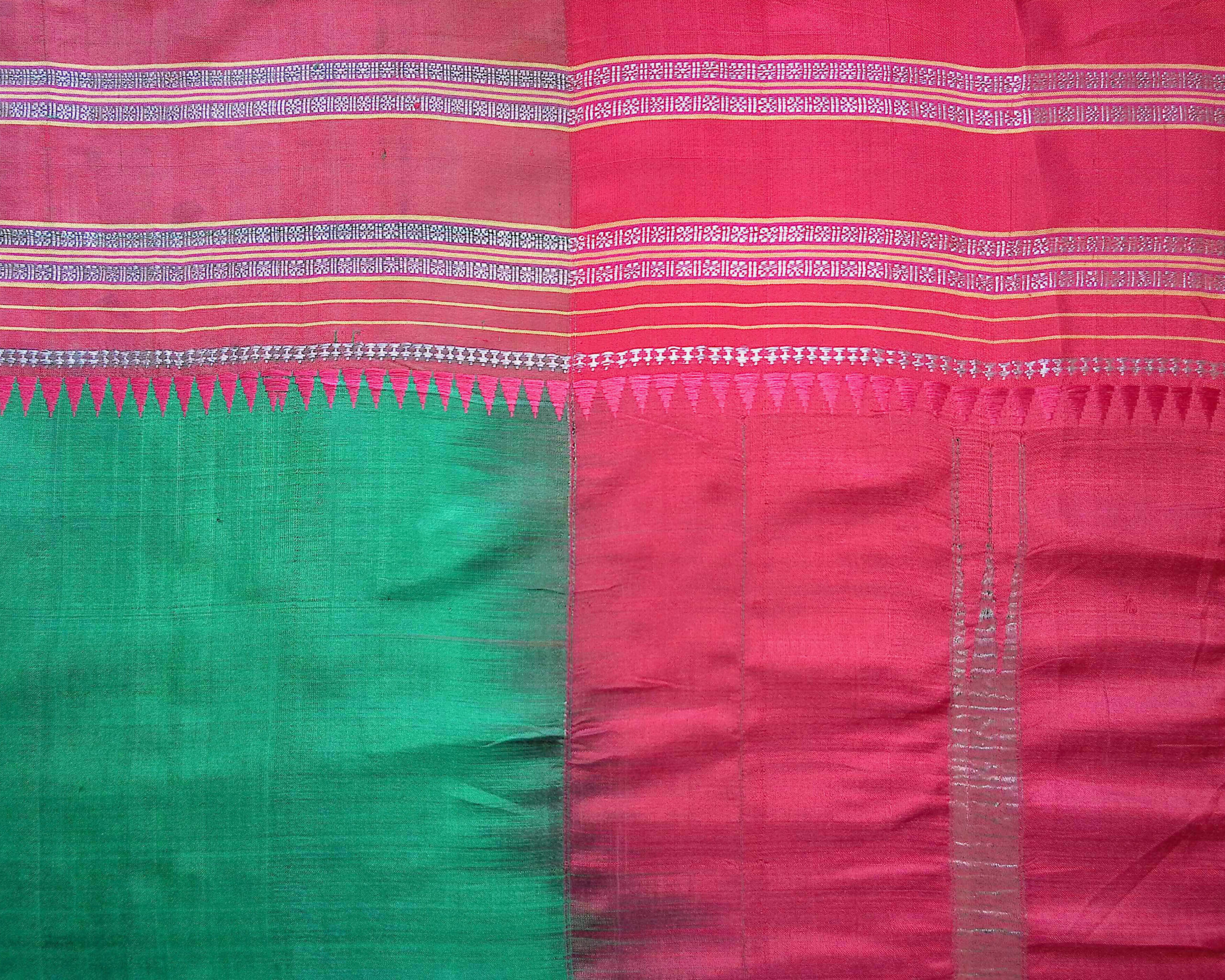
Chandrakala saree
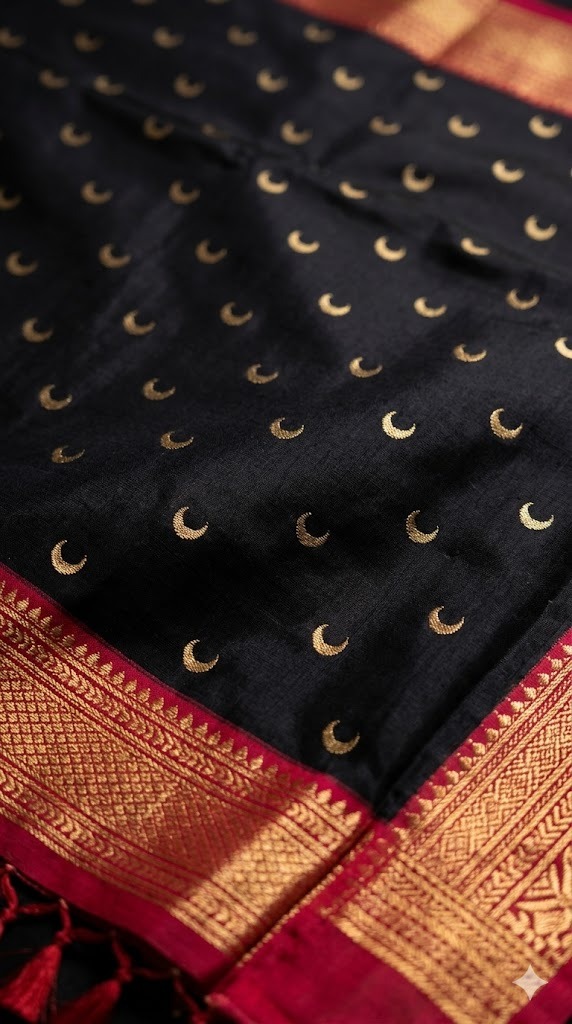
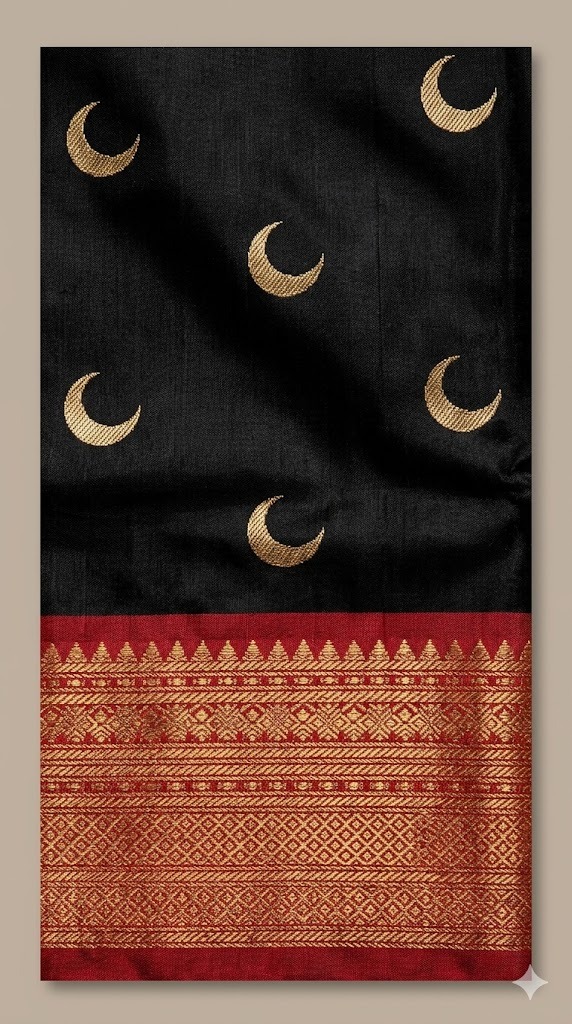
The Chandrakala Saree, often referred to as Kali Chandrakala (Black Chandrakala), is a unique saree, historically designated as a Makar Sankranti special.
This is notable because Makar Sankranti is one of the few days when black garments are traditionally worn, as the dark colour is considered auspicious for this festival. The name Chandrakala literally means “digit of the moon” or “crescent moon”. The colour is meant to evoke a “night sky full of twinkling stars,” with the correct traditional substitution for black being navy blue or midnight blue.
History and Origin
Traditionally, these sarees were donned by royal families and aristocratic ladies during the time of the Marathas, especially under the Peshwas. The Saree gained popularity during festivals and marriages due to its luxurious feel and look created by the silk fabric and weaving.
The design and color of Chandrakala Sarees have changed over time, but one can always see the originality in terms of the fabric used, which is silk, with zari and elegant designs. Thus, it has become a part of Maharashtrian heritage. Today, it holds importance due to its eternal look and feel.
Types of Chandrakala
- Classic Cotton Chandrakala – These are made from delicate cotton fabric, featuring a body in deep black or another dark shade, set off by a zari border in a contrasting color. They’re light, graceful, and just right for religious events and cultural celebrations.
- Silk Chandrakala – These are woven with silk for a more luxurious feel and a beautiful sheen. Often used for festive occasions, they usually have more elaborate zari work on the borders and pallu.
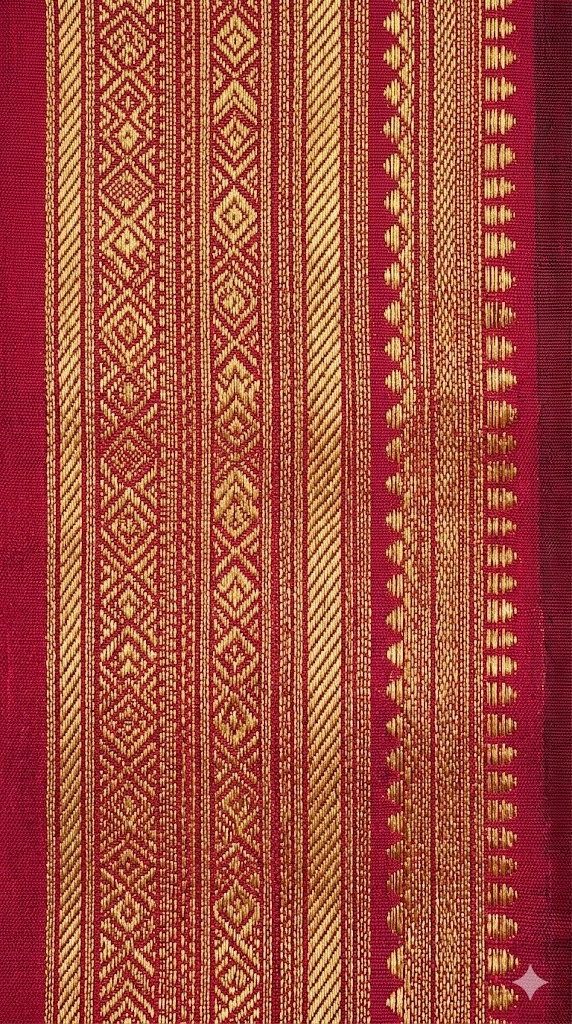
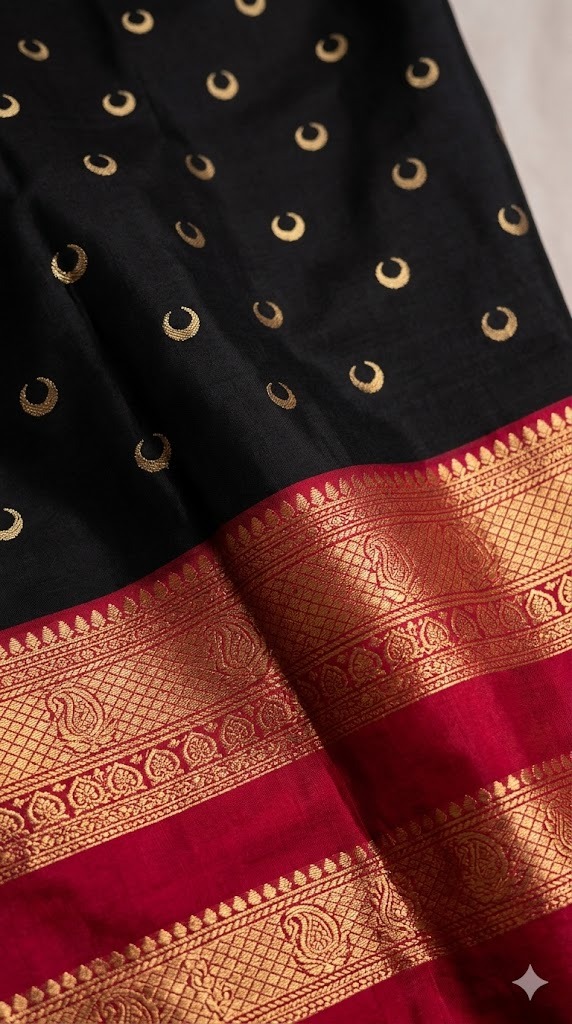
- Zari Border Chandrakala – The main feature here is the wide gold or silver zari borders. The design keeps things simple, with very few motifs on the body, so all eyes are drawn to the striking contrast.
- Butti Chandrakala – These have tiny zari or thread motifs (called buttis) woven across the body of the fabric, adding a touch of subtle decoration.
- Contemporary Chandrakala – These are modern takes on the classic saree, and you can find them in all sorts of colors, not just the traditional black. Sometimes, they’re made with lighter materials or have simpler borders, making them perfect for everyday wear.
Fibres and Materials used
The saree uses a combination of natural fibers and metallic thread:
- Base Fabric: Cotton.
- Zari: Silver Zari (which is typically gold-plated and contains at least 5% real gold content in high-quality traditional pieces).
Traditional Colours
The defining characteristic is its dark colour, representing the night sky are Black,Navy Blue, Midnight Blue.
Motifs
Moon / Crescent (“Chandra”) Motif
Central to the Chandrakala style. Often as a crescent moon shape, sometimes paired with stars or dots.
- Flower / Floral Motif : Motifs like simple blossoms, full flowers, or floral fillers around the moon or scattered.
- Dots / Buttis :Tiny round motifs that may represent stars or pearls. These are used to fill space or provide background texture.
- Peacock Motif : Sometimes the pallu might feature peacocks or use peacock motifs in the border or decorative panels.
- Geometric Motifs / Buttis in Rows : Repeated simple geometric shapes, small but repetitive buttis, stripes or lines.
- Chikki Paras (Small Square or Diamond Border Motifs: Small, precise repeated border motifs in square or diamond form in border or pallav areas.
- Border (Kath): Typically features patterns like the Khawle Kath (scalloped/wave border) or the Narli Kath (coconut/geometric line border), handwoven throughout the length.
- Body Motifs (Butti): Features an elaborate distribution of motifs everywhere, often including the rupiya butti (coin motif).
- Pallu (Padar): The pallu design is elaborate, featuring a jaal pattern (net-like design) above the pallu proper and an akruti frame (decorative outline) with dense Zari filling.
Manufacturing method
Traditionally, the Chandrakala Saree is created by a meticulous and detailed handloom weaving process, where first, silk and zari yarns, either gold or silver, are chosen as raw materials. The silk yarns are colored, traditionally in a deep black or other rich colors, and then processed for the weaving operation. In the warping process, the yarns are stretched and fixed on the loom, defining the length and breadth of the Saree. Skilled artisans then manually weave the Saree on a loom, where the warp and weft yarns are intertwined, incorporating zari and other motifs into the fabric, and then subjected to finishing operations such as washing, drying, and polishing, to produce a beautiful and elegant traditional garment.
Past and Present Practices
Aspect | Past Practices (Traditional) | Present Practices (Modern) |
Materials |
|
|
Weaving Process |
|
|
Designs |
|
|
Challenges and Future Focus
- Low Weaver Wages: Artisans in the handloom sector, including those weaving traditional silk sarees, frequently face low wages (with many earning as little as ₹5,000 a month), creating economic precarity.
- Quality and Standardization: A challenge in revival is ensuring consistent quality and standardization without compromising the essence of the handmade craft as production scales.
- Technological Integration: The sector faces challenges related to inadequate technological integration and a diminishing artisan workforce, making sustainable growth difficult.
- Future Focus: The future relies on creating a sustainable enterprise model (like direct-to-weaver engagement) that guarantees fair compensation and fosters strong artisan relationships, thus making the craft an appealing and dignified livelihood for the next generation.
- Material Focus: The modern push is to produce authentic versions, focusing on quality silk and the retention of the unique color scheme—black or deep blue silk—a traditional color choice that is unusual but auspicious for this specific saree.
- Motif Preservation: The core design of the saree, the scattered golden buttas representing stars and the moon, is meticulously maintained as it is the distinguishing characteristic of the weave.
- Lighter Weight: In line with broader market trends for silk sarees, lighter-weight versions are being produced to increase comfort and general wearability outside of purely ritualistic occasions.

Himroo
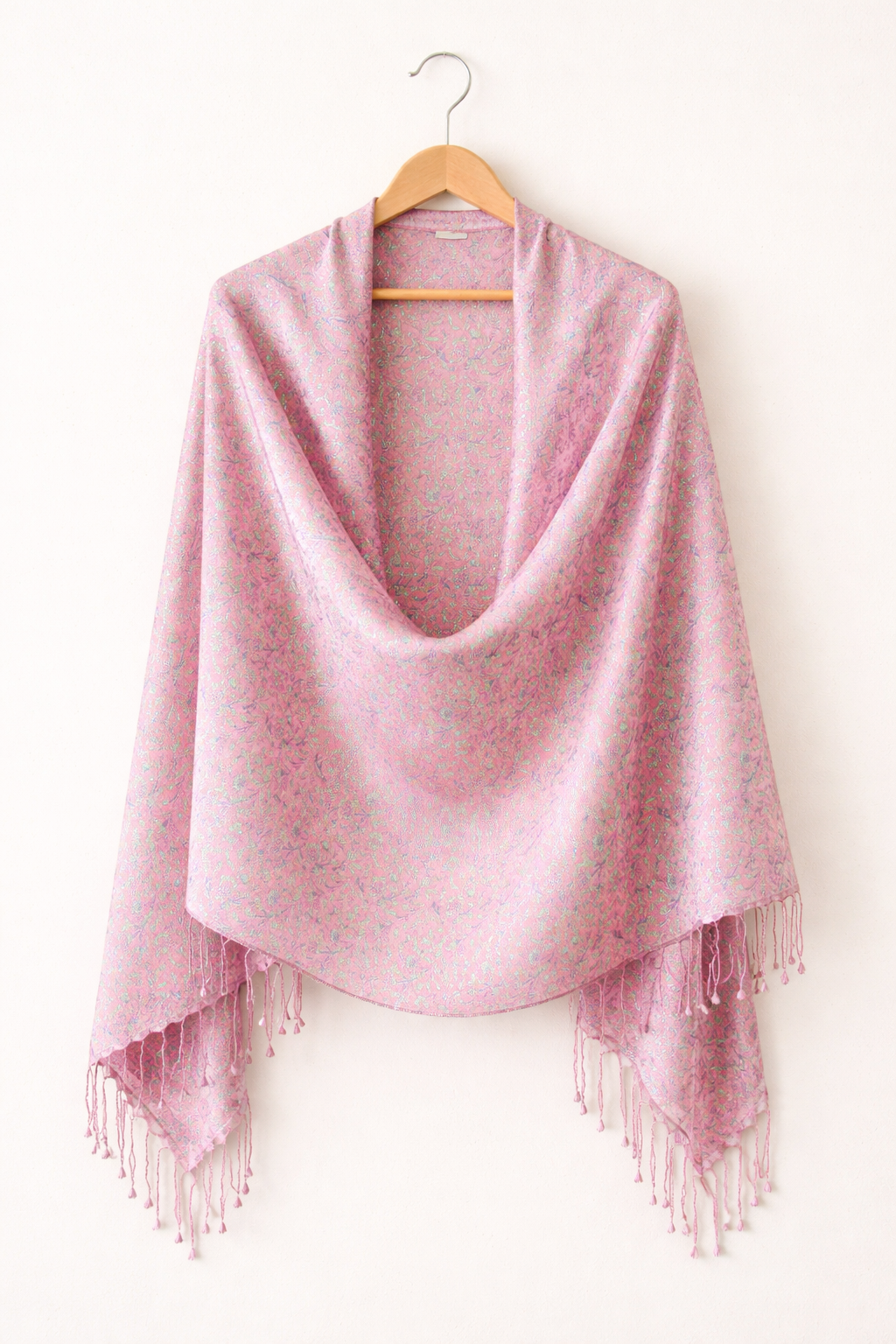
The word Himroo comes from the Persian term Hum-Roo, meaning “looking similar,” referring to its resemblance to fine fabrics produced in Delhi.
Himroo weaving is believed to have originated in Persia and is associated with the 14th-century rule of Muhammad-bin-Tughlaq. When he shifted his capital from Delhi to Daulatabad (near Aurangabad), many weavers migrated and settled there. Under rulers like Malik Ambar and during the Mughal period, Aurangabad became a major center for Himroo weaving, attracting many artisans. These luxurious textiles were mainly used by royalty and the elite.
History and Origin
Traditionally, these sarees were donned by royal families and aristocratic ladies during the time of the Marathas, especially under the Peshwas. The Saree gained popularity during festivals and marriages due to its luxurious feel and look created by the silk fabric and weaving.
The design and color of Chandrakala Sarees have changed over time, but one can always see the originality in terms of the fabric used, which is silk, with zari and elegant designs. Thus, it has become a part of Maharashtrian heritage. Today, it holds importance due to its eternal look and feel.
Types of Himroo
- Traditional Himroo – Cotton warp with silk weft and intricate designs.
- Mushru (related fabric) – Both warp and weft made of cotton with simpler designs.
- Khadi Himroo – Made with hand-spun cotton and pure silk yarns.
Created and compiled
Fibres and Materials used
- Warp (Lengthwise): Primarily cotton (20s count) or silk.
- Weft (Widthwise): Silk, Rayon (Art-silk), wool, or metallic threads (Zari).
- Unique Additions: Historically, even peacock feathers were incorporated as supplementary weft threads for a unique luster.
- Modern Shift: Increased use of Staple and Rayon yarns due to cost
- Synthetic dyes for colouring the yarn
Traditional Colours
The colours found in Himroo are mostly Red, Blue, Yellow, Purple, Orange, Violet, Pink.
Multi-coloured combinations are commonly used to highlight designs.
Motifs
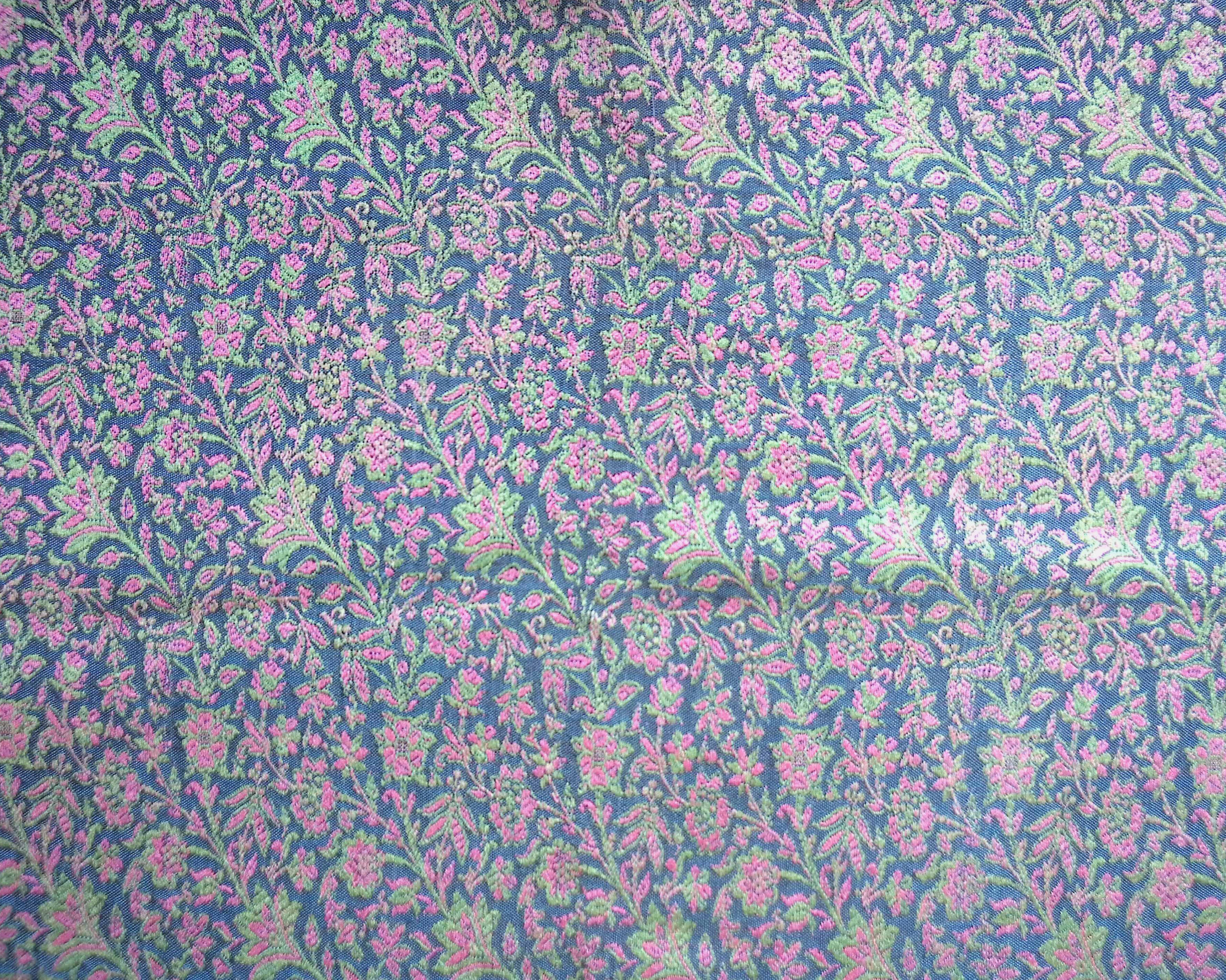
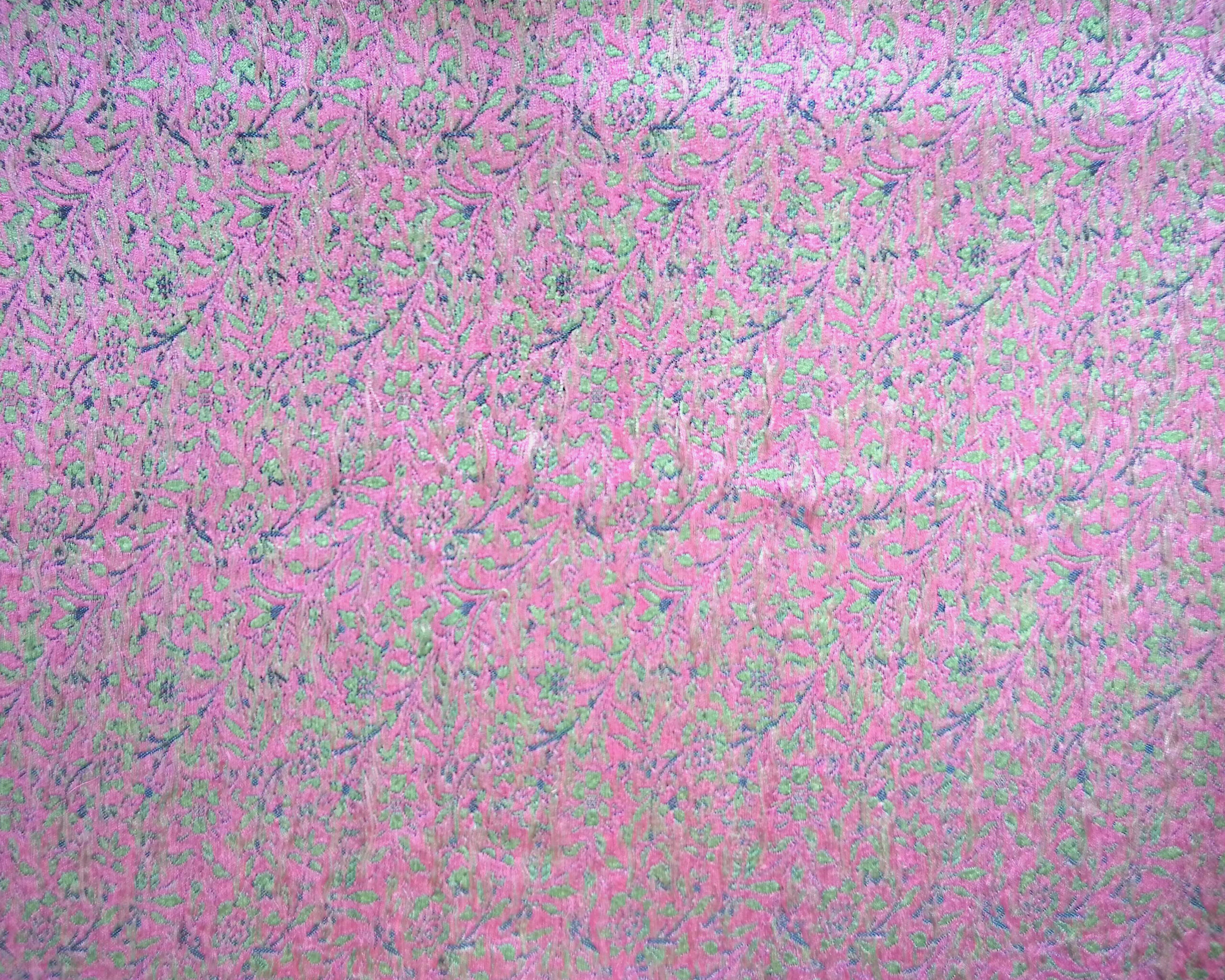
Designs are often copied from the carvings of ancient temples (like Ajanta/Ellora). The key patterns used are mostly Flora/Fauna and mainly Peacocks, Elephants, Lotus, etc, Intricate floral arrays and the classic Paisley (Ambi) design.
The designs create The “Shadow” Effect:, as they are woven in a way that the silk appears on the surface while the cotton stays on the reverse.
Manufacturing method
- Himroo is a very sophisticated form of extra weft weaving carried out on a traditional throw shuttle loom. The most distinctive aspect of the Himroo weaving process is the ‘Jala’ method, which is a manual ‘memory’ of the pattern made up of a complex network of suspended threads.
- While the weaver sits with their legs in a pit to operate their feet on the foot pedals or ‘treadles’ to manipulate the base fabric, the assistant sits on a raised bench to manually operate the ‘Jala’ strings. This process raises the warp threads to make the ‘silk’ or ‘zari’ float on the surface to create the intricate designs like Paisley or Jamawar.
- The technical brilliance behind the fabric of Himroo lies in the fact that the fabric is made by a technique called “shadow,” whereby the silk pattern is on the front side of the fabric, while the cotton warp is mostly on the back side. This means that the luxurious feel of the silk is on the outside, while the gentle feel of the cotton is on the inside, making the wearer feel the comfort of the fabric. T
- his design was originally intended to accommodate the demands of royal Islamic clothing.
- A polished Katla (shuttle) made from wood, known as Shisham wood, is used to pass through the layers of fabric.
Past and Present Practices
Aspect | Past Practices (Traditional) | Present Practices (Modern) |
Materials | • Pure silk, fine hand-spun cotton, and wool. • Real zari made from gold or silver threads. • Indigenous fast vegetable dyes in primary and secondary colors. | • Commercially sourced cotton, staple, and rayon (art-silk). • Artificial or plastic-based zari. • Cheaper synthetic aniline dyes offering a wider range of hues. |
Weaving Process | • Entirely hand-woven on a manual throw-shuttle pit loom. • Use of the complex “Jala” system for design memory, requiring a helper boy. • Skill passed down hereditary lines from father to son. | • Primarily restricted to a few dedicated family-run weaving centers. • Increased reliance on mechanized tools for yarn winding and warping. • Some shift toward power looms and jacquard attachments to offset labor costs. |
Designs | • Traditional patterns like peacocks, elephants, and intricate flower/Paisley motifs. • Designs heavily influenced by the carvings of ancient local temples. • Focus on creating a “shadow” (Hum-Roo) where silk shows on top and cotton touches the skin. | • Fusion of traditional motifs with modern geometric layouts. • Expanded product range including sarees, wall hangings, and dress materials. • Adaptation to modern tastes with lighter textures and varied thread combinations. |
Challenges and Future Focus
- Economic Viability: It is an extremely cumbersome process, time-consuming, with low monetary rewards compared to the power loom method.
- Generational Gap: The lack of interest among the younger generations to learn the intricate art of “Jala” manually.
- Competition: Competition from cheaper artificial imitations produced by machines, as well as the use of artificial fibers.
- Future Focus: Preservation through cooperative societies, along with the marketing of Himroo as a “heritage luxury” for the international collector.
Ghongadi
The Ghongadi is an ancient, hand-woven woolen blanket native to the state of Maharashtra. It is not only an integral part of the region’s pastoral tradition but also acts as a holy elective for the shepherd community, called Dhangars. Ghongadi is believed to have medicinal value for back pain and sleep. It is traditionally used for religious rituals, as a floor mat for guests, and for the Dhangars, who use it as a rugged covering during the monsoon and winter seasons.
History and Origin
Ghongadi” is an age-old & extremely popular piece of woolen textile used & made in rural areas of Maharashtra. The “Ghongadi” is a regional name for the hand-spun, hand-woven blanket of Maharashtra (One of the historically prime states of India) made in pure “Desi” wool. The “Ghongadi” is also mentioned in the cultural as well as traditional folklore of Maharashtra that describes a nomadic community called “Dhangars”- (the Shepherds) of the region who breed & posse ‘Desi sheep’ of various rural regions such as Marathwada, Vidarbha & Solapur. It is often linked with the deity Lord Biruba and is an integral part of the Dhangar identity.
Types of Ghongadi
- Rough Ghongadi: A thick, coarse variety used primarily for bedding and protection against heavy rain.
- Fine/Soft Ghongadi: Woven with finer wool, often used for ceremonial purposes or as a gift.
Gaj (Bordered) Ghongadi: Features specific colored borders, usually red or white, signifying different sub-communities or regions.
Fibres and Materials used
It is primarily made with Sheep Wool, specifically sourced from the native Deccani sheep. The yarn is treated with a paste made from tamarind seeds or corn flour to provide strength and stiffness. The wool retains its natural lanolin, which provides water-resistant qualities.
Traditional Colours
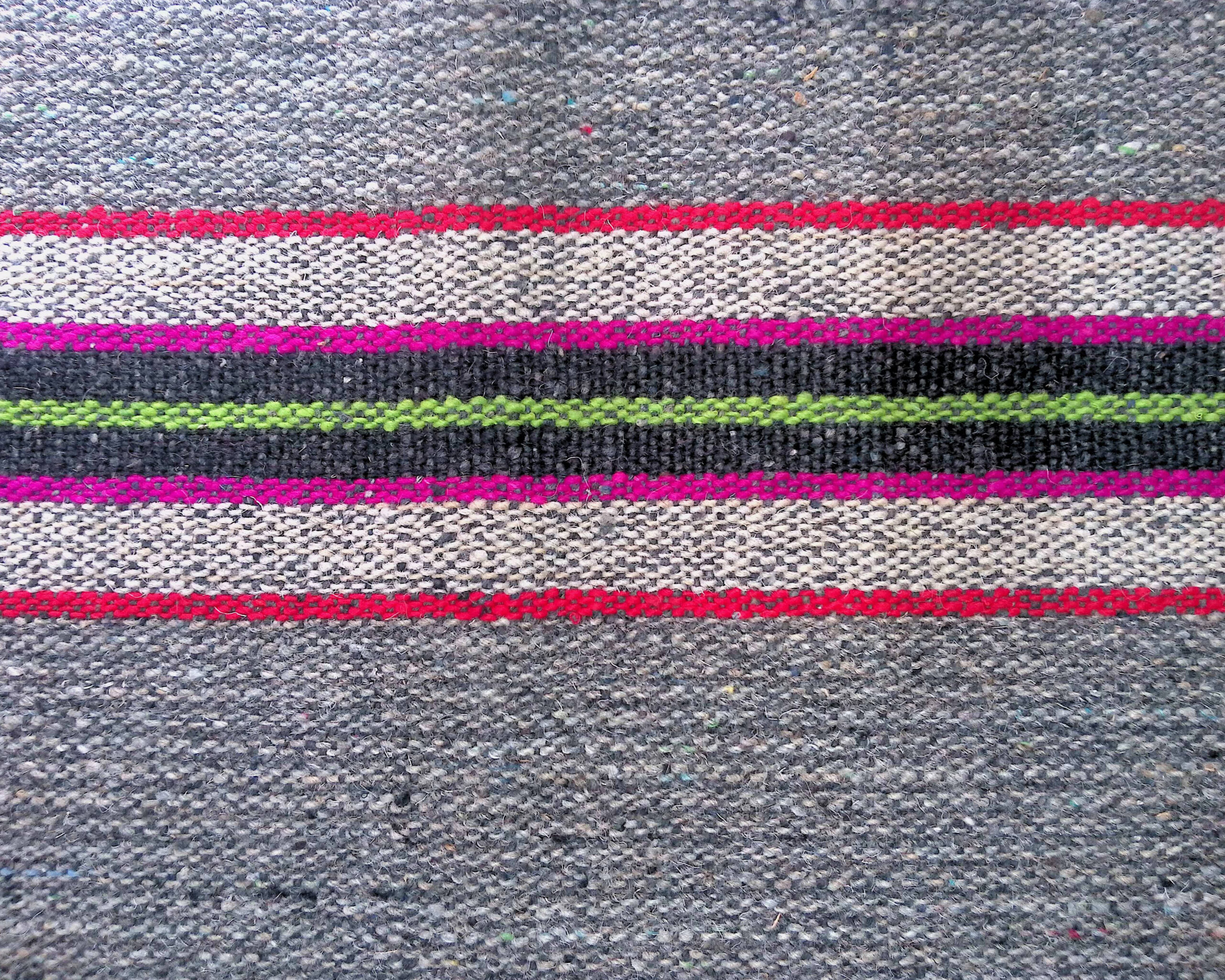
Most Ghongadis are in the natural colors of the sheep: Black, Grey, and White.
Small quantities of colored wool in the colors Red and Yellow are used for the borders, called Kanth.
Motifs
Ghongadi is different from Himroo in that the former is simple. The “motif” here is essentially the stripes at the two ends of the blanket, arranged horizontally or vertically. The central part of the fabric is often plain so that the texture of the hand-spun wool is visible.
Manufacturing method
- The wool is hand-shorn from the Deccani sheep and is then sorted according to color.
- The wool is cleaned and spun into yarn using a Charkha, a spinning wheel.
- The warp yarn is dipped in tamarind seed paste for the purpose of preventing the yarn from breaking during weaving.
- The weaving is done using a pit loom or frame loom, and the fabric is woven in narrow strips, which are then joined together.
Past and Present Practices
Aspect | Past Practices (Traditional) | Present Practices (Modern) |
Materials | • Pure wool shorn from native Deccani sheep. • Organic sizing using tamarind seed paste or corn flour. • Natural wool colors (black, grey, white) with minimal herbal dyes for accents. | • Primarily Deccani wool, though sometimes blended for different textures. • Continued use of organic sizing to maintain traditional medicinal benefits. • Occasional use of synthetic dyes for more vibrant border colors. |
Weaving Process | • Entirely hand-spun using a Charkha and hand-woven on traditional pit looms. • Slow, meticulous weaving in narrow strips later joined together. • Skilled craftsmanship passed down within the Dhangar (shepherd) community. | • Combination of traditional hand-spinning with some mechanized carding processes. • Continued use of pit looms to preserve the authentic coarse texture. • Faster production for commercial markets while attempting to retain traditional skill sets. |
Designs | • Minimalist designs featuring simple horizontal or vertical stripes. • Borders (Kanth) in natural red or white to signify regional sub-groups. • Designs and techniques preserved primarily through oral tradition and community ritual. | • Fusion of traditional stripes with contemporary sizes for use as yoga mats or throws. • Expanded color palette for borders to appeal to urban aesthetic tastes. • Lighter, more versatile versions created for home decor alongside heavy traditional blankets. |
Challenges and Future Focus
- Declining Sheep Population: The reduction in grazing lands for Deccani sheep threatens the raw material supply.
- Labor Intensive: A single Ghongadi can take several days to weave, leading the younger generation to seek easier employment.
- Future Focus: Efforts are being made to brand Ghongadi as an eco-friendly, therapeutic product to appeal to health-conscious urban consumers.


Solapuri Chaddar
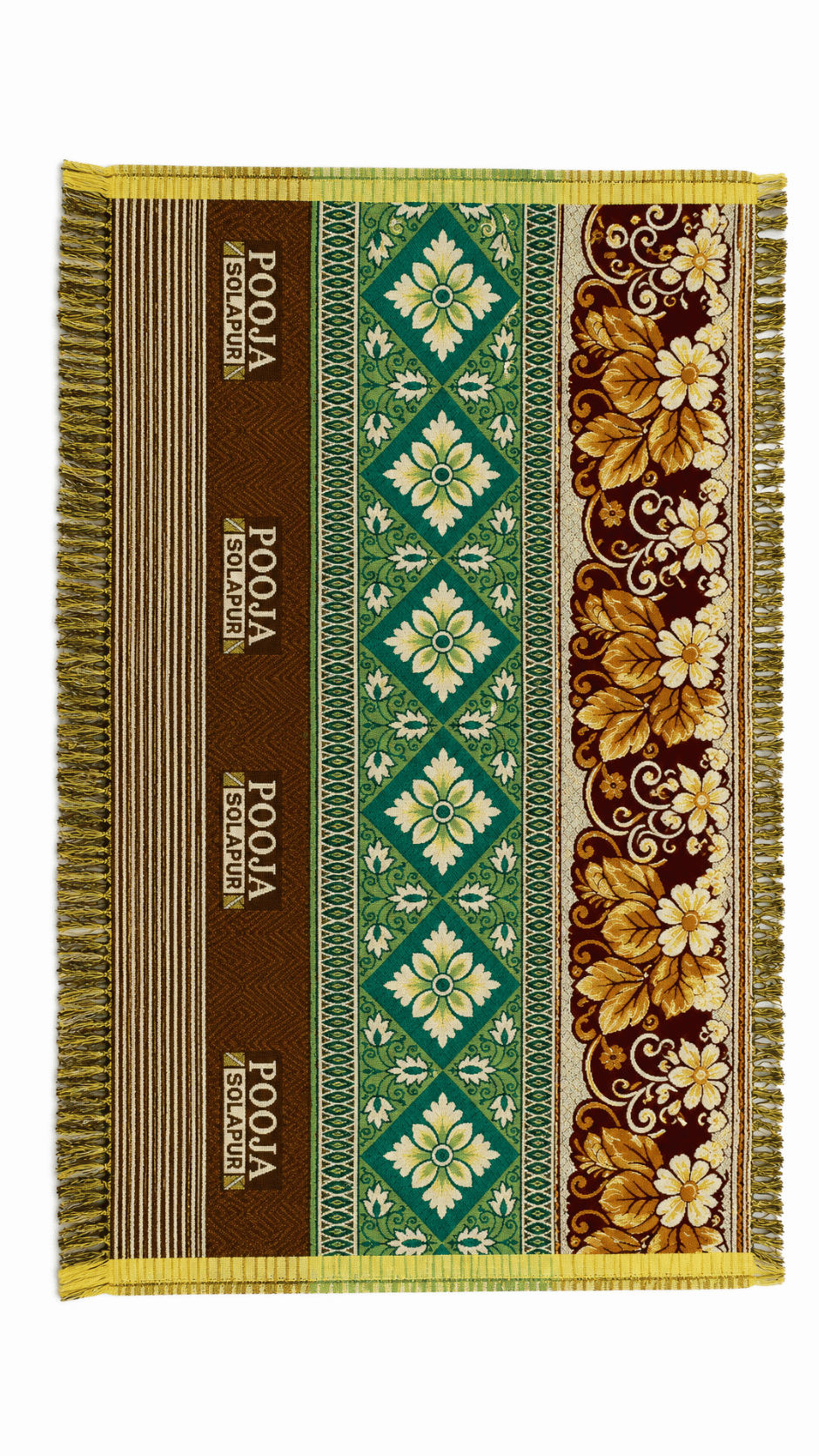
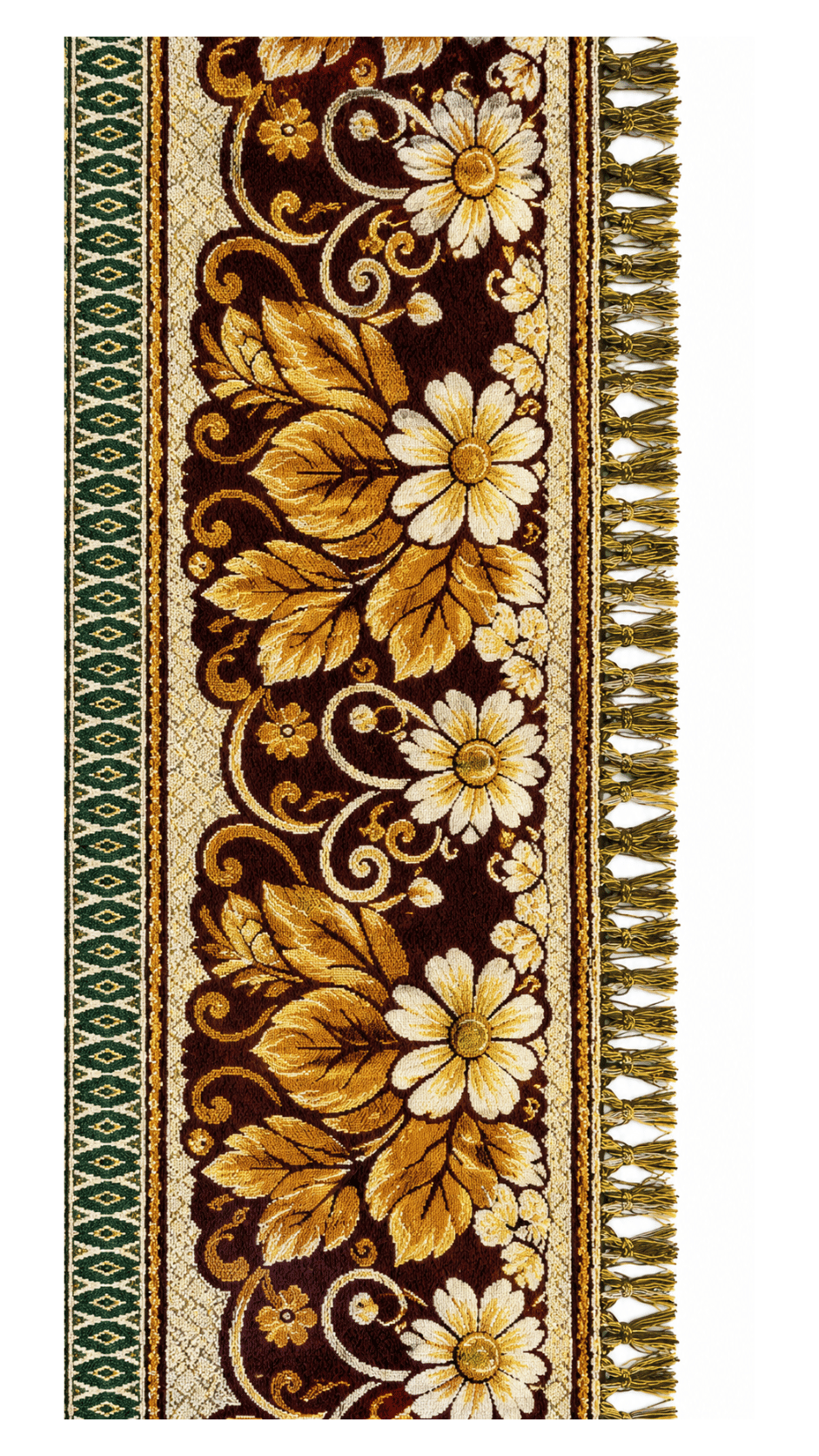
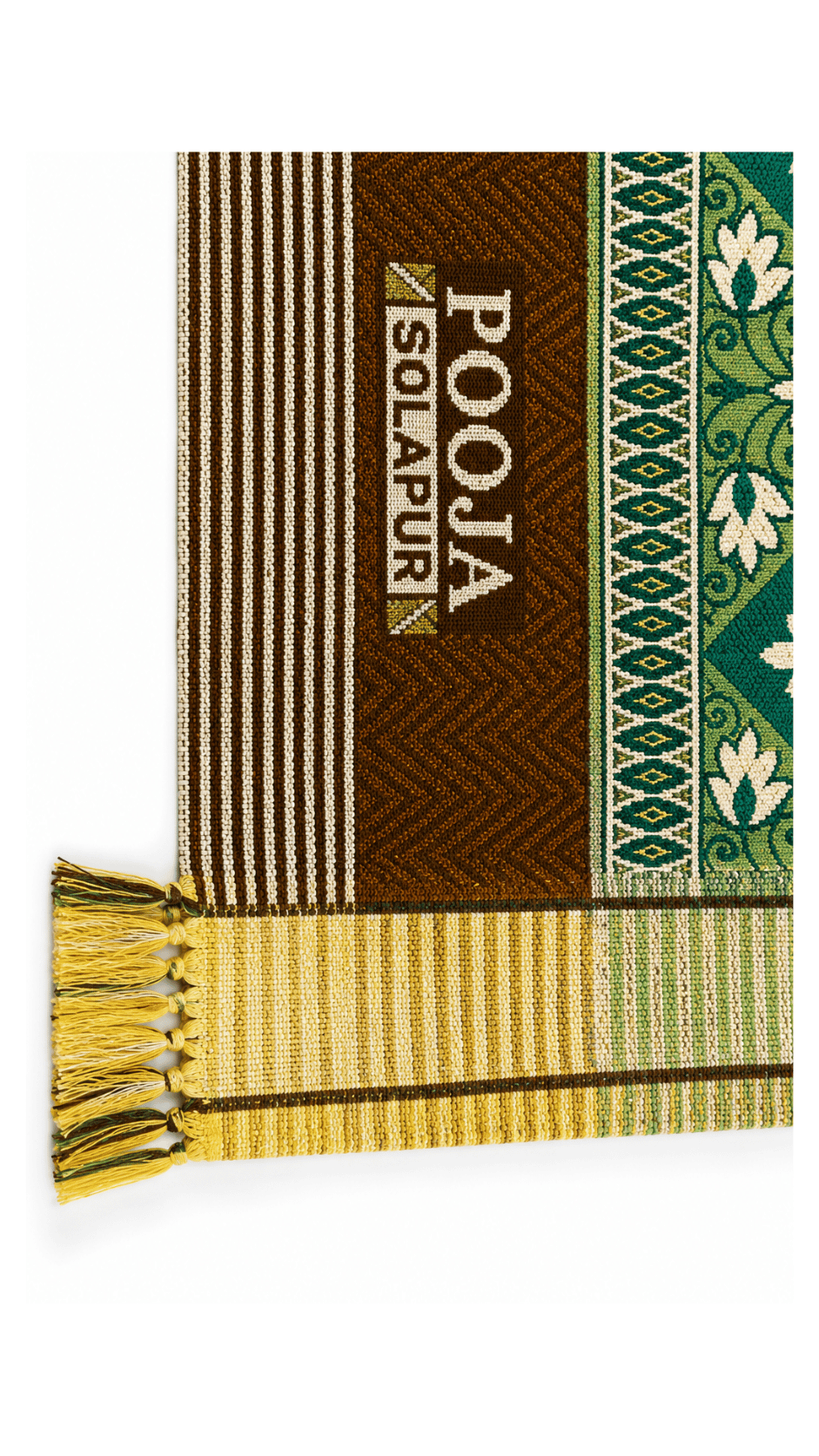
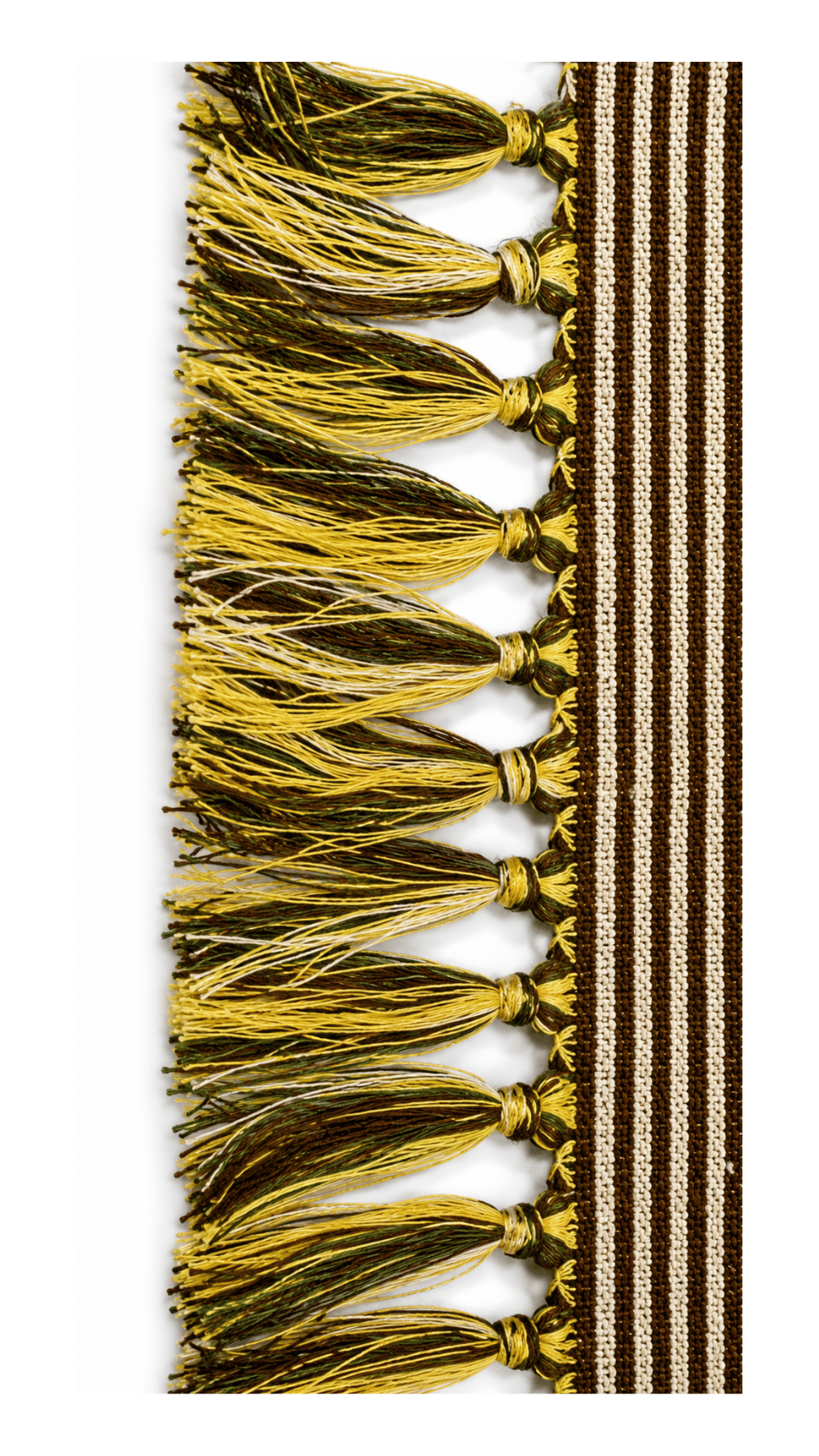
Solapuri Chaddar is a cotton bed spread that is traditionally made in Solapur, a city in the state of Maharashtra in India. Solapuri Chaddar is known to be long-lasting, lightweight, colored, and intricately patterned. Chaddars are generally used as bed covers and are known to provide comfort in various climates.
The craft of Solapuri Chaddar is closely linked to the tradition of handlooms in Solapur and provides employment to thousands of weavers and textile workers in the area.
Solapuri Chaddars were granted Geographical Indication (GI) status in 2005, thus becoming the first GI product of Maharashtra.
History and Origin
The history of Solapuri Chaddars can be traced back to centuries ago and is associated with the textile industry. This craft has grown during the Peshwa rule, with small-scale weaving units operated by artisan families.
This craft has traditionally been practiced by weaving and scheduled castes, such as Padmashali and Devanga, who have migrated from southern India and settled in Maharashtra. This craft has traditionally been practiced as a family business, with men working on looms and women helping in spinning, dyeing, and related processes.
In the 1950s, weaving units were converted into cooperative mills, and jacquard machines were introduced.
Types of Chaddars
- Traditional Handloom Chaddar : Made using handlooms. It is composed of thick cotton yarns. It has traditional geometric and striped designs
- Jacquard Solapuri Chaddar : Jacquard looms are used for weaving, it is composed of floral and peacock designs
- Cotton Blend Chaddar : Composed of cotton blended with viscose or polyester. It is lightweight and easier to maintain.
- Decorative or Gift Chaddar : It has decorative designs and bright colors.
Fibres and Materials used
Traditional Solapuri Chaddars primarily use cotton yarn, chosen for its breathability and durability.
Main materials
- Cotton yarn (warp and weft threads)
- Coarse cotton yarn for strength and thickness
- Sometimes blended fibers such as viscose or polyester in modern versions
The weaving technique often uses the extra-warp principle, where additional yarns create decorative woven patterns integrated into the fabric structure.
Traditional Colours
Traditional Solapuri Chaddars are known for their bold and contrasting colors.
Common traditional colors include:
- Deep red
- Indigo blue
- Emerald green
- Mustard yellow
- Black and white combination
Earlier, these colors were achieved using natural dyes, giving the chaddars rich and earthy tones.
Motifs
Common motifs and patterns
- Stripes (Patta / Patti)- One of the most recognizable designs. It has alternating bands of contrasting colors
- (Chaukat / Bidi) – Squares, diamonds, and checkered designs
- Stylized flowers woven across the surface
- Peacock (Mor) motifs
- Textured patterns created by manipulating warp and weft threads
Manufacturing method
1. Yarn Preparation
Cotton yarn is spun and strengthened by twisting and doubling.
2. Dyeing
Yarns are dyed in desired colors.
3. Winding and Warping
Threads are wound onto bobbins and arranged as warp threads on the loom.
4. Design Setting
Patterns are programmed using dobby or jacquard mechanisms.
5. Weaving
The fabric is woven using warp and weft threads on handlooms or power looms.
6. Finishing
The chaddar is washed, pressed, inspected, and packaged.
This careful process ensures the fabric remains strong, breathable, and long-lasting.
Past and Present Practices
Aspect | Past Practices (Traditional) | Present Practices (Modern) |
Materials | • Pure cotton yarn from local sources • Natural dyes from plant extracts • Thick hand-spun yarn | • Commercial cotton and cotton blends • Synthetic or chemical dyes • Use of viscose or polyester blends |
Weaving Process | • Entirely manual weaving on pit looms \ • Family-based craft with skills passed through generations • Slow and labour-intensive production | • Use of jacquard and power looms • Mechanized processes for winding and warping • Faster production while retaining some traditional techniques |
Designs | • Simple geometric patterns, stripes, and checks • Limited but bold color combinations • Motifs inspired by nature and local culture | • More complex jacquard designs • Wider color palette due to synthetic dyes • Fusion of traditional and modern motifs |
Challenges and Future Focus
- One of the major problems is that there is a threat of competition from synthetic textiles and imported products, which are generally cheaper. Moreover, there is a lack of demand in this product, as many are opting to buy soft blankets and bedsheets.
- Another problem is that of high production costs involved in the craft of handloom weaving. Also, water scarcity and increased prices of raw materials are adding to the costs of production.
- Another problem is that of fake products being sold under the Solapuri chaddar brand, which is a threat to the original craft.
- However, there are a number of ways in which this craft can be sustained and promoted in the future.
- One of these is to strengthen the GI and brand of this craft to ensure that it is authentic.
- Another is to introduce innovative and fashionable designs to attract the younger generation. Moreover, this craft can also be promoted through electronic commerce sites to reach a wider audience.
- Another way of promoting this craft is to increase awareness about Indian textiles all over the world, thus increasing the market and resulting in the growth of this craft.