
Department of Textile Science &
Fashion Design
About the Department
The Department of Textile Science & Fashion Design at Dr. BMN College of Home Science, Mumbai is dedicated to blending India’s rich textile heritage with contemporary fashion education. The department nurtures creativity, innovation, technical expertise, and entrepreneurial thinking while promoting awareness of traditional crafts and sustainable textile practices.
The academic program provides an interdisciplinary foundation in textile science, apparel design, fashion technology, and merchandising, enabling students to understand both the creative and scientific aspects of the fashion and textile industry. Through a balanced approach of theoretical learning, practical training, research exposure, and industry interaction, students develop the skills required to succeed in diverse professional roles.
Modern laboratories equipped with industrial sewing machines, embroidery machines, knitting equipment, and digital design resources support hands-on learning and technical skill development. Continuous upgradation of facilities through UGC, CPE, and RUSA grants has significantly enhanced the department’s infrastructure and teaching capabilities.
The department has consistently demonstrated academic excellence, producing two consecutive university gold medalists in the B.Sc. program. Students have also gained international exposure by representing India in prestigious competitions such as the International Design Competition organized by the Society of Dyers and Colourists in London.
Through industry collaborations, workshops, study tours, and community engagement initiatives, the department prepares students for careers in fashion design, textile research, merchandising, apparel production, entrepreneurship, and sustainable fashion development.
Vision
To be a center of excellence in textile and fashion education that integrates traditional textile heritage, innovative design practices, and sustainable technologies, while preparing students to become creative professionals and responsible global citizens.
Mission
- To provide high-quality education in textile science and fashion design through an interdisciplinary and skill-based curriculum.
- To encourage creativity, innovation, and research in textile and apparel design.
- To promote sustainable practices and preservation of traditional textile crafts.
- To strengthen industry interaction and experiential learning opportunities for students.
- To nurture entrepreneurial abilities and professional competence among future fashion professionals.
Students Gain Expertise In
- Textile Science & Technology – Fiber identification, fabric construction, chemical processing, dyeing, and finishing techniques.
- Fashion Design & Illustration – Sketching, digital fashion illustration, trend forecasting, and creative concept development.
- Apparel Production & Merchandising – Pattern making, draping, garment construction, CAD (Computer-Aided Design), and industrial production processes.
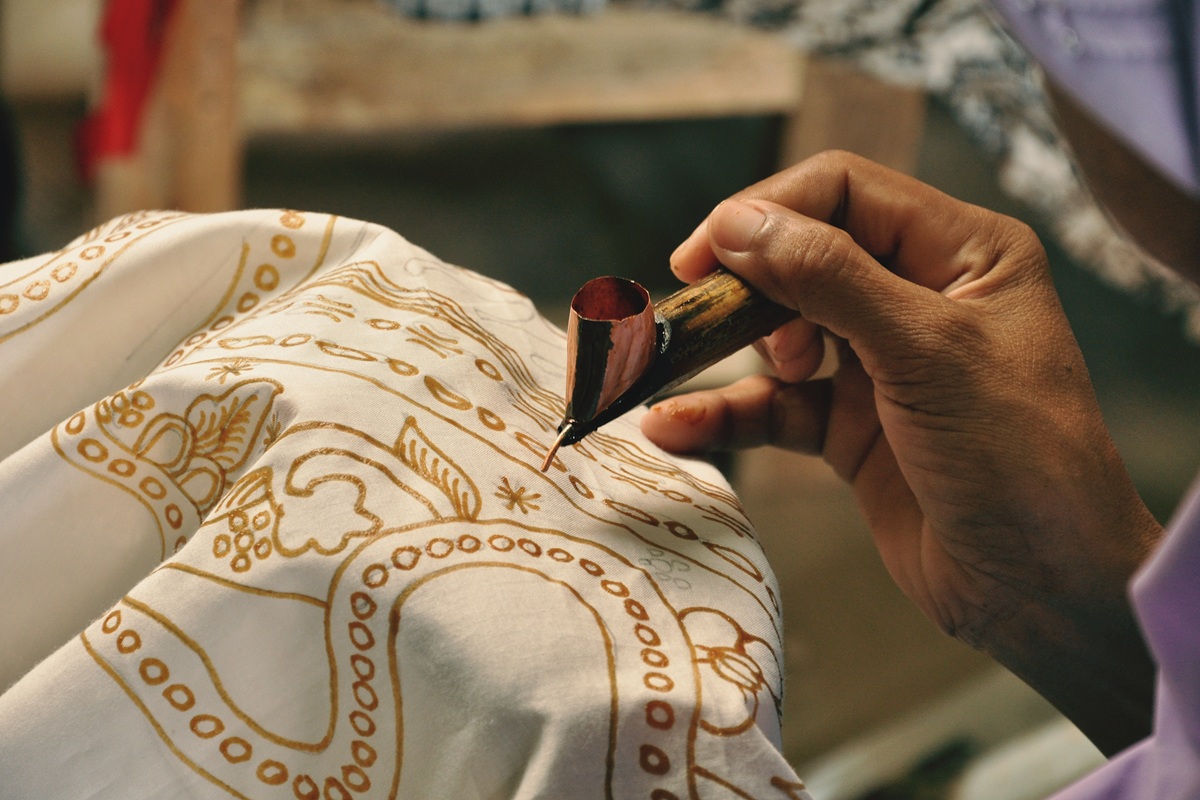
- Surface Ornamentation – Indian embroideries, handloom weaving, block printing, tie-dye, batik, and embellishment techniques.
- Quality Control & Sustainability – Textile testing, eco-friendly materials, sustainable fashion practices, and ethical sourcing.
- Digital & Smart Textiles – Wearable technology, technical textiles, and innovative material development.
- Fashion Marketing & Retail Management – Branding, consumer behavior, visual merchandising, e-commerce, and trend analysis.
- By integrating traditional craftsmanship with contemporary technology, we ensure our students remain at the forefront of industry advancements.
Entrepreneurial Focus & Industry Readiness
Entrepreneurship is at the heart of our program. We encourage students to explore business opportunities in fashion, textiles, and retail, providing them with:
- Entrepreneurial Skill Development – Business planning, fashion forecasting, brand development, and financial management.
- Hands-on Incubation Support – Training in product development, supply chain management, and digital marketing.
- Exposure to Industry Experts & Workshops – Guest lectures, industrial visits, and collaboration with successful entrepreneurs.
Graduates are equipped to establish their own fashion labels, garment manufacturing units, textile printing businesses, boutiques, and online retail ventures.
Collaboration with Paramparik Karigar Association A unique feature of our program is our partnership with the Paramparik Karigar Association, which connects students with master artisans specializing in:
- Handloom weaving techniques (Banarasi, Kanjeevaram, Pashmina, etc.)
- Traditional dyeing and printing (Ajrakh, Bandhani, Kalamkari, etc.)
- Heritage embroidery styles (Chikankari, Phulkari, Kantha, Zardozi, etc.)
This collaboration fosters an appreciation for Indian textile heritage while enabling students to incorporate traditional artistry into contemporary fashion.
Strengths of the Department

Modern infrastructure and laboratories with advanced garment construction and textile testing facilities.
Strong focus on skill development and practical training.
Experienced faculty actively engaged in research and academic development.
Industry collaborations and expert sessions for professional exposure.
International and national participation in design competitions.
Integration of NEP-based multidisciplinary and vocational courses.
Career Pathways & Alumni Network
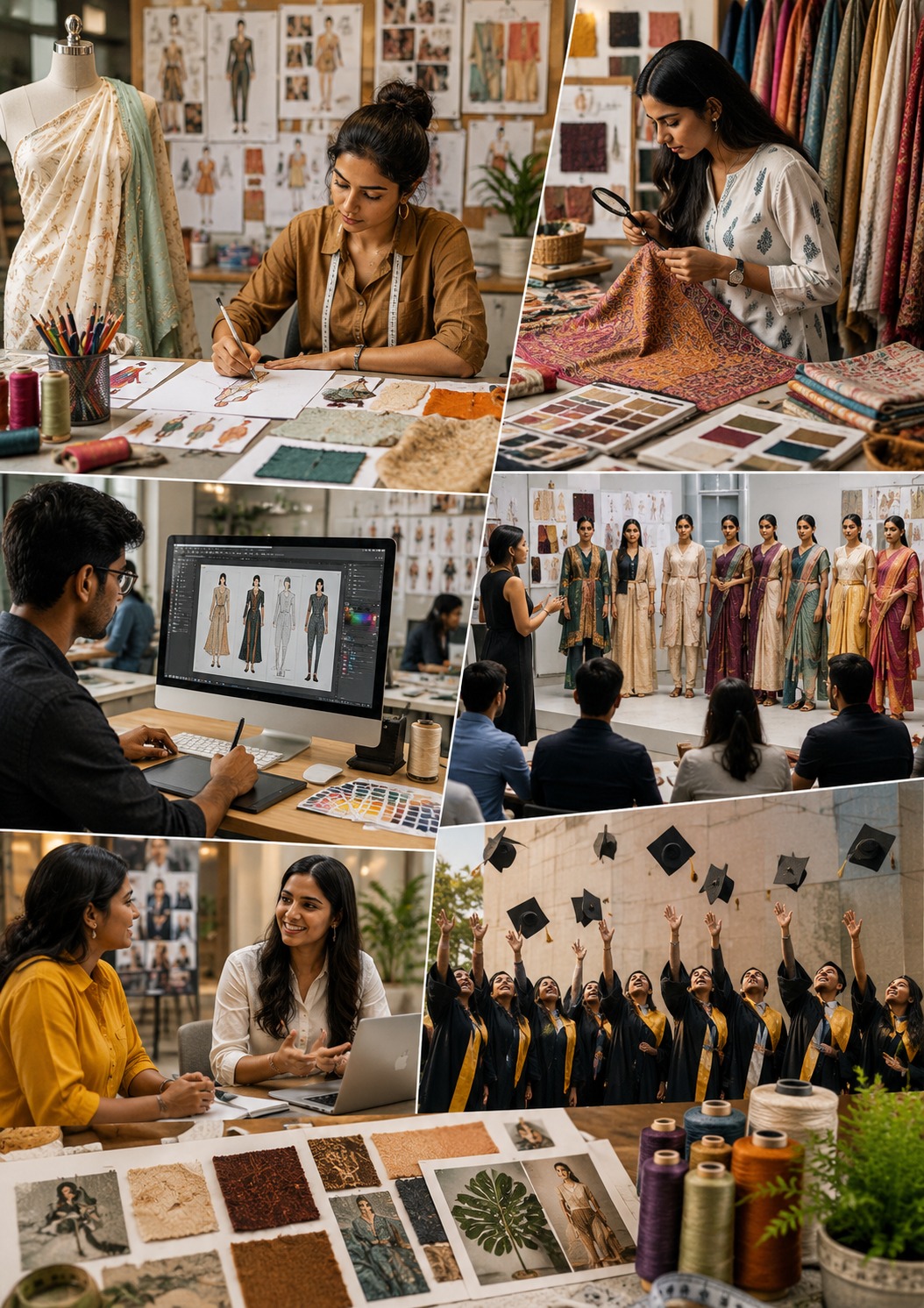
Our strong alumni network plays a vital role in mentoring students and facilitating job placements. Graduates find opportunities in diverse roles, including:
Design & Product Development
- Fashion Designer (Women’s wear, Men’s wear, Kidswear, Ethnic wear, Western wear)
- Textile Designer (Print, Knitwear, Embroidery, Sustainable textiles)
- Graphic & CAD Designer (Digital fashion design, AI in textiles)
- Costume Designer (Film, Theatre, Television)
Production & Quality Management
- Apparel Production Manager (Manufacturing units, Export houses)
- Quality Control Analyst (Textile and apparel testing laboratories)
- Textile Engineer (Research & Development, Sustainable innovation)
Retail & Marketing
- Merchandiser (Domestic & international fashion brands)
- Retail Buyer (Department stores, E-commerce platforms)
- Visual Merchandiser (Store design, Fashion communication)
- Fashion Blogger/Vlogger (Trend analysis, Digital marketing, Styling)
Entrepreneurship & Self-Employment
- Boutique Owner (Custom-made clothing, Luxury wear, Wedding couture)
- Fashion Accessories Designer (Handbags, Jewelry, Footwear)
- Home Textile Entrepreneur (Cushions, Curtains, Upholstery)
- Customized Clothing Specialist (Maternity wear, Adaptive clothing for special needs)
Unique Features
Skill-Based Learning
The department emphasizes hands-on training in garment construction, pattern making, textile processing, surface ornamentation, and digital design, ensuring students gain practical expertise.
Experiential Learning
Students participate in fashion styling workshops, fashion shows, study tours to textile clusters such as Bhuj and Kutch, and industry seminars, gaining real-world exposure to the fashion ecosystem.
Entrepreneurship Development
The Navodhyam Club encourages students to transform their creative skills into entrepreneurial ventures. Students design, develop, and market products while gaining practical knowledge in branding, pricing, and digital marketing.
Community Engagement
Through collaborations with organizations such as Vision Rescue NGO, the department conducts skill training workshops for community women and artisan interaction programs, contributing to social empowerment and craft preservation.
Cultural and Heritage Promotion
Activities such as National Handloom Day celebrations and traditional craft workshops with Paramparik Karigars promote awareness and appreciation of India’s diverse textile heritage.
Higher Education & Research Prospects
For those interested in advanced studies and research, our graduates can pursue:
- M.Sc. in Textile Science and Apparel Design
- M.Design (Fashion Design, Textile Design, Knitwear Design)
- Master in Fashion Management (MFM)
- Postgraduate Diploma in Garment Manufacturing, Textile Design, Retail Management
- Diploma in Computer-Aided Design (CAD)
- Specialized Certifications in Smart Textiles, Sustainable Fashion, and AI in Design
Students Skill Development
The Department of Textile Science and Fashion Design emphasizes the development of strong creative, technical, and professional competencies among students. Through a balanced combination of classroom learning, laboratory practice, workshops, design projects, and industry exposure, students gradually develop expertise in multiple aspects of textile science and fashion design.
The program enables students to transform creative ideas into functional, aesthetically appealing, and market-ready products. By integrating theoretical knowledge with hands-on practice, students gain a deeper understanding of textile materials, garment construction techniques, design aesthetics, and consumer preferences.
Practical training forms a core component of the curriculum. Students work extensively with different fabrics, sewing techniques, textile processes, and surface ornamentation methods, gaining practical experience in areas such as weaving, dyeing, printing, embroidery, and fabric manipulation. These experiences help students understand the relationship between materials, structure, design, and garment functionality.
The curriculum also encourages design thinking, creativity, innovation, and trend awareness. Through activities such as fashion styling workshops, product development projects, fashion shows, and study tours to textile clusters, students gain confidence in presenting their ideas and communicating their design concepts effectively.
In addition to design and craft skills, the program focuses on developing digital competencies and professional skills, including computer-aided design (CAD), portfolio development, visual merchandising, and fashion marketing. These capabilities help students adapt to the evolving demands of the modern fashion industry.
Key Areas of Proficiency
Students develop practical and conceptual expertise in the following areas:
Textile Science and Fabric Technology
- Identification and analysis of natural and man-made fibers
- Yarn formation and fabric construction techniques
- Textile processing, dyeing, and finishing methods
- Fabric testing and quality evaluation
Apparel Design and Garment Construction
- Fashion illustration and design visualization
- Pattern making, draping, and garment development
- Garment construction techniques and finishing methods
- Clothing fit analysis, styling, and product development
Surface Design and Textile Crafts
- Embroidery and decorative textile techniques
- Tie-dye, block printing, and fabric manipulation
- Adaptation of traditional Indian textile crafts into contemporary design
Fashion Technology and CAD
- Computer-aided design (CAD) applications in fashion
- Digital fashion illustration and design visualization
- Fashion portfolio development and presentation
Fashion Merchandising and Marketing
- Trend forecasting and color analysis
- Retail management and visual merchandising
- Fashion branding, communication, and product promotion
Research, Sustainability, and Innovation
- Textile documentation and analysis
- Sustainable and eco-friendly textile practices
- Creative product development and design research
By integrating traditional textile knowledge with modern design practices and digital technologies, the department ensures that students graduate as skilled, industry-ready professionals capable of contributing to the evolving global fashion and textile industry.
These competencies enable graduates to pursue diverse career opportunities in fashion design, textile design, apparel production, fashion merchandising, styling, fashion communication, research, and entrepreneurship.
Entrepreneurial Focus & Industry Readiness
The Department of Textile Science & Fashion Design strongly emphasizes entrepreneurial development and industry preparedness, ensuring that students graduate with both creative expertise and professional competence.
Through the Navodhyam Club, students are encouraged to transform their creative ideas into marketable products. They gain practical exposure to:
- Product design and development
- Pricing and cost calculation
- Branding and packaging
- Digital marketing through social media platforms
- Customer engagement and sales
In addition, the curriculum integrates industry-oriented learning experiences such as:
- Workshops conducted by fashion professionals and artisans
- Study tours to textile clusters and craft regions
- Industry seminars and expert lectures
- Participation in fashion shows and design exhibitions
- Skill training programs in collaboration with NGOs and artisans
The department also actively engages in community outreach programs, where students apply their skills in training workshops for women’s groups and craft communities. These initiatives foster social responsibility, cultural appreciation, and sustainable livelihood support.
By combining technical knowledge, design innovation, entrepreneurial training, and industry exposure, the department prepares students to become competent professionals, creative designers, and future entrepreneurs in the global textile and fashion industry.
Alumni Support
The Department of Textile Science and Fashion Design is strengthened by a vibrant and supportive alumni network that actively contributes to the academic and professional development of current students. Many alumni who are now established professionals in the fashion and textile industry regularly engage with the department through guest lectures, workshops, mentorship sessions, internships, and placement support. Their experiences provide students with valuable industry insights, guidance on career planning, and exposure to evolving professional practices.
Through these meaningful interactions, students gain a deeper understanding of the real-world functioning of the fashion industry, including production processes, design innovation, market trends, and entrepreneurial opportunities. Alumni also play an important role in creating industry linkages, helping students connect with organizations, fashion houses, export companies, and start-ups.
Career Opportunities
Design and Product Development
Career opportunities in this domain include:
- Fashion Designer
- Textile Designer
- Apparel Product Developer
- Fashion Illustrator
- CAD Designer for Fashion and Textiles
- Costume Designer for Media and Entertainment
- Fashion Stylist
- Textile Craft Product Developer
Apparel Production and Quality Management
Career opportunities in this field include:
- Garment Production Executive / Manager
- Quality Control Executive in Apparel Industry
- Production Supervisor in Garment Manufacturing Units
- Technical Designer
- Fabric and Textile Technologist
- Sampling Coordinator in Export Houses
- Apparel Manufacturing Coordinator
Retail, Fashion Merchandising, and Marketing
Career opportunities in this sector include:
- Fashion Merchandiser
- Retail Manager for Fashion Brands
- Visual Merchandiser
- Fashion Buyer
- Export Merchandiser
- Brand Executive in Fashion Companies
- Fashion Marketing and Communication Specialist
- Fashion Blogger / Content Creator
Entrepreneurship and Self-Employment in Fashion and Textile Businesses
Career opportunities in this domain include:
- Boutique Owner
- Fashion Label / Brand Founder
- Online Fashion Business Entrepreneur
- Textile Craft Enterprise Owner
- Design Studio Owner
- Freelance Fashion Designer or Stylist
- Handmade Textile Product Developer
- Sustainable Fashion Entrepreneur