
Gujarat
Bela printing
Bela print is an ancient block-printing technique from the state of Gujarat, known for its intense visuals and large patterns with heavy contrasts. Bela village near Bhuj lends its name to this art of printing the fabric, which is a part of the illustrious block-printing legacy of Kachchh. According to researchers and organizations working for preservation of Kutch’s crafts, Bela printing is not just a craft but a cultural reflection closely tied with Rabari and Kanni communities of the area.
History and Origin
The art of Bela printing was born in the village of Bela and it is from Gujarat’s Kachchh district. Although it has been practiced mostly by the Khatri community, who also use several other block printing methods including Ajrakh and Batik. They’ve been at the heart of this craft for generations. But the waning demand for these hand-printed textiles has meant a dwindling number of practitioners, alongside Mansukhbhai Khatri who is committed to its renaissance.
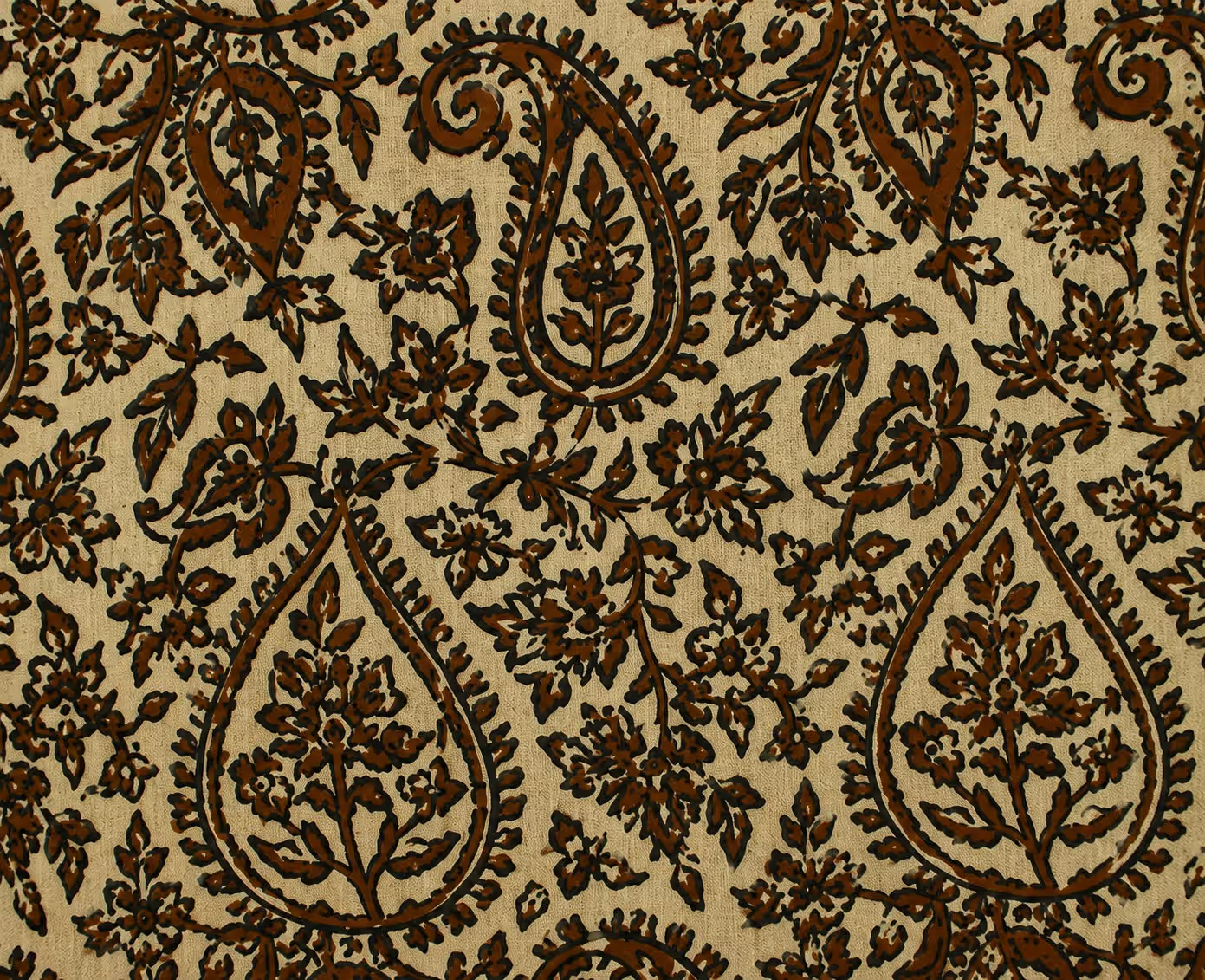
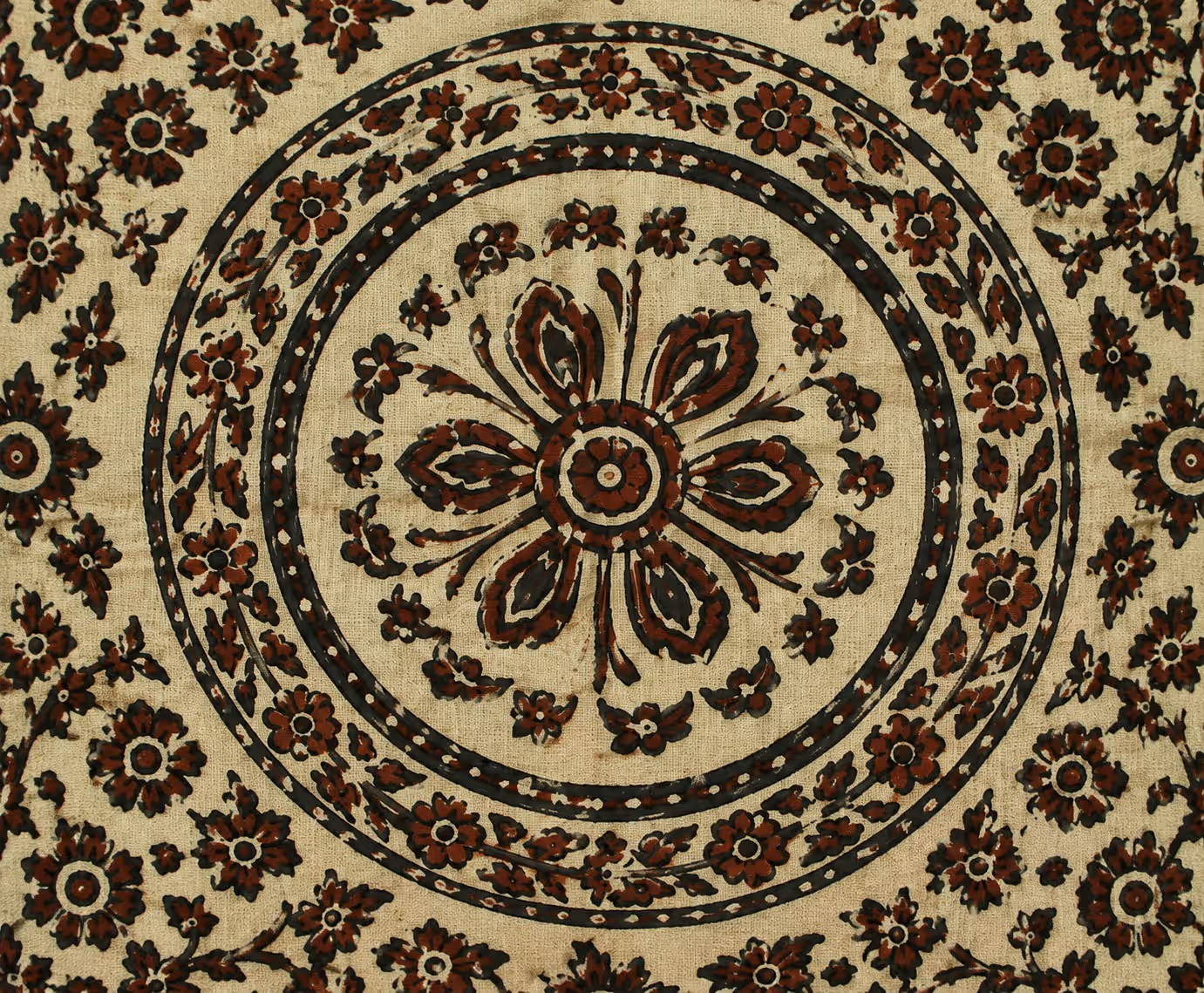
Bela printing is not just a craft, it’s the medium of cultural expression. The patterns and motifs of the art form are based on the tradition, belief and lifestyle of pastoral communities in that area. The bold, oversized geometric motifs are an illusion to the traditional motifs which can be found on Rabari and Kanni women’s attire especially their chaniyas (skirts) and odhanis (headscarves). These fabrics were traditionally worn during a special event, which could be used to celebrate or identify with a community.
Types of Bela Printing
Motifs
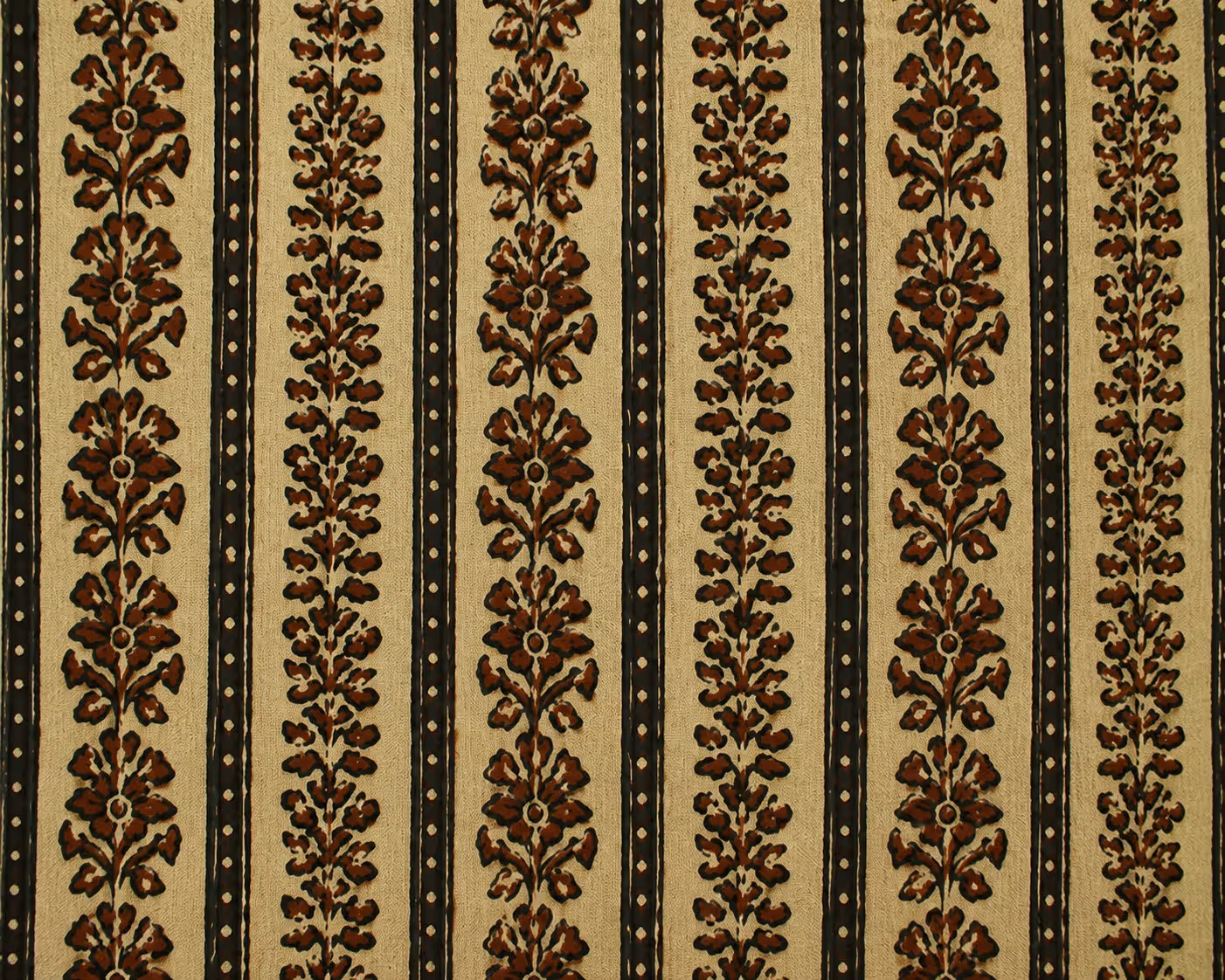
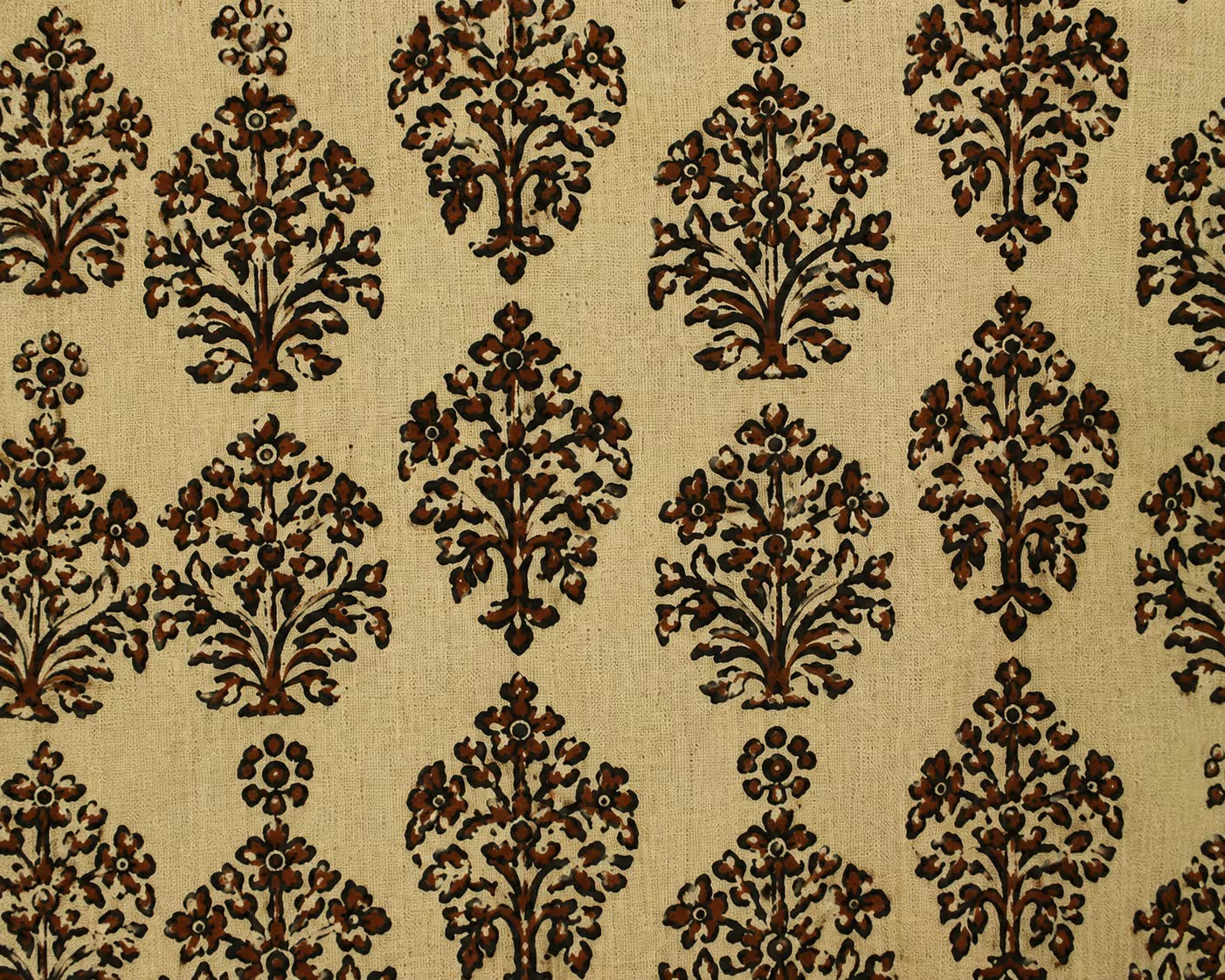
The patterns used in Bela printing are derived from local culture and the environment.
They are characterized by:
Geometric based: Designs are made with shapes such as squares, diamonds and circles.
Floral designs: Patterns are based on local flowers and plants.
Symbolism: Motifs usually represent everyday life, nature and the realm of the spirit.
Big, bold designs: One thing that separates Bela printing from other block-printing traditions is its often oversized, large-scale patterns; many other prints use smaller and more intricate motifs.
Fibres & Materials used
Traditional Colors
Bela Printing is recognised for its sparse but high-contrast colouring, typically red and black. The color comes from a madder root for the red, and a mixture of iron rust, jaggery, and water for the black.
Manufacturing method
The making of a Bela-printed textile is an intricate, multi-step affair that demonstrates the craftsman’s patience and talent.
Preparing the Fabric: First the cotton is washed in a river, which purges any impurities, and then put on rocks to prepare it to receive dyes. It is then kept in a small hole called kundi to make it semi-dry before going for printing.
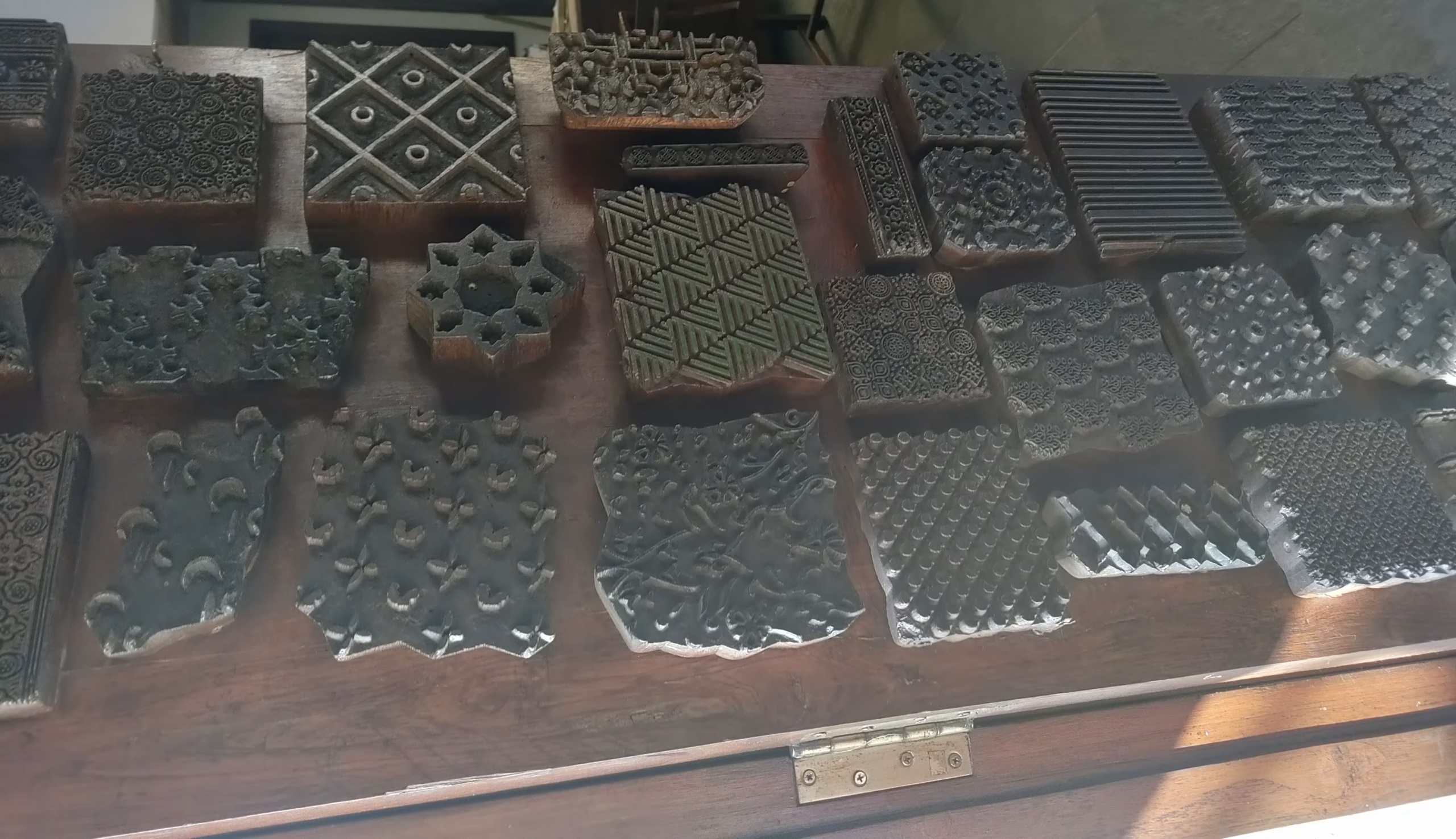
Dye and Block Making: Dyes are made by soaking natural material, such as madder root or iron rust into water. These are combined with organic substances, such as alum and soda ash, which serve to mordant the color so it is permanent. At the same time the woodcarvers chisel out designs in wooden blocks.
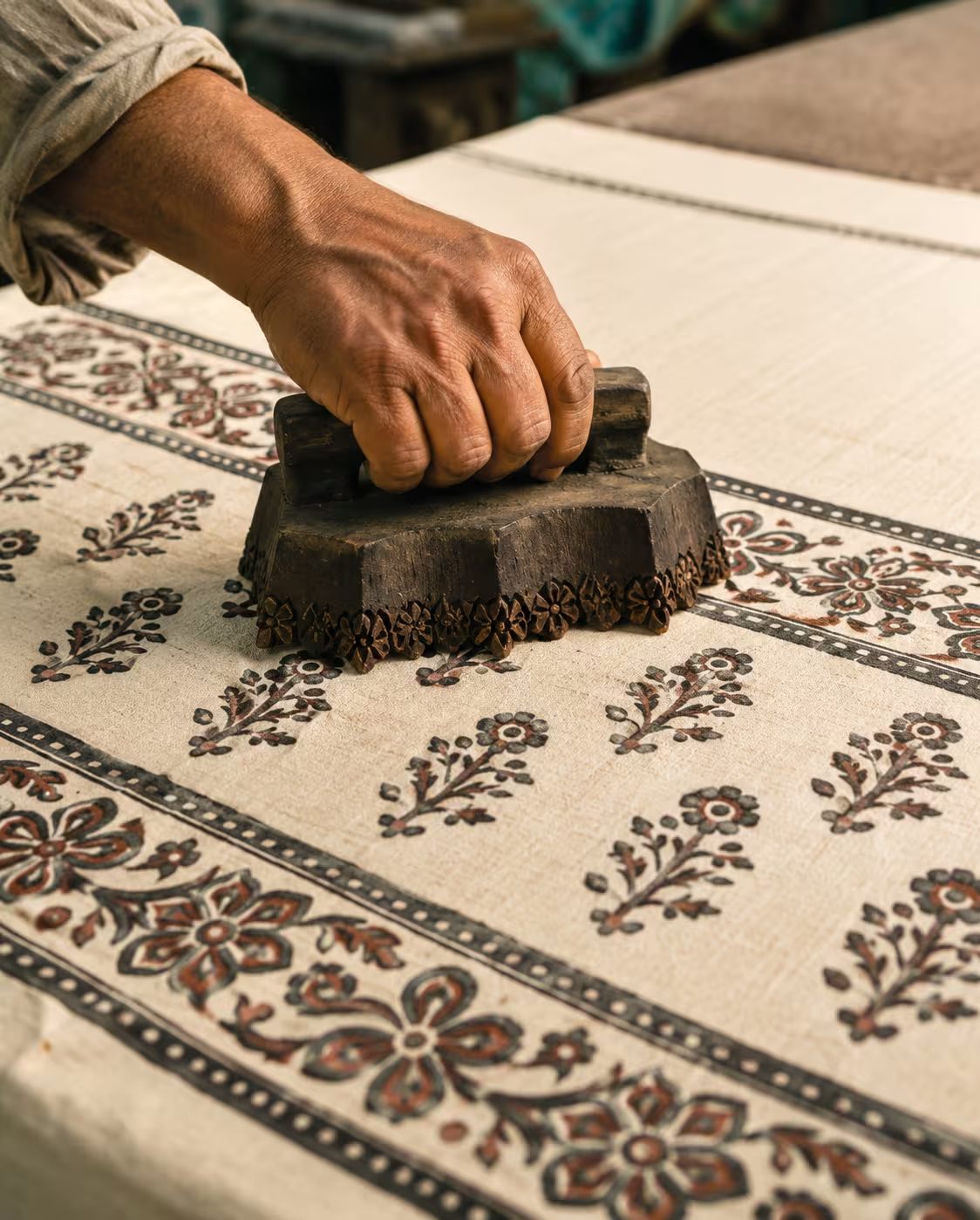
Print exposure: The fabric is placed on a flat horizontal surface. Using a continual and firm pressure, the blocks are dipped into the dye paste and stamped onto the fabric; repeating this process over and over. This is essential for a nice, clean print. The prints were usually set in a repeating time motif to showcase the graphical aspect of the design.
Drying & Finishing: After printing, the fabric is sun-dried as a means of fixing color. It is then washed to extract any remaining dye and could be coated with alum paste as a fixative.
Bela printing is under considerable pressure despite its glorious past. Many have abandoned the craft due to less demand for traditional hand-printed cloth, caused by the popularity of faster and cheaper machine-made fabrics. This has resulted in a loss of craftsmen as younger people move to cities in search of more stable work opportunities. The threat of competition with modern printing methods such as screen and digital printing only adds to these challenges, which put the very survival of this ancient art at stake.
Process –
The Bela printing workflow is a multi-stage affair that will have even a seasoned artisan like me test his patience. Here’s the process of how to make Bela-printed textiles:
Preparing the Fabric –
The material is typically cotton, washed first in a river to remove impurities. This ensures the fabric is clean with no chemicals to interfere with the dyeing process.
The cloth is then spread out in a shallow pit, known as a “kundi,” and allowed to stand so that any excess water can be removed from it, allowing the cloth to become semi-dry before printing.
Preparing the Dyes –
The colour of Bela prints are obtained from plant, vegetable and minerals. Red and black are the most common ones, simply because these two colors are the most stable and the strongest. The dyes are distilled by soaking madder root (for red) and iron rust (for black) in water.
The dyes are combined with alum and soda ash, other natural materials to fix the color, and increase its fastness.
Carving the Wooden Blocks –
The wood blocks for Bela printing are also hand carved, typically from teak or rosewood, and consist of complex designs and patterns.
Every block bears a unique design that is etched into it. The designs generally include geometric figures, flowers and animal motifs, traditional patterns etc. Every other block is a tribute to the workmanship of the builder.
Printing the Fabric –
After making the dyes and blocks, lie the fabric on a table. The dye is then applied to the wooden blocks, which are stamped onto the fabric in a pattern.
Big, bold prints with plenty of strong colour contrasts. Prints frequently work well in a repeated geometric design enhancing the graphical effect of the pattern.
Drying and Finishing –
At the time of printing the fabric is dried in the sun, and sunlight serves to fix the colour in such fashion that it becomes difficult to wash out.
The fabric is then washed to purge excess dye after being dried. The fabric may be treated with an alum paste to increase colorfastness.
Final Inspection and Quality Control –
The last dried and washed fabric is then checked for consistency and caliber. Any printing anomalies are cleaned up to meet the standards of quality for the trade.
Past and Present Practices
Aspect | Past Practices (Traditional) | Present Practices (Modern) |
Material |
|
|
Process |
|
|
Design |
|
|
Challenges and Future Focus
- Near Extinction: The craft is in dire straits, with only one remaining active artisan. The younger generation is unwilling to pursue it due to the low financial returns and long, laborious process.
- Disrupted Trade Routes: The Partition of India and Pakistan severely impacted the craft by cutting off the historical trade route with Sindh (Pakistan), which was a major market for Bela prints.
- Competition: The rise of power looms and cheaper, faster machine-made textiles (e.g., polyester) rendered the time-intensive, handmade products unaffordable and non-competitive, leading to the closure of nearly all artisan workshops.
- Environmental Factors: The drying up of the Saran river near Bela village has forced the last artisan to relocate, as the craft is highly dependent on a good water source for its washing and dyeing process.
- Niche Heritage Market: The future of Bela printing rests on positioning it as an exclusive, high-value heritage product. Its status as an ‘endangered craft’ and its bold, graphic aesthetic can appeal to conscious consumers and designers looking for authentic narratives.
- Patronage and Training: Continued patronage from NGOs, government agencies, and private buyers is essential. A key future focus must be on training and mentoring new apprentices and making the craft financially lucrative to ensure the skill is passed on.
- Collaborative Innovation: Future use will be sustained through continued design interventions that allow the traditional aesthetic to be applied to contemporary items without compromising the fundamental materials and techniques.
- Cultural Documentation: The existing wooden blocks and the artisan’s knowledge are invaluable cultural assets that must be comprehensively documented and preserved for study and inspiration, even if the printing practice cannot be widely expanded.
Motifs
Patola, Patan
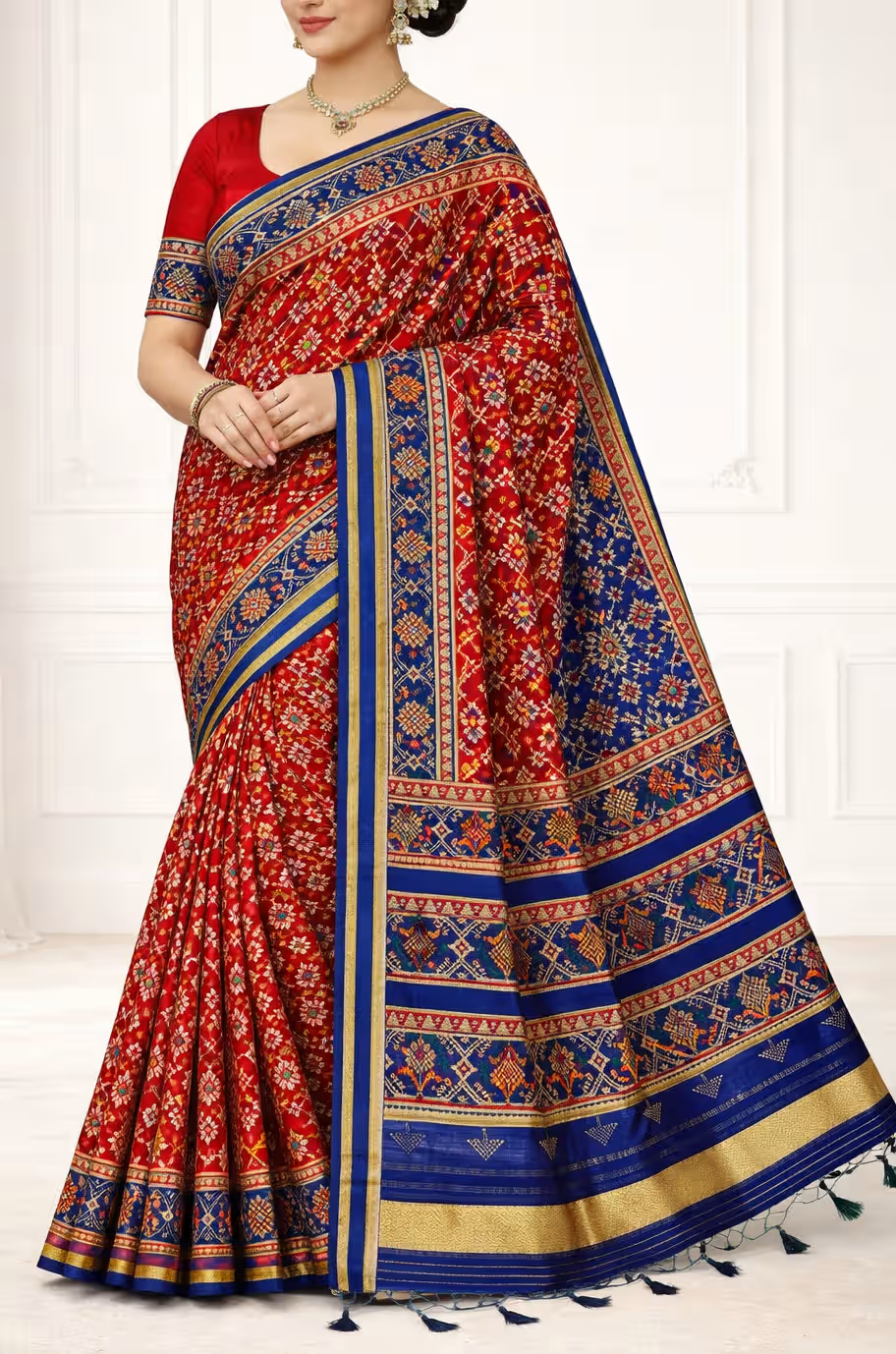
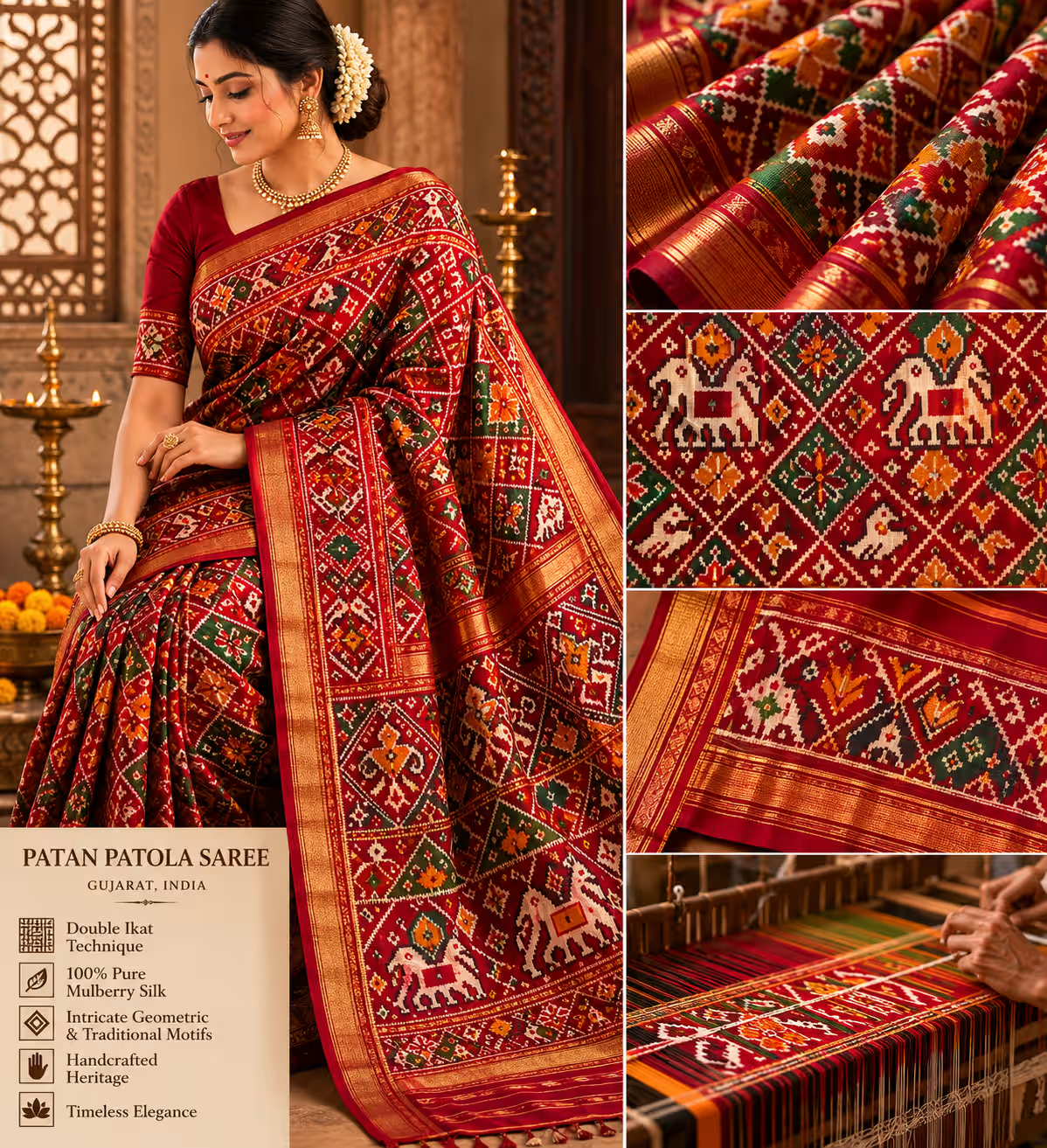
Patola is an art of hand woven silk textile hailing from Gujarat, known for its brilliant geometric patterns and elaborate craftsmanship. Patola, traditionally woven in Patan uses a double ikat weaving method where dyed warp and weft threads are carefully lined up to create the design before being woven -requiring supreme expertise and skill. Today worn by no less than the royalty, Patola sarees have become keepsakes of fine artistry all due to the vibrant textile industry that hails from Gujarat.
History and Origin
Types of Patola
Patan Patola: The original and most expensive form of patola, the double ikat method in which both warp and weft threads are resist-dyed before weaving. The patterns also are featured on each side of the saree, so it is reversible.
Rajkot Patola:This is a contemporary version which is woven using the single ikat process, where only the warp threads are tie-dyed. This results in that the weaving proceeds quicker and less costly. The borders and pallu of Rajkot Patola generally contain zari work.
Fibres and Materials used
Patolas are usually woven in pure silk; early ones were only silk without using any metallic threads. The silk yarn is then degummed and ready for dyeing.
The resist tying, which is an important stage in the process of making a double ikat, is carried out with cotton threads.
The threads are carefully wrapped around various portions of the silk yarn to form specific patterns. Later adaptations, notably in Rajkot Patola, have included zari (gold or silver thread) techniques for the borders and pallu (the loose end of the sari), giving a metallic sheen to woven motifs.
Traditional Colours
-
The shades for Patola are generally prepared by using organic colors, which were the traditional vegetable colours. The dyes used were famous for being deep colours that did not bleed or fade with the passage of time and in turn the Patola gained a renown for their longevity. The colors are dyed from light to dark, and the threads are retied every time there is a new color. The peacock and bright colour combinations in deep greens, yellows and reds are significant to Patan Patola. Nowadays synthetic acid or reactive dyes have gained ground. That enabled a wider and brighter range of colors to be created faster, but at the expense of sometimes slightly off-kilter shades from the classic, more muted earth tones made with natural dyes.
Motifs
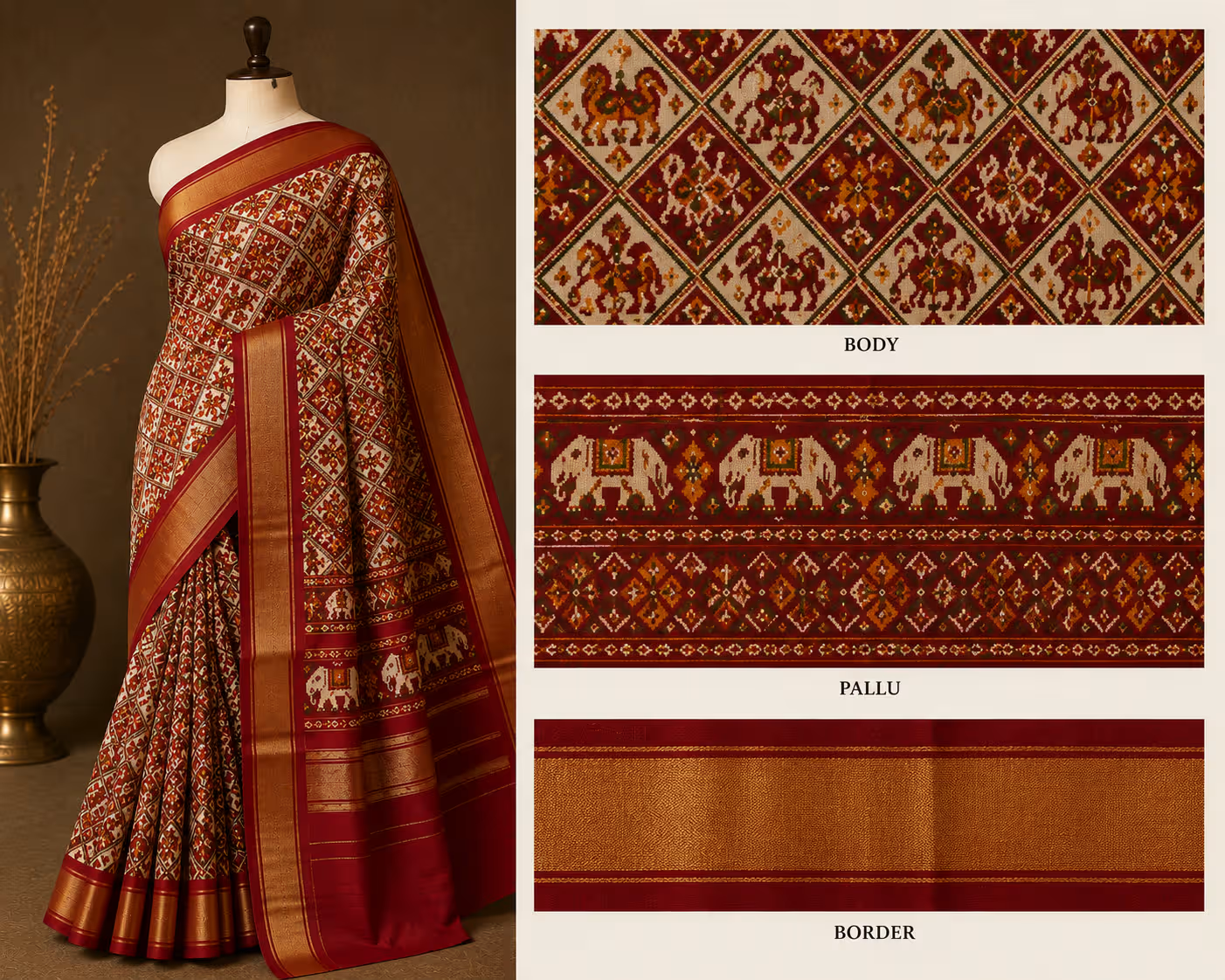
Patan Patola designs are highly stylized, geometric, and often symbolic.
Patola patterns, also called Bhat, are often based on nature and symbolism. The popular and fortunate figure is that of an elephant (Kunjar bhat).
Traditional motifs are generally grouped into four main types catering to different communities:
Jain and Hindu Communities– Figurative and detailed designs, including:
- Nari Kunjar Bhat (Women and Elephant pattern)
- Popat Bhat (Parrot pattern)
- Phul Bhat (Flower pattern)
- Paan Bhat (Peepal Leaf motif)
- Vagh Kunjar (Tiger and Elephant)
Muslim Communities: Typically feature geometric designs and flower patterns, worn mostly for weddings.
Maharashtrian Brahmins: Wear the Nari Kunj (bird design) with plain, dark-colored borders.
Other Traditional Motifs: Ratan Chowk (Floral in geometric pattern), Chhabdi (Basket), and Chokta (Square/Box).
Manufacturing method
The Patola weave is a wonder of precision and master skill. It is one of the most complicated types of weaving in the world.
Yarn Making: Silk hanks are boiled off (for gum) and reeled on to hand engagements. These threads are twisted to enhance their strength.
Gathering up for Resisting (tano and vano): The warp threads (tano) are tied to a frame independently from the weft threads (vano). Weavers, seasoned where they have learned most of the patterns by heart but although each line is already printed on the woodwork in logarithmically curved chalkpages too many layered patterns are per ease. One,” or a complete sari, has over 2,500 warp threads that have to be precisely aligned.
And to Resist: This is the heart of the double ikat process. Bundles of yarn are tied firmly with cotton. This act is repeated with each unique color, allowing new parts of the yarn to come into contact with the dye.
Dyeing: Yarns are dyed in multiple colors, from the lightest to the darkest. The tied areas of the fabric resist the dye, resulting in wonderful patterns. After dyeing, the ties are taken off and the final pattern is unveiled on threads.
Weaving: The weaving is done on a special inclined handloom. It takes two weavers: the master, who works the heddles and shuttles; and an assistant to aid in alignment. By hand, the assistant manipulates both warp and weft threads to synchronize with pre-dyed patterns, in a process demanding meticulousness as well as continuous application of skill. It’s this painstaking process that explains why a single Patola sari can take anywhere from six months to more than a year to complete.
Past and Present Practices
Aspect | Past Practices (Traditional) | Present Practices (Modern) |
Materials |
|
|
Weaving Process |
|
|
Designs |
|
|
Challenges and Future Focus
- Time and Cost: The sheer labor-intensive nature (6 months to a year for one sari) and the resulting high cost limit the market to a small, elite clientele, making economic sustainability challenging.
- Competition from Imitations: The market is flooded with cheaper, machine-made replicas or single-ikat versions that confuse consumers and undercut the prices of authentic Patan Patola.
- Succession Crisis: The younger generation is often reluctant to enter the craft due to the intense labor, long hours, and uncertainty of income, threatening the continuity of the specialized skill set.
- Availability of Raw Materials: Sourcing authentic natural dyes and high-quality silk can be inconsistent and expensive.
- Luxury and Heritage Segment: Patola will continue to thrive as a high-end luxury, heirloom, and heritage product, with a focus on its cultural and historical value, appealing to a niche of affluent, conscious consumers.
- Sustainable and Ethical Focus: A future emphasis on sustainable practices using 100% natural dyes and ethical production, will appeal to the growing global demand for eco-friendly luxury textiles.
- Cultural Diplomacy: The fabric will remain a symbol of Indian textile art on the world stage, potentially featured in international cultural exchange programs and high-profile exhibitions.
- Innovation in Design Application: While retaining the core technique, greater use of Patola motifs in haute couture, accessories, and limited-edition designer collaborations will ensure its relevance in the modern fashion industry.
Brocades and Kinkhabs
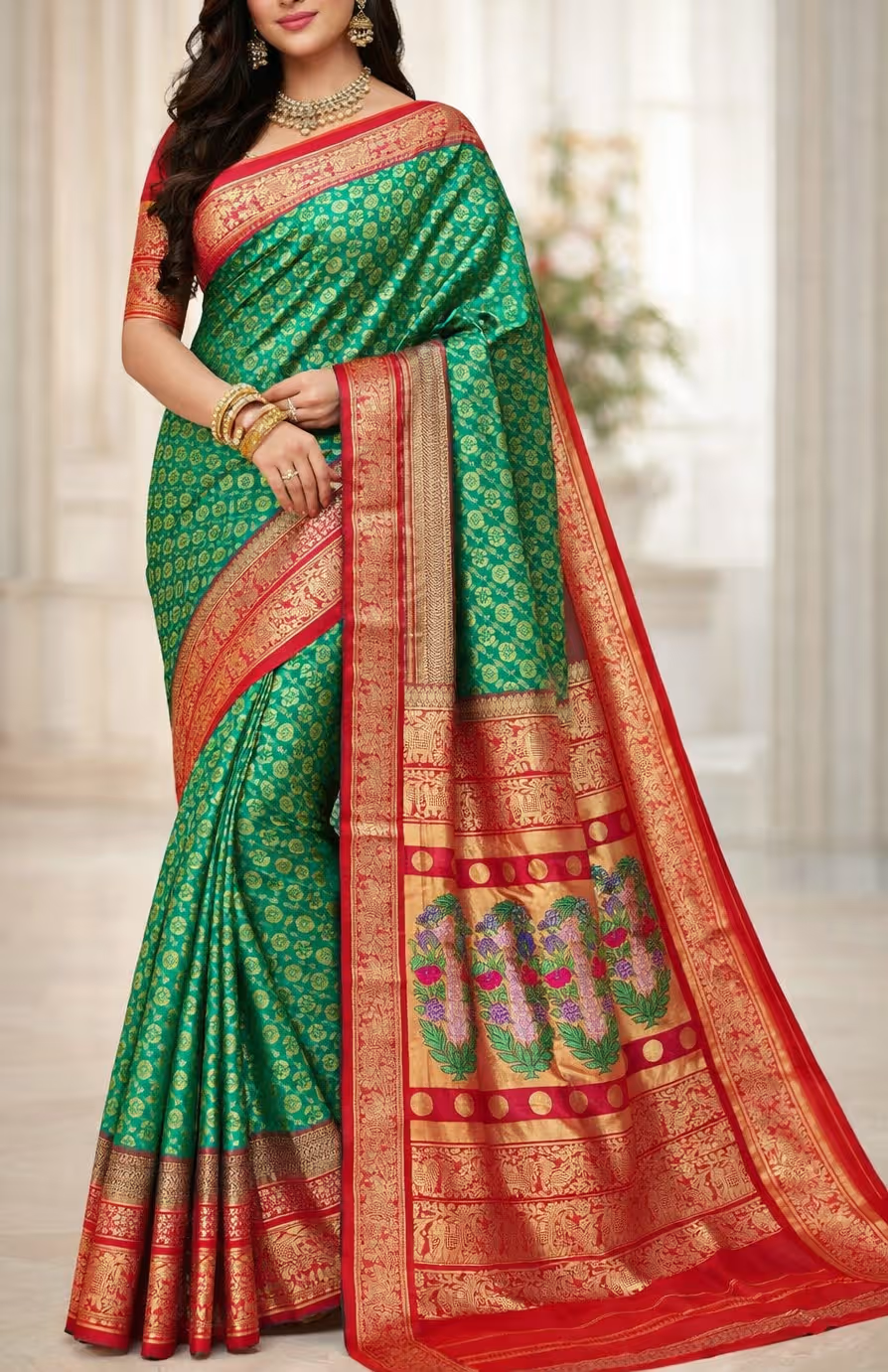
The Brocade and Kinkhab are luxurious woven fabrics with silk, threads of gold or silver reflecting magnificence and royal allure. These luxurious textiles, which were once favored by the Mughal aristocracy, feature detailed floral and geometric motifs woven using elaborate weaving techniques.
Brocade has raised patterns in silk (and metal threads) woven into the fabric, kinkhab – a rich brocade for weft-faced compound fabric with design supplement of zari” is often used for garments such as sari, suit or choli. Valued for their enduring beauty, these textiles can still be found on bridal wear, ceremonial dress and in heritage collections.
History and Origin
Brocades are one of the oldest woven textiles in India, and people have been creating them for a very long time. It all started with the creation, as mentioned in ancient texts like the Yajur Veda and Rig Veda, of women who wove intricate embroidered cloth and beautiful shiny golden robes.
Greek historian Megasthenes made repeated mention of Indian royalty dressed in “cloth of gold,” centuries later, leading us to the extraordinary status these fabrics enjoyed.
The Indian cities of Ahmedabad, Surat and Jamnagar in Gujarat and the Konkan region in Maharashtra were flourishing weaving centres through much of this period.
Great workshops, sometimes patronised by the Sultanate or Mughal rulers, made resplendent textiles. They made soneri, a golden brocade with colorful borders, and rupari — silver thread.
One city in Gujarat, for example, sent its brocades even across the Patna all the way to the ports of the Far East from Cambay.
Types of Brocades and Kinkhabs
Kinkhabs are categorised primarily on the type of threads applied and how intensive the metallic work is.
Tashi Kinkhab:
A design is woven with a gold, silver and silk thread blend on this type of fabric. The ground may be woven with gold, and the figures with silver threads, or contrariwise. The effect is a gorgeous two color metallic look.
Meenakari Kinkhab:
In this kinkhab pattern, a third colored silk thread is used with the gold and silver zari. The metallic patterns feature the threads, which are used to trace coloured lines defining such patterns, providing a dynamic and enamel-like appearance reminiscent of traditional Indian art form Meenakari.
Zari Brocade :
Kinkhabs are categorised primarily on the type of threads applied and how intensive the metallic work is.
Tashi Kinkhab:
A design is woven with a gold, silver and silk thread blend on this type of fabric. The ground may be woven with gold, and the figures with silver threads, or contrariwise. The effect is a gorgeous two color metallic look.
Meenakari Kinkhab:
In this kinkhab pattern, a third colored silk thread is used with the gold and silver zari. The metallic patterns feature the threads, which are used to trace coloured lines defining such patterns, providing a dynamic and enamel-like appearance reminiscent of traditional Indian art form Meenakari.
Zari Brocade :
Not specifically a variety of kinkhab but zari brocade is an umbrella term for several kinds of kinkhabs. It is characterized by zari (threads made of fine gold or silver) weaving. This traditionally has been real gold and silver threads but is now usually synthetic metallic yarn.
Fibres & Materials used
Brocades have been traditionally woven with thread made of gold and silver, which have a silk or cotton core. The brocades you see today are still made with silk yarn, a six-ply filament to be precise, in addition to zari from Surat and cotton.
The kinkhabs, which are a kind of brocade, were first fashioned from silk and gilded threads (a thread with a thin layer of gold). Modern versions are made of synthetic materials such as polyester or viscose rayon for the weft and metallic yarn for warp, with an artificial zari, using a slimmer metallic thread commonly used also in other forms of embroidery to replace the gold and silver threads.
The silk yarns for these fabrics are dyed with acid dyes. A variety of bright and permanent dye colors are available for use with silk.
Traditional Colours
A richly-woven fabric, brocade is characterized by a raised embossing made with silver and golden threads, as well as vivid colors such red, green, blue, pink, yellow, purple or maroon.
They also appear in gorgeous blended or “shot” versions, where two colours are woven into the fabric to create a sparkling, two-tone effect. The colours are always contrasted with a resplendent sparking zari border.
Kinkhabs are woven mostly in red, purple, green, blue and yellow with black. Weavers gave very special names, as poets do, to some of the colours and effects:
- Mazchar (Silver Ripples)
- Dhup-chawa (Sun & Shade)
- Bulbulchasm (Nightingale’s Eyes)
- Morgala (Peacock’s Neck).
Motifs
The motifs however are more than just decorative – they are a part of cultural beliefs and tradition, making every piece of kinkhab a story woven as an art of warp and weft reflecting history and symbolism in richness.
- Buti/Butidar: Small single motifs such as flowers, dots or a sprig scattered all over the fabric.
- Bel/Beldar: A meandering floral scroll or vine design which is recurrent and used across the border line or as diagonal lines in the fabric.
- Kalka (Paisley):
- This is a favorite design that looks like an abstract flame or mango—the “enduring classic” of Indian fabrics.
- Floral Sprays and Trellises: Called phulwar, this pattern is of an all-over floral nature — occasionally taking the form of a lattice (jali). Common flowers are poppies, roses and jasmine.
- Leaf motifs: Patterns of leaves, such as the kammal pata (‘lotus leaf’) and tuld (a kind of leaf) are also often drawn.
- Shikargarh (Hunting scenes): An elaborate and well-known pattern that features animals such as deer, tigers, elephants and lions amidst dense foliage.
- Peacock (Mor): The peacock is a highly attractive and decorative design, with many different designs of this bird, sometimes in pairs forming the main figure or part character of a larger scene.
- Tota (Parrot): Parrot is also a popular motif, especially incorporated as in the floral or vine motifs.
- Kalash: This is a design symbolizing a holy pot, which signifies prosperity and abundance.
- Buti (Asharfi/Pavali): Small round shaped motifs like coins that are spread over on the fabric which represents wealth and prosperity.
- Geometric shapes: Floral designs predominate, but from time to time geometric patterns such as the kathri (a diamond with a dot) and chkuali (bangle) are produced.
Manufacturing Method
- Silk hanks boiled in hot water, soap, soda ash; dried overhead.
- Acid dyes, but often with weavers themselves doing much of the dyeing.
- Yarn is wound from darka → phirki → nari → shuttle. Traditionally taken on by female family members.
- Yarn is wrapped on a warp beam (30 m for brocades, 70 kinkhabs). Iron pins and wedges of wood for spacers.
- Warps passed through the harness into the reed and cloth beam. New compositions were created with the jacquard cards inserted.
- On a throw-shuttle pit with jacquard, 12 shafts.
- Technique: supplementary weft with twill binding, ground weave satin/sateen/plain.
Past and Present Practices
Aspect | Past Practices (Traditional) | Present Practices (Modern) |
Materials |
|
|
Weaving Process |
|
|
Designs |
|
|
Challenges and Future Focus
- Cost and Competition: The hand-woven, pure-zari Kinkhab is extremely expensive, making it non-competitive against the high-volume, low-cost imitations produced by power looms.
- Artisan Attrition: The demanding labour and inconsistent income associated with hand-weaving lead many skilled weavers to migrate to factory jobs, resulting in a severe shortage of master craftspeople.
- Raw Material Cost: The high and fluctuating prices of genuine silk and metallic zari make it economically difficult for weavers to produce authentic pieces without substantial government or institutional support.
- Niche Luxury: Maintaining a small, high-value heritage market for collectors and connoisseurs, focused exclusively on authentic hand-woven, pure-material pieces, often commissioned for ceremonial use.
- Mass Commercialization: Continuing to innovate in the commercial sector by using high-quality synthetic blends and power-loom technology to produce Kinkhab-inspired textiles. This will ensure the aesthetics and patterns of the fabric remain visible and accessible in the global fashion industry, securing its long-term economic relevance.
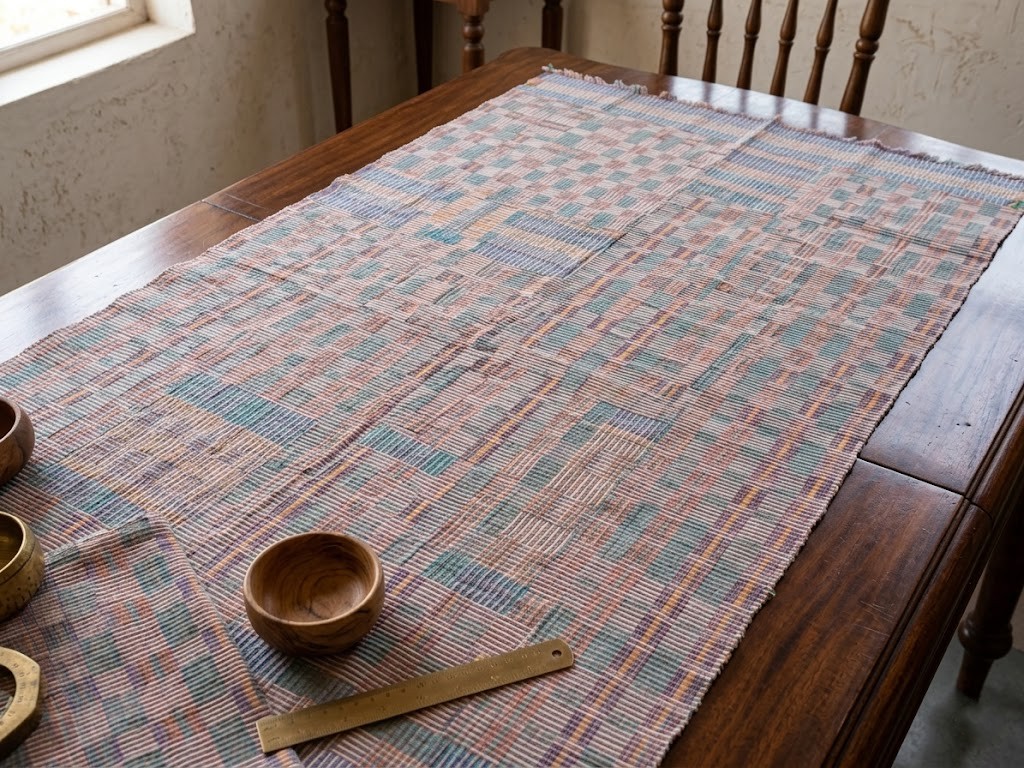
Sujani
Sujani is a traditional Indian embroidery from Gujarat, celebrated for their complex hand-stitched designs and storytelling patterns. Developed as a means of creating quilts for new born babies from old sarees and scraps of clothes, Sujani carries strong cultural significance and the themes in these lovely textiles range from everyday living to folklore village story telling with overlaying social messages. Each work is created using basic running stitch in colourful thread, to create dynamic works from humble fabric. Sujani embroidery is both known and famous today for its beauty, sustainability and culture.
History and Origin
Sujani of Bharuch Sujani of Bharuch is a double-cloth padded quilt tradition practiced in Bharuch district, Gujarat.
It is a very narrowly skilled trade, and only 5-6 families having roots linked to Nabubhai Sujaniwala from the Muslim community carry the practice forward.
Now, only 4-5 families are left who still carry on with this exclusive art.
Sujani: The name Sujani could have several potential histories; it is a common Arabic word for “striking” or “convincing”; alternatively, and in what would undoubtedly be the most popular theory, the term may have simply been borrowed from sujan — a general Asian term that refers to any kind of needlework.
Types
Types of Sujani quilts are mainly categorized according to size and design.
Based on Size:
- Single bed: 60 x 90 inches.
- Double bed: 120 x 90 inches.
Based on Design:
- Geometric: The most popular style, which consists of squares and rectangles in two or more alternating colours and white.
- Butis with Flowers: An earlier, no longer common design in which extra-weft flowers (butis) were included within the squares.
Fibers and Materials used
The fabrics employed in making the Sujani or Bharuch quilts have changed over time, and include a mix of traditional and contemporary methods.
- Warp: woven a plain weave instead of the pattern structure and used white cotton yarns for all backgrounds. This gave the kaleidoscopic patterns a solid, colourless backdrop.
- Weft: The ground weft or the weft forming patterns was woven in different fibres such as :
- Colored silk/colors: This was an upscale option that gave personal quilts a subtle gloss.
- Mercerized cotton: Cotton taken to a high sheen, which held color well.
- Acrylic and Rayon – These materials were chosen for the variety of colors they came in.
- Zari: Sometimes the use of zari (metallic thread) is added to augment and give that extra bit of extravagant look.
- Shiring: Register quilts were originally stuffed with cotton wool for warmth and softness.
Traditional Colours
Historically the Sujani quilts are known for their small, limited hue palette. The designs themselves had only four basic colors — red, yellow, blue and green — all against a clean white canvas. This restricted palette lent the quilts a classic, high-contrast appearance.
Motifs
- Primarily geometric squares and rectangles in checks/stripes.
- Previously featured floral butis woven with extra-weft (Discontinued).
Manufacturing method
Traditionally the Sujani was weaved on to throw-shuttle pit looms. Contemporary weavers have graduated to broader throw-shuttle frame looms (57-72 inches) and the speedier fly-shuttle frame loom; reeling a pass off with one leg, like winding the pulltoy mouse in and back out.
The warp for the quilt is a white cotton 60/2 thread, wound around a beam (100 metres in length). The coloured weft yarns (20/2) are either bought or dyed by the artisans. The winding of bobbins is women’s work though men also weave and dye.
Weaving and Stuffing
Sujani quilts are double-woven on an eight-sing harness loom. Heddles are knotted at intervals so as to interlace the two layers of cloth. Six treadles are used to operate a variety of harness combinations producing two separate fabric layers which when woven together produce pockets. These pockets are individually hand filled with cotton wool by a 5-inch copper rod called a sua. Today, some craftsmen also use acrylic fiber as a cheaper and lighter option. The layers are then rotated; this traps the stuffing within the quilt.
Past and Present Practices
Aspect | Past Practices (Traditional) | Present Practices (Modern) |
Materials |
|
|
Weaving Process |
|
|
Designs |
|
|
Challenges and Future Focus
Sujani weaving is recognized as an endangered and vanishing craft of Gujarat, facing severe threats to its survival.
- Economic Viability: Hand-woven Sujani is extremely labour-intensive and time-consuming (taking 1-2 days for one piece), making it financially non-competitive against faster, cheaper, machine-made quilts and textiles.
- Artisan Attrition: The craft suffers from a severe shortage of master weavers. The demanding nature of the work and the low, inconsistent income cause the younger generation to abandon weaving for more stable and lucrative industrial work (e.g., diamond cutting).
- Limited Market Demand: Historically used solely as a quilt, the product has a restricted market, particularly given Gujarat’s mild winters. The lack of design variation further limits consumer appeal and demand for multiple products.
- Product Diversification: The most crucial strategy for survival is expanding the product range. Sujani fabric is being adapted for contemporary home and fashion items such as cushion covers, wall hangings, rugs, and decorative accessories.
- Targeting the Niche Market: The future lies in establishing Sujani as a high-value, niche luxury heritage product for connoisseurs who appreciate its unique double-weave technique and durability, justifying a premium price.
- Direct Market Linkages: Supporting the few remaining artisan families to directly access e-commerce and fair-trade markets allows them to secure a better return for their difficult work, bypassing traditional middlemen and stabilizing their income.
Dhabhla
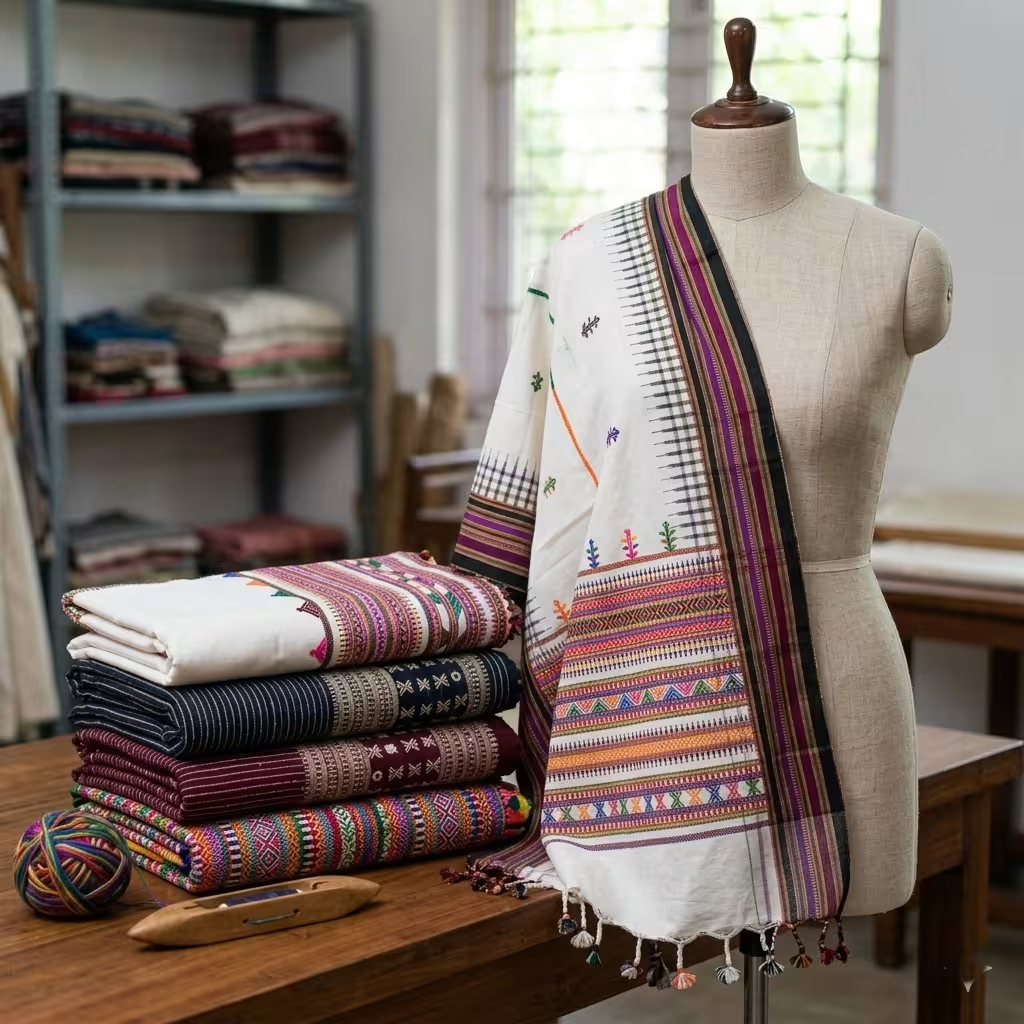
Dhabla is a kind of woolen shawl and blanket traditionally linked with nomadic cultures like Rabari tribes. It is very famous for being long-lasting, bold in pattern and color, and earthy in tone, which is ideal for protection against cold desert weather. These handmade textiles have rich stories and cultural importance, as they reflect the cultural and traditional lifestyles of their makers. The patterns have strong themes and symbolic content related to tribal culture and lifestyles. Dhablas are now being valued not only for their usage but also for their unique raw look and the craftsmanship put into making them, which is an important part of traditional cultural heritage.
History and Origin
Dhabla textiles have their origin in the desert region of Kutch in the Indian state of Gujarat and have been produced over the last 500-600 years. Dhabla textiles have traditionally been produced by members of the Vankar weaving community and made from wool procured from sheep grazed by pastoral groups such as Rabari and Bharwad. Dhablas were traditionally thick woollen blankets intended to keep desert nomadic herders warm from the desert climate, which was often chilly at night, windy, and rainy. Dhablas were produced using simple pit looms and plain weaving. The Dhabla textiles were made in two narrow pieces, sewn together with an elaborate seam, and had minimal geometric patterns with plain centers. Dhabla textiles have changed over time from being functional blankets to being lightweight shawls and fashion textiles while still maintaining traditional weaving techniques of the region.
Historically located in the region between Maharashtra and Andhra Pradesh (specifically associated with the town of Narayanpet in present-day Telangana, and popular in Solapur and other parts of Maharashtra).
Types
Although the term Dhabhla often designates a woollen blanket, the weaving technique used here is found on a range of other textiles for everyday as well as ceremonial wear, which are documented in texts on regional dress.
Khathi: A shoulder cloth of men woven of wool.
Ludi: Woollen veil of Rabari women decorated and mostly embroidered.
Pachhedi: A female skirt cloth.
Adhivto: An Ahir shoulder cloth with distinct medallion pattern.
Fibres and Materials used
Dhabhla used to be manufactured in hand-spun sheep wool that was locally available, resulting in the fabric being in white shade. The size for the strengthening of the warp threads was composed of an admixture of ingredients: wheat / rice or bajra flour was mixed and other products poured over it. As described in literature on Kutch textile traditions, the change from natural wool to mill spun wool is a major shift, changing for speed and continuity. While the base cloth is off-white or natural wool color, the borders and motifs are filled with strikingly contrasting brilliant bright extra weft patterns. The colourful tassels (fimtas) provide characteristic ending accents. The colours of the motifs which are usually in contrasting hues, makes the Dhabhla stand out.
Traditional Colours
Common traditional colors that are usually present in Dhabla are as follows:
- Black – One of the most dominant colors, usually present in the background as it is not easily prone to dirt accumulation and is also long-lasting.
- White/Off-white – Natural wool color, usually present in stripe or geometric patterns.
- Red/Maroon – A symbolically dominant color, usually present in border patterns and motifs, traditionally derived from natural dyes.
- Brown – Derived from natural shades of sheep wool and plant dyes.
- Grey – Another shade of wool color, usually present in simple patterns and backgrounds.
- These colors are usually arranged in a strong stripe or band pattern and simple geometric motifs, creating a strong contrast while still retaining the rugged and earthy look that is characteristic of Dhabla textiles.
Motifs
The designs, usually geometric and floral in nature, are artistic expressions exclusive to the Meghwal weavers. The designs themselves, as noted by scholars, such as Judy Frater, provide evidence to weavers’ creativity and interpretation of motifs drawn from their surroundings. A major factor of aesthetic appeal is the contrast between the unadorned body field and the heavily ornamented borders.
Manufacturing method
The process of manufacturing is a journey of many steps, representing tacit traditional knowledge.
Fibre Preparation: The wool is sorted, carded and spun on a hand spinning wheel – spinning on a charkha – which generally ladies of household are involved in.
In case the hues were chosen, dyeing was traditionally delegated to Khatri´s (the Khatrig’s are professional at tie-dye and resist printing).
Weaving Weaving was formerly accomplished on a throw shuttle pit loom (haatad apoca), a horizontal ground-pit loom. The use of this loom was so restricting in width that it required two pieces to be sewn together for larger garments. Where the faster-fly shuttle loom (phatkashaad) is adopted there has been a very great increase in the speed of weaving. The process of separately weaving the borders and motifs (border gold/colour wrapped on a separate shuttle from the field-shuttle) is an extra-weft technique where the supplementary weft does not pass under the warp threads but lays on top of them, thus creating a slightly raised pattern that is reminiscent of embroidery as described in numerous textile studies over this area.
Finishing: Joining of 2 narrow woven panels at the center (khilavani) is a characteristic of the older, pit-loom made blankets. The edges are adorned by colored fringes or tassels, serving as both decoration and protection.
Past and Present Practices
Aspect | Past Practices (Traditional) | Present Practices (Modern) |
Materials |
|
|
Weaving Process |
|
|
Designs |
|
|
Challenges and Future Focus
The survival of Dhabla depends on balancing the preservation of its ancient technique with innovative market expansion.
- Competition and Counterfeits: The craft faces fierce competition from cheap, mass-produced textiles and an influx of machine-made copies sold as authentic Dhabla. This undercuts the pricing power of genuine handloom artisans.
- Skill and Labour: The traditional, high-quality weaving is time-consuming and requires specialized, generations-old knowledge. This difficulty, coupled with low economic returns, deters the younger Vankar generation from continuing the craft.
- Raw Material Cost: The use of high-quality materials like hand-spun, local wool and natural dyes increases the final product cost, making it less accessible to the traditional Rabari market and challenging to compete with synthetic alternatives.
- Geographical Indication (GI) Status: Securing a GI tag for Kutch Weaving (which includes Dhabla) has helped protect its cultural identity and authenticity, allowing artisans to command a premium price and fight against knock-offs.
- Product Diversification: The future is secure through product expansion. Dhabla fabric is now being successfully transformed into stoles, sarees, scarves, home furnishings (rugs, upholstery), and fashion accessories, moving beyond its original function as a blanket.
- Direct Market Access: Weavers are increasingly utilizing e-commerce platforms and exhibitions to sell directly to urban and international consumers. This strategy removes middlemen, ensures fairer wages, and allows artisans to directly gauge market trends, promoting sustainability of the craft.
- Profit Margins and Wages: Weavers face razor-thin profit margins due to rising costs of silk and cotton and inconsistencies in yarn quality and distribution from suppliers.
- Market Competition: The craft faces intense competition from power loom imitations and mass-produced fashion, threatening the viability of the slow, hand-weaving process.
- Future Focus: The future depends on sustainable infrastructure, assured pricing, and continued youth engagement through training programs and educational campaigns to maintain the craft’s cultural and economic viability.
- Global Recognition: The award of Geographical Indication (GI) status has enhanced its international recognition, featuring the saree in global exhibitions and fashion shows.
- Empowerment: The craft has become a source of sustainable livelihood, significantly boosting women’s empowerment through intergenerational skill transfer in weaving families.
- Diversification of Products: The fabric is now used in contemporary silhouettes and products, including kurtas, jackets, fusion wear, and accessories, ensuring the craft’s relevance beyond the traditional saree form.
- E-commerce and Global Reach: Online platforms and e-commerce have been crucial, directly linking weavers to a wider, global customer base who value the saree’s authenticity and origin story.
Bandhani
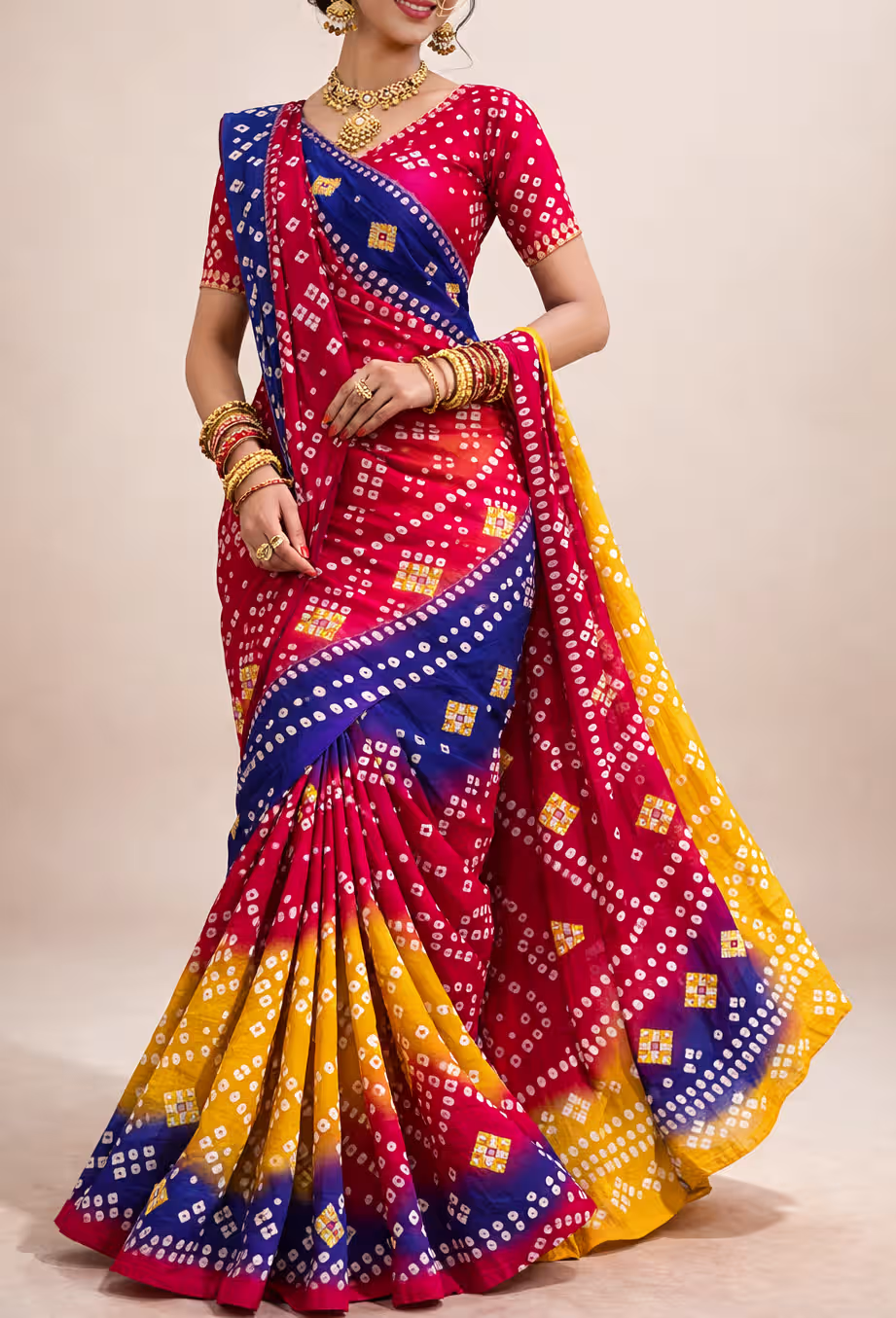
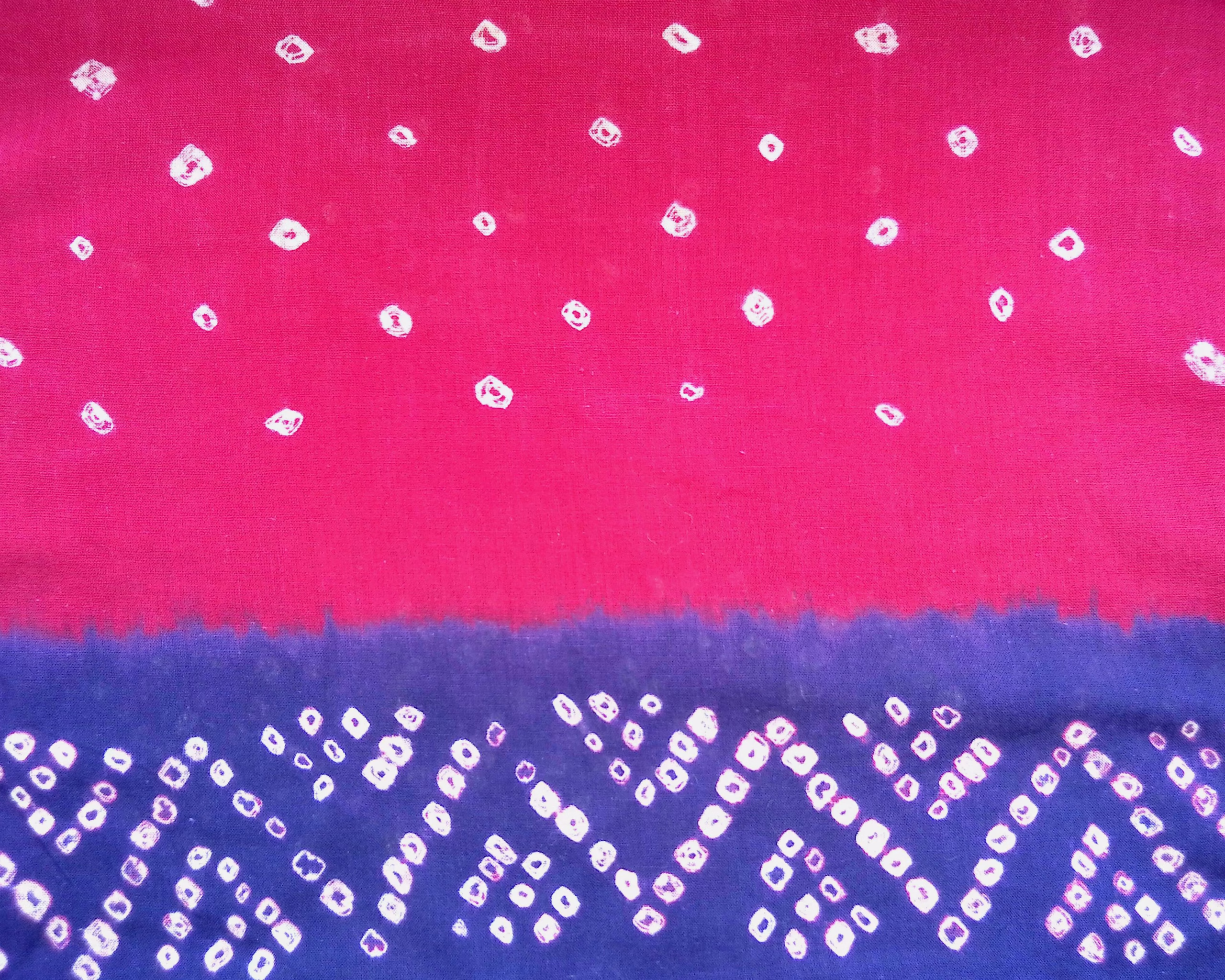
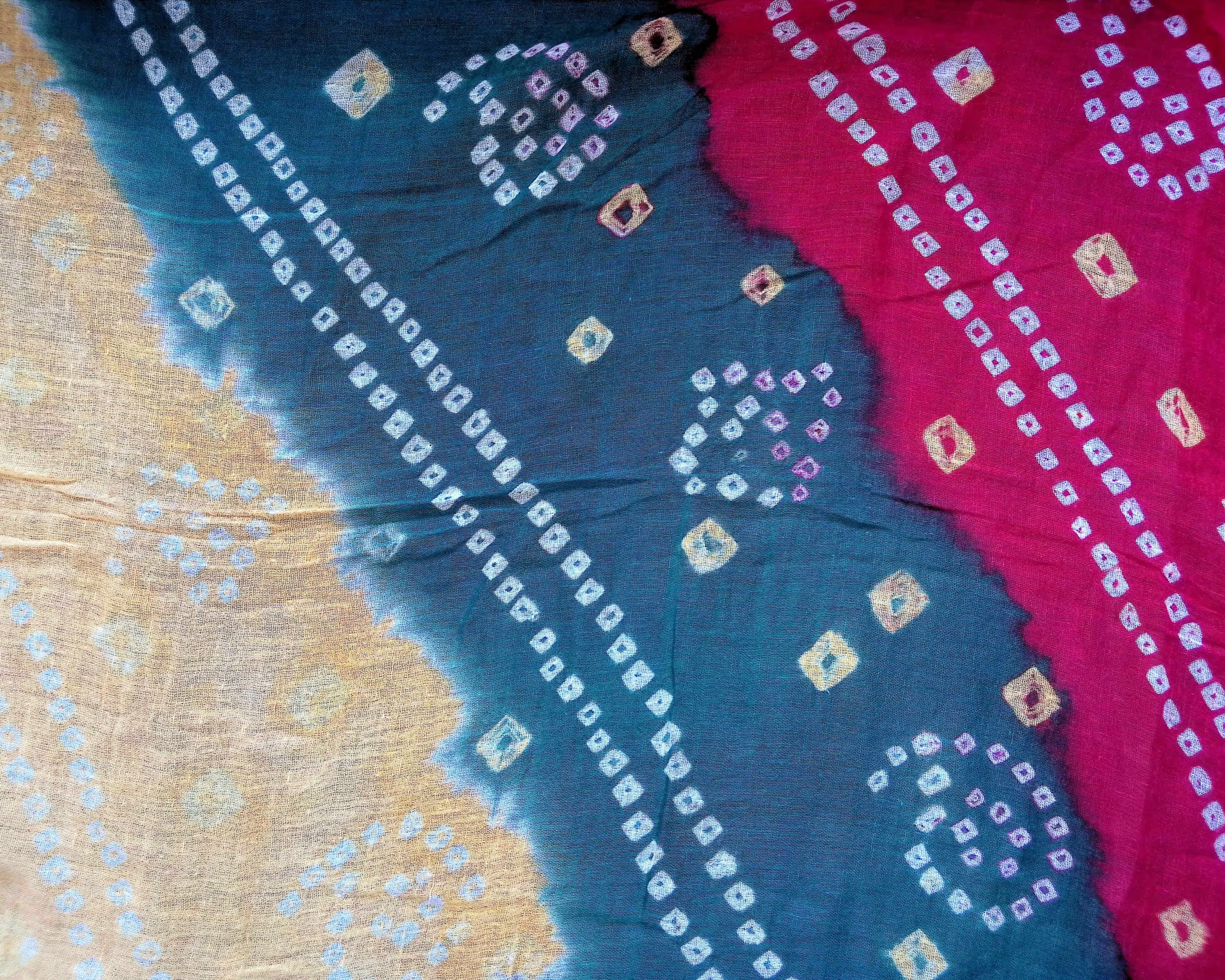
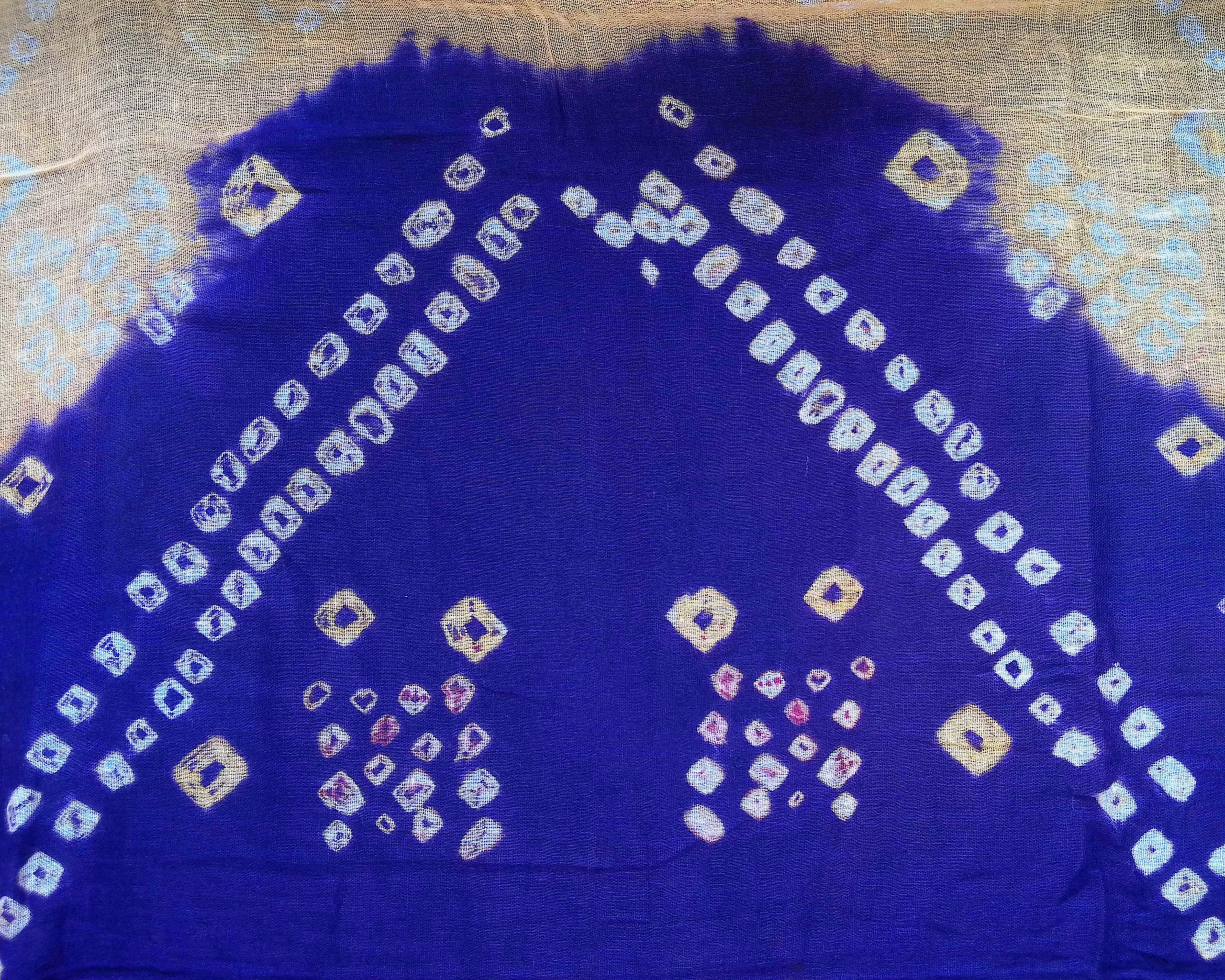
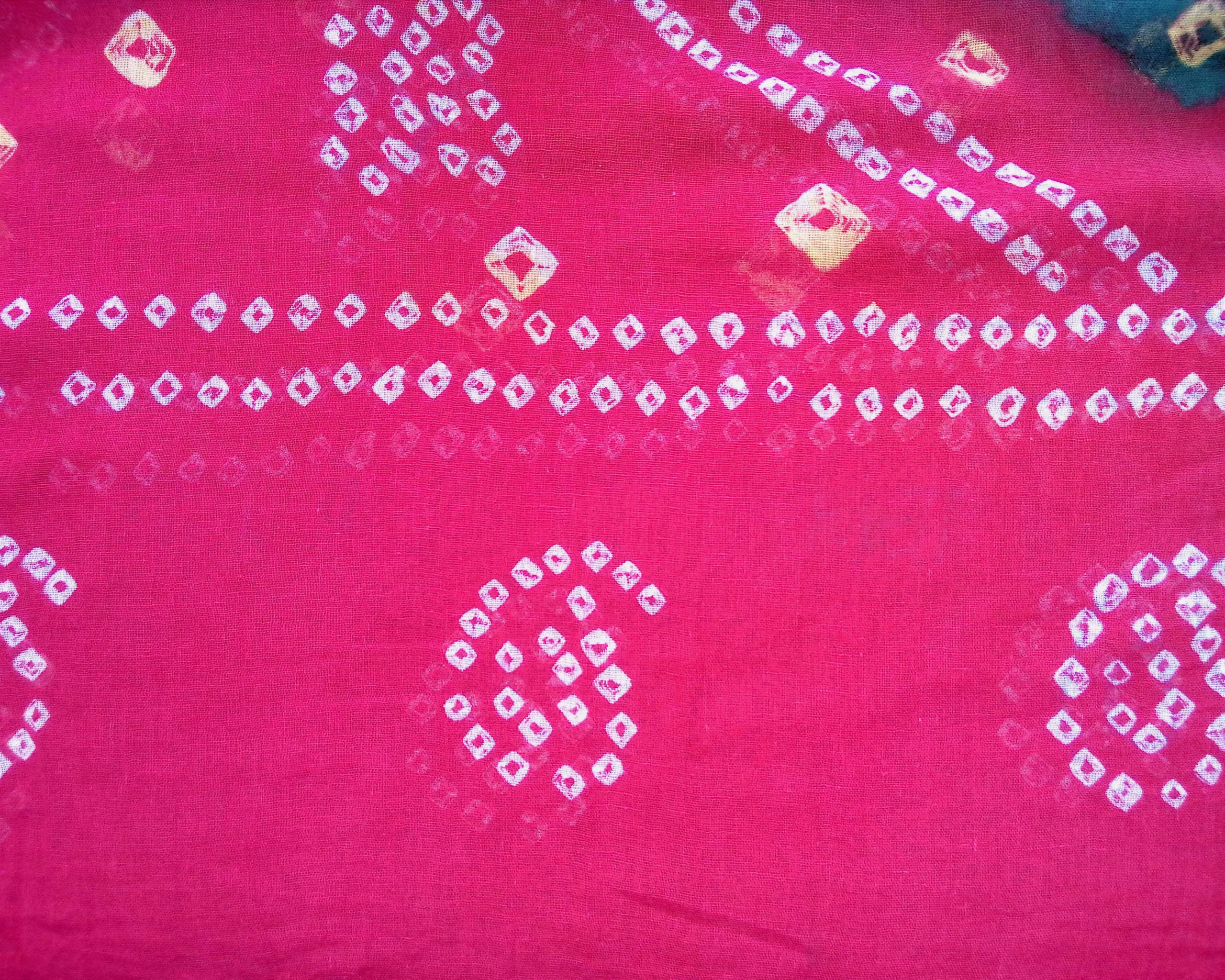
Bandhani represents India’s ancient textile tradition which uses its tie-and-dye method to produce intricate dotted fabric designs. The term “Bandhani” originated from the Sanskrit term bandh which means “to tie” and describes the technique of tightly binding small fabric sections with thread before applying dye. The fabric displays unique dot patterns and decorative designs which emerge after the dyeing process and removal of threads.
History and Origin
Bandhani originated more than 5000 years ago which makes it one of the oldest tie-and-dye textile artforms in India. Historical records show that ancient people used this technique in the Gujarat and Rajasthan regions which now serve as the principal Bandhani production centers. The archaeological discoveries from the Indus Valley Civilization period show that ancient Indians had knowledge of tie-dyeing techniques because researchers found tie-dye fabrics from that time period. Bandhani became an artisanal craft that Khatri community members developed because they operated as specialists in the complex methods of fabric tying and dyeing. The craft evolved into a cultural tradition which became essential for festive and bridal attire in Indian society and it maintains its status as a vital component of India’s textile history.
The design and color of Chandrakala Sarees have changed over time, but one can always see the originality in terms of the fabric used, which is silk, with zari and elegant designs. Thus, it has become a part of Maharashtrian heritage. Today, it holds importance due to its eternal look and feel.
Types
A number of fabrics are decoratively designed using the Bandhani technique, the use depending on the fabric to be adorned and different patterns for bandhani are used for different fabric.
Gharchola: This is a religious wedding saree, usually red or green, which has zari checks with a Bandhani sign in each square. It is a representation of marital fortune.
Chunnari/Chunnadi : A less elaborate version in cotton, often with bright colors. The Panchrangi (five-coloured) and the Navrangi (nine-coloured) are among the favourites.
There are different ways knots may be tied, called Dani (a dot), Sircum (knot in a straight line or square shape, used for border and outside the scrolls) and Bharti (cladded dots laid closely to create a pattern).
- Silk Chandrakala – These are woven with silk for a more luxurious feel and a beautiful sheen. Often used for festive occasions, they usually have more elaborate zari work on the borders and pallu.
- Zari Border Chandrakala – The main feature here is the wide gold or silver zari borders. The design keeps things simple, with very few motifs on the body, so all eyes are drawn to the striking contrast.
- Butti Chandrakala – These have tiny zari or thread motifs (called buttis) woven across the body of the fabric, adding a touch of subtle decoration.
- Contemporary Chandrakala – These are modern takes on the classic saree, and you can find them in all sorts of colors, not just the traditional black. Sometimes, they’re made with lighter materials or have simpler borders, making them perfect for everyday wear.
Fibres and Materials used
Bandhani’s splendour lies in the fineness of materials. Originally, it was produced on cotton fabrics or silk and wool. The knot that is tied by cotton thread in a complex manner. Artisans also refer to the sizing material such as arrowroot, rice paste, or wheat starch that is applied to the cloth in preparing it. The tools of the trade range from wooden or nail printing blocks for marking designs to a special thimble, called a nukalia, that women use when tying the thousands of tiny knots.
Traditional Colours
Bandhani is famous for its symbolic and colorful designs.
Traditional Colour Symbolism: Red represents marriage and passion and happiness, Saffron relates to spirituality, Yellow is the colour of spring and cheerfulness, Blue (nela) refers to Lord Krishna Purple symbolizes prosperity. Maroon and black are also used, especially for mourning or by some tribal groups in Kutch.
Natural Dyes: In the past, traditional artisans were using natural dyes. Red was extracted from kesuda flowers, yellow from turmeric and pomegranate rind, and blue from indigo fermentation. Black was prepared of jaggery, rusted iron and bajra floor. These natural colors were rich and permanent.
Contemporary Dyes Acid and reactive dyes are in common use today as artificial dyes. They provide a wider range of color, brighter hues and the process is much quicker so naturally that increases production capacity.
Motifs
The language of traditional designs are the motifs of Bandhani. They are mostly dots, waves, checker, and geometrical shapes positioned to create stunning patterns. Regional iconography ranges from geometric lines, diamonds and grids to floral shapes such as petals, vines and round flowers. These symbolic motifs are used in numerous textiles such as sarees, dupattas and turbans.
Manufacturing method
It is a labor of love to make the Bandhani fabric that goes through several painstaking processes.
Fabric Preparation The fabric whether cotton or silk, is washed and cut to the desired length and often starched. It is folded into usually four, five or six folds( together) to obtain a symmetric design.
Design Marking: Design is picked up by a master craftsman and imprisoned on fabric using wooden/nail blocks or paper stencils.
Tying(Bandhani dots): This is the most time-consuming process and is mainly done by women of the Khatri Community. Using fine cotton threads, they knot thousands of tiny knots. According to him the workers hold on the fabric and tie using a ‘nukalia’ or their teeth. For their part, they are paid by the knot (kadi), though per quantifying knot underscores the worth of each miniscule hand-tied unit.
Dying Process: Fabric is dyed beginning with the lightest color leaving the darkest for last. The knotted sections refuse the dye, which creates the lovely patterns. To achieve multi-colored patterns using tie-dye technique a method called Borbo was employed, where the edges of the cloth are tied separately. The fabric is washed, dried and re-tied for the subsequent color.
Finishing: The clothes are marketed in a tied condition, unfolded only about halfway to show design. The rest of the pattern is conspicuous when the buyer unties the knots, this might be a ceremonial moment.
Past and Present Practices
Aspect | Past Practices (Traditional) | Present Practices (Modern) |
Materials |
|
|
Process |
|
|
Design |
|
|
Challenges and Future Focus
- Competition from Imitations: The biggest challenge is the proliferation of
mass-produced, machine-printed textiles that mimic Bandhani patterns. These cheaper imitations undercut the market for genuine, hand-tied Bandhani, which requires significant time and skill. - Economic Pressures: Artisans often face low wages for their painstaking labor and intense competition, leading to economic hardship and a reluctance among the younger generation to continue the craft.
- Dyeing and Environmental Concerns: While the craft traditionally used natural dyes, the widespread shift to synthetic dyes (for their vibrant color range and lower cost) raises concerns about environmental pollution and artisan health if proper waste disposal is not followed.
- High-Value Luxury: The future lies in positioning authentic, intricately tied Bandhani as a high-value, luxury, and heritage product, ensuring fair compensation for the artisans’ skill and time.
- Design Innovation: Continued collaboration between traditional artisans and contemporary designers will lead to innovative products, ensuring Bandhani remains relevant in modern aesthetics while preserving its traditional techniques. This includes adapting motifs for new formats and integrating the craft into fusion wear.
- Digital and E-commerce Expansion: Utilizing digital platforms and e-commerce for direct selling will help artisans bypass middlemen, increase their profit margins, and reach a wider global audience who value handloom and handcrafted quality.
- Geographical Indication (GI): Securing and promoting the Geographical Indication (GI) tag for specific regional Bandhani styles (e.g., Jamnagar or Kutch Bandhani) can help distinguish genuine products from imitations, protecting the craft’s identity and market integrity.
- Competition from Imitations: The biggest challenge is the proliferation of
Batik
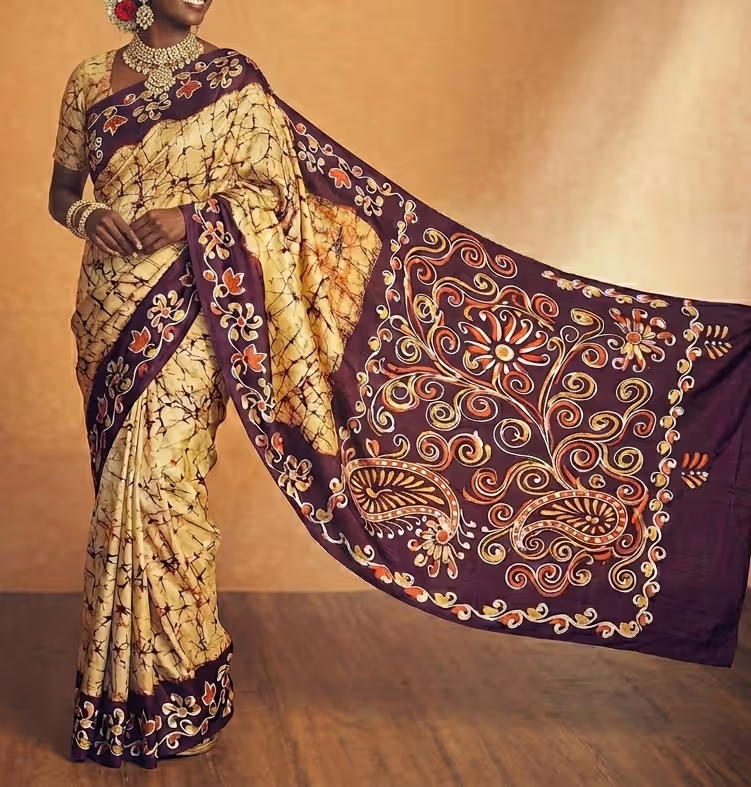
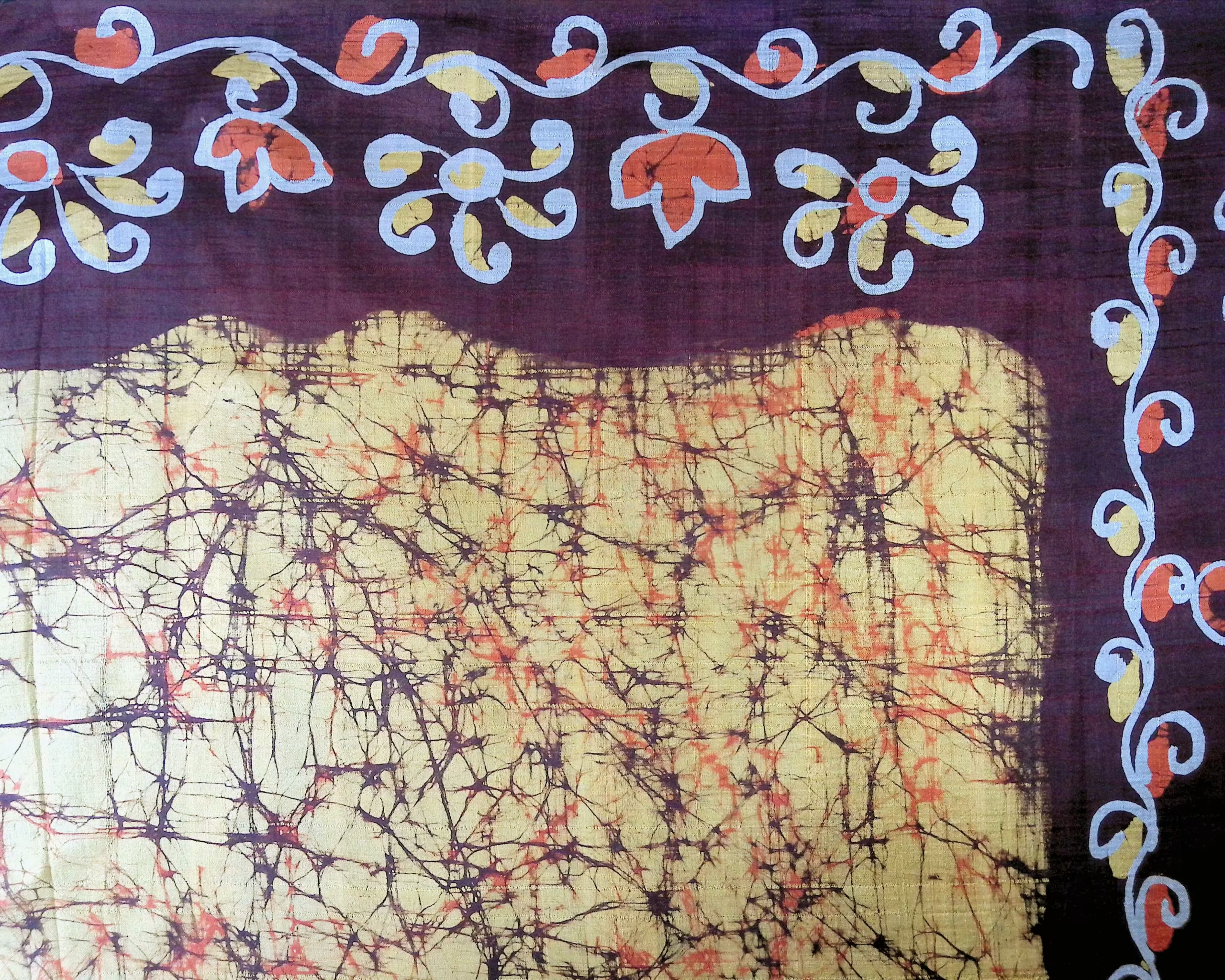
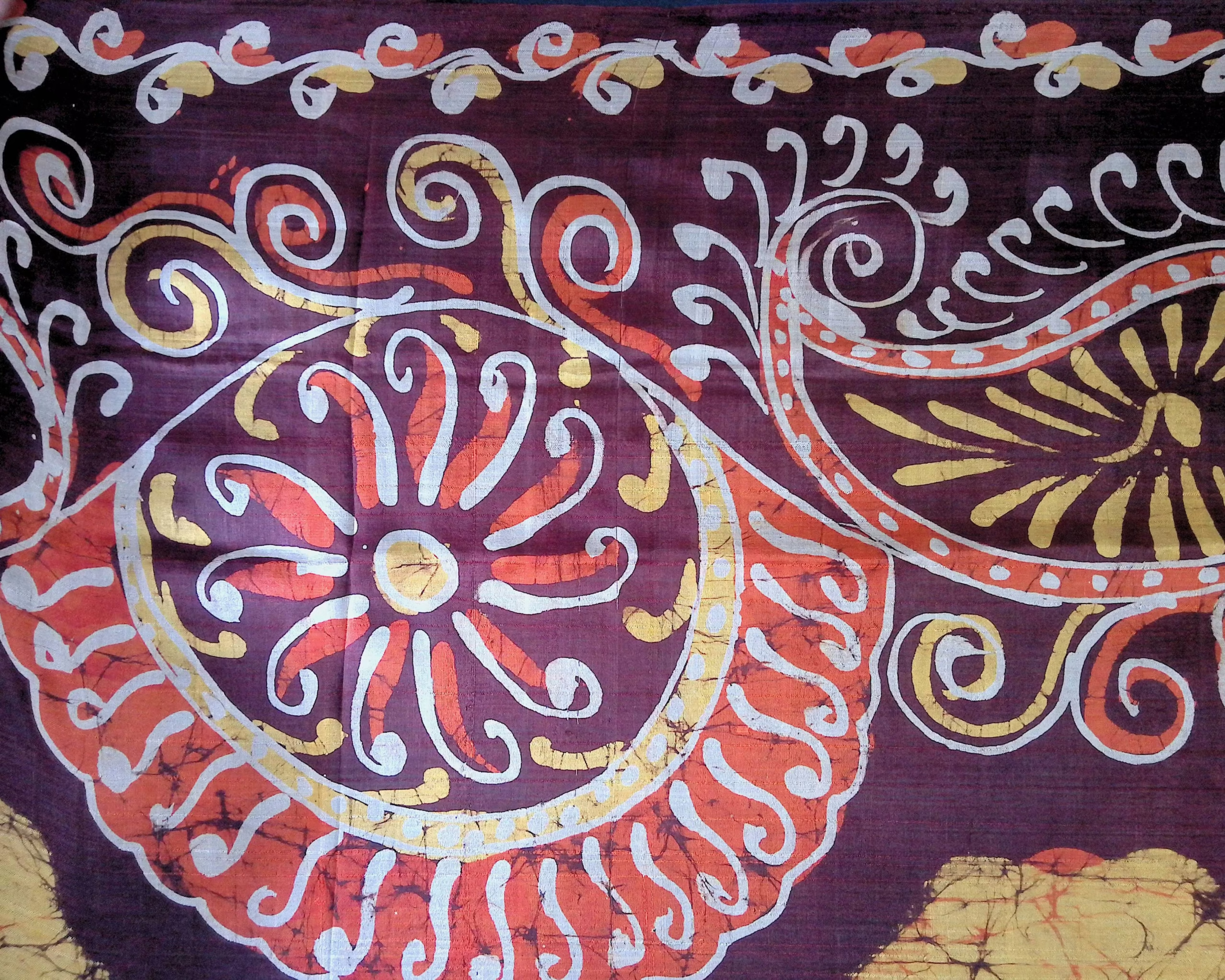
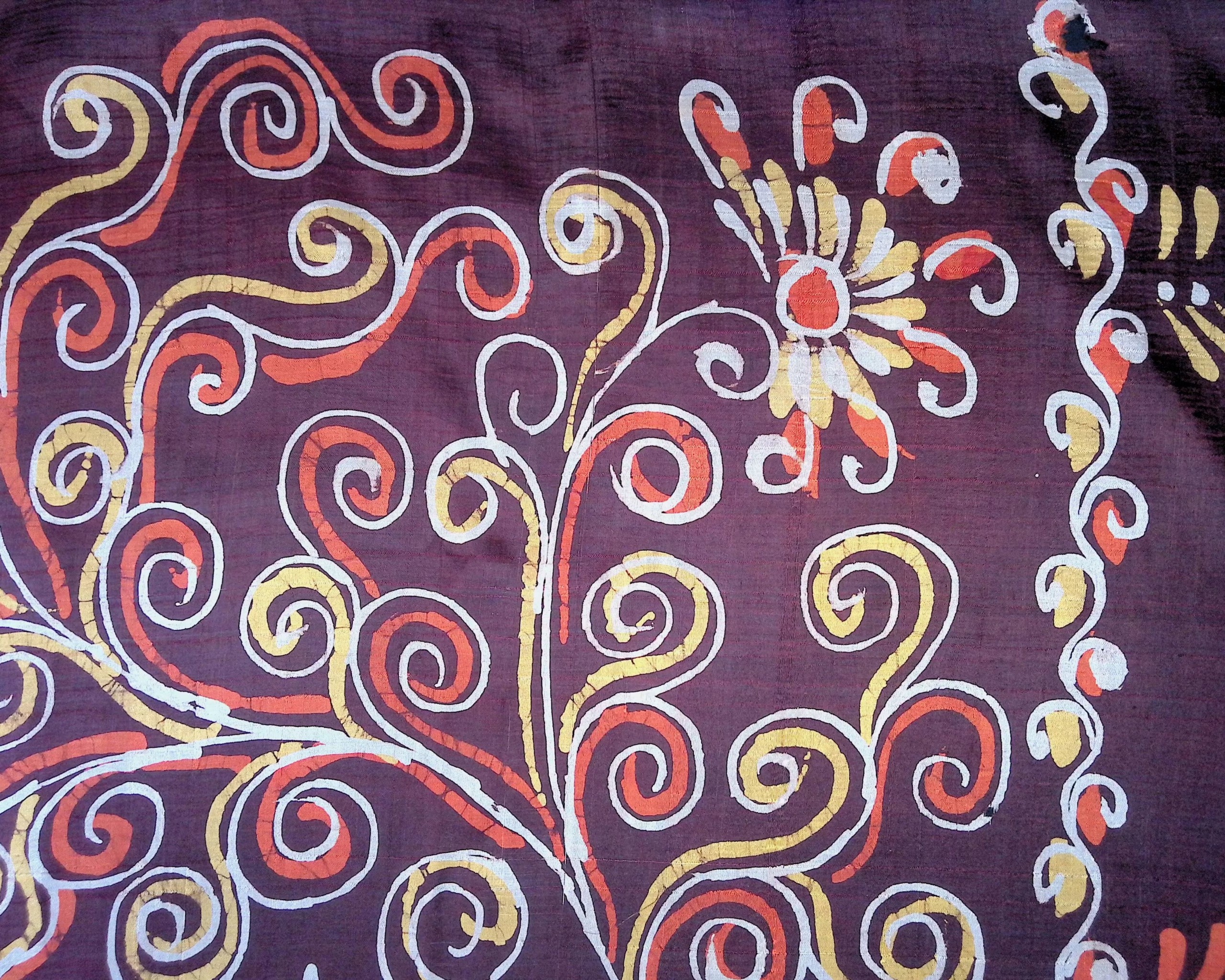
Batik is an ancient textile tradition that originated in Indonesia, using wax-resist dyeing to create striking designs. In Gujarat the batik craft has been developed through generations., famous for its unique fine cracked effect, multiple colors and minute patterns. For both traditional taste and modern fashionistas, this is a popular choice for craftsmen.
History and Origin
Batik is a wing dyeing technique carried out by the hand and forms many Asian culture patterns. Originating from all around the world, Batik has been profusely present in Gujarat for ages together. Its practice is indicative of the region’s wider tradition with resist-dyeing techniques, demonstrating a process that celebrates layered colors and complicated patterning.
Though Batik is internationally celebrated, in Gujarat its existence is a situation specific to some urban areas. The art is mainly practiced in the cities of Ahmedabad, Surat and Bhavnagar where they have traditionally been centres for textile trade and production. The way in which Batik has been adopted and incorporated into the textile culture of Gujarat proves that the state is open to new artistic influences while keeping its distinct identity. It is a very popular craft of massive repertoire of resistdyeing in Gujarat after Bandhani and Ajrakh.
Types of Himroo
The skill in creating Batik fabric can be found in the variety of techniques used.
Hand-drawn Batik: This intricate, free-style work is drawn meticulously by hand with a stylus. The patterns this way come out one of a kind because in the end they are touched by me.
Block Batik: The block batik employs carved wooden blocks to apply the wax, allowing large areas of bold designs such as flowers and other motifs. It is much quicker than freehand batik and wonderful for duplicating prints.
Screen Batik: A modern and more contemporary large format take on the traditional craft. Screens are employed for application of the wax and can be used more practicable in commercial applications.
Fibres and Materials used
The beauty of Batik is in the fine choice of material and workmanship. The preferred fabrics are generally cotton, silk and georgette which absorb dye easily and have a smooth surface to which the wax adheres.
It is a beeswax or paraffin wax resist, often blended to the desired viscosity and melting point. What is the difference between beeswax and paraffin wax crackle? Beeswax produces a finer crack, as it bends more easily than paraffin The larger molecules of paraffin have less flexibility. Previously natural dyes were the only option available, but now synthetic dyes in every color are used for their colour strength and fastness.
Traditional Colours
Classic palette: That consists of dark indigo, red hot and sunny yellow with earthly brown. Such colors were usually obtained from nature, giving the fabrics a classical and restrained appearance.
Modern palette: With the use of synthetic dyes, the color spectrum has broadened making possible brighter shades by using different colors such as orange, purple, green and multi tonal compositions. These new colors stretch the colour range and appeal to a more up-to-date target market.
Motifs
The designs in Gujarati Batik are mostly taken from nature and geometry.
Floral and botanic designs: These are popular, showing detailed vines and flowers.
Geometric patterns: Repetitive abstract images such as spirals, dots and stripes are used.
Figurative patterns: Birds, fish and other cultural symbols are a common part of Oya designs.
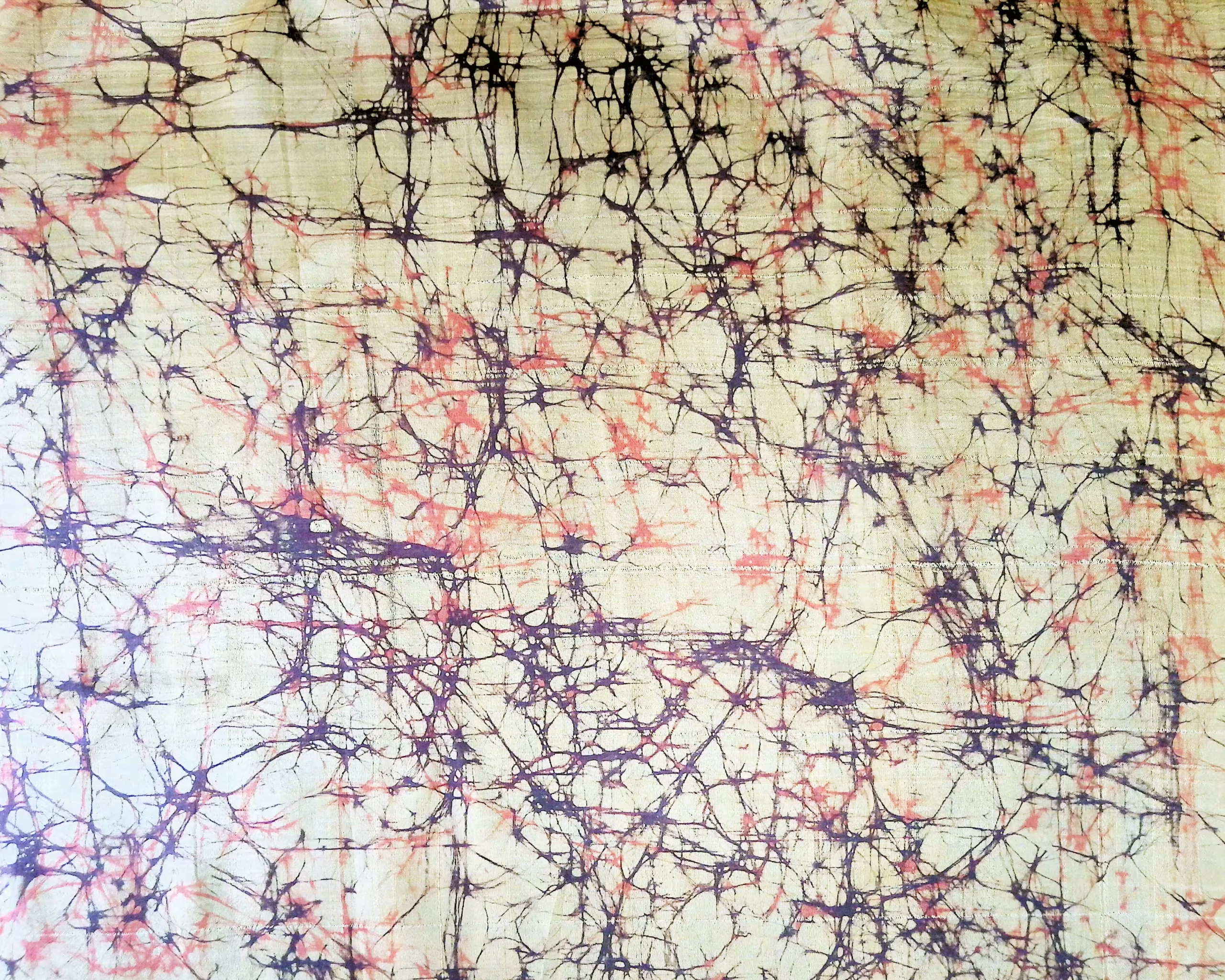
Crackle effect: This is a significant decorative element, and gives the final fabric an unusual organic texture
Manufacturing method
The Batik process is one of heat, wax, and dye that results in its distinctive appearance.
Washing: Fabric is washed in the initial step to cleanse and remove all the impurities or sizing so that dye could enter it.
Applying Wax: Hot wax is used to draw the motifs on the fabric by a pattern drawn out with stylus (canting), brush or a wooden block. The waxed sections will repel the dye.
Dying: The cloth is then put in a dye pot. Wherever the fabric has been waxed, the dye will not be able to penetrate.
Second Waxing and Dyeing: In case of multi-colored patterns this process is repeated. The cloth is dried, and fresh areas are waxed before dipping the fabric into a second dye bath (generally a darker color). Such waxing and dyeing layer by layer creates several colours and elaborate patterns.
Wax Removing: The last but an important step is to soak the fabric in boiling soda water for 10-20 minutes to remove wax. When the wax is dissolved away, the characteristic crackle effect emerges, little cracks in the wax where dye seeped through.
Past and Present Practices
Aspect | Past Practices (Traditional) | Present Practices (Modern) |
Materials | • Pure silk, fine hand-spun cotton, and wool. • Real zari made from gold or silver threads. • Indigenous fast vegetable dyes in primary and secondary colors. | • Commercially sourced cotton, staple, and rayon (art-silk). • Artificial or plastic-based zari. • Cheaper synthetic aniline dyes offering a wider range of hues. |
Weaving Process | • Entirely hand-woven on a manual throw-shuttle pit loom. • Use of the complex “Jala” system for design memory, requiring a helper boy. • Skill passed down hereditary lines from father to son. | • Primarily restricted to a few dedicated family-run weaving centers. • Increased reliance on mechanized tools for yarn winding and warping. • Some shift toward power looms and jacquard attachments to offset labor costs. |
Designs | • Traditional patterns like peacocks, elephants, and intricate flower/Paisley motifs. • Designs heavily influenced by the carvings of ancient local temples. • Focus on creating a “shadow” (Hum-Roo) where silk shows on top and cotton touches the skin. | • Fusion of traditional motifs with modern geometric layouts. • Expanded product range including sarees, wall hangings, and dress materials. • Adaptation to modern tastes with lighter textures and varied thread combinations. |
Challenges and Future Focus
- Market Competition: The biggest challenge is the replication of the style by screen and laser printers, who can produce textiles in larger quantities at cheaper prices, undercutting the handmade artisan market.
- Loss of Interest: Post-1960s, the popularity faded, and the craft is sometimes unfairly associated with a past decade rather than modern high fashion.
- Resource Scarcity: Environmental factors, such as the increasing scarcity of water (critical for the dyeing and washing processes), pose a threat, particularly to the continuation of natural-dyed Batik.
- Sustainability and Ethics: A significant emerging trend is the demand for ethically sourced and sustainable Batik. This includes a renewed focus on:
- Using organic and natural dyes (like those derived from the piloo tree) for a lower environmental impact.
- Implementing environmentally friendly waxes and processes to create a conscious product.
- Product Diversification: Expansion beyond traditional sarees and dupattas to a wider range of contemporary products, making the craft more adaptable to everyday modern wardrobes and home furnishings.
- Artistic Innovation: Exploration of new methods for wax application, such as etching and marbling, and blending Batik with other art forms like Kalamkari and various block-printing techniques.
- Collaborative Ecosystem: Continued collaborative efforts among artisans, designers, and the fashion industry are vital for ensuring the craft’s survival and making it a dynamic, modern art form.
Ajrakh
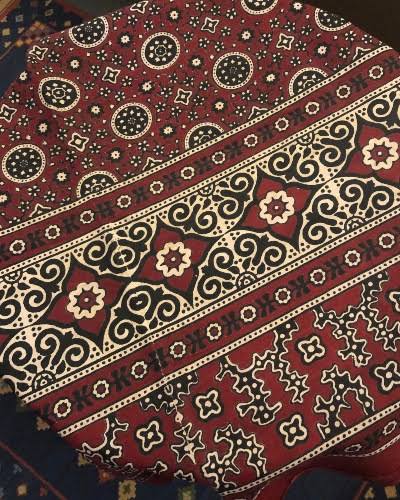
Ajakh is a genre of block printed cloth with deep dyes and complex patterns produced in the Kutch district in Gujarat, India. “Even its name is said to be a remnant of the olden days — it comes from the Arabic word azrak, which means ‘blue,’ or from ‘Aaj Rakh’, meaning ‘keep it for today’ blended with Hindi, hinting at its ancient origins. As described eloquently by scholars, such as Eiluned Edwards in Textiles and Dress of Gujarat and other seminal books on Indian textiles, Ajrakh is not just a textile; it’s a way of life: It’s a melding of art with craft that fuses skill with an intimacy about natural dyes and indigenous landscape.
History and Origin
Ajrakh is one of the world’s oldest resist and mordant-dyed block-printed fabrics, originating in the present-day states of Sindh in Pakistan along with Kutch District of Gujarat in India.A history rooted back to almost 2500 BC.. The artisanal process takes around 14-16 days starting from preparing it for printing and ending on washing. Background:The name “Ajrakh” is said to be derived from the Arabic ‘azrak’, meaning blue, as blue happens to be the one of the principal colours in Ajrakh. Its place of origin is the Sindh area (now in Pakistan) but it was brought to Kutch by Raja Bharmalji I, Maharao of Cutch 1586–1682. The art thrived and fused with the culture of the area. Ajrakh is mainly produced in the villages of Dhamadka (earlier) and Ajrakhpur (post the 2001 earthquake relocation), Kutch, Gujarat and Barmer (Rajasthan), showing how widely prevalent it is across regions. This is fine art and has for centuries been predominantly the work of Muslim Khatri community but it is also done by Hindu Khatris immigrants from Sindh into Kutch and some castes like Muthia, Sandhli etc.
Types
- Ekpuri – printed on one side.
- Bipuri / Hipuri – both sides precision printed.
- Bepoto Ajrakh-Producing using two narrow strips of cloth attached together.
Fibres and Materials used
For generations, the artisans would utilize handspun, handwoven cotton that was available in their area to serve as an ideal base for the natural dyes. It was the breathable, durable kind of material that was structurally strong. Today, although handspun cotton is still employed, the art form has evolved to meet contemporary demands and artisans now employ an assortment of materials such as:
Machine woven cotton (latha and mulmul): More available, regular weave.
Silks, georgette and fabrics such as Chanderi, Maheshwari and Kota doria have enabled the use of Ajrakh in various modern day clothing lines beyond conventional varieties of shawls and turbans.
The printing blocks used in this process, which were (and often still are) made of wood (teak and sheesham woods are common), carved with complex geometric and floral designs. While a few experimented with blocks of clay, metal and such, wood has proved to be the most successful medium able to absorb and then transfer the dye evenly.
Traditional Colours
The traditional colors of Ajrakh is highly symbolic and made up of a small number but strong act of colors which include:
- Indigo blue (Vadalineela)- Represents the infinite sky and universe.
- Red (Laal)- Representing sunset, life and blood.
- Black (Kala)- Reflecting the night; make patterns stand out and look deep.
- White (Safed)- Representing the stars of heavens, to give intricate detail and highlights.
Artisans have added to the palette over the years, and have found some willing partners in nature for their colors:
- Green (Leelo)
- Yellow (Peelo) – often from turmeric.
- Brown (Bluro), made from such substances as pomegranate peels and rhubarb roots.
Motifs
- Geometric + floral repeats similar to lattice designs, borders and center fields.
- About 20 classic motifs.
- People”s favorite designs from 4 blocks each:
- Rekh (outline)
- Datlo blocks (fillers) – geh datto, mavi datto rekle datto
Manufacturing method
Ajrakh is a laborious and intricate, several-week long process which has rigorous stages that must be followed meticulously for maximum impact. The craftsmen use a novel technique of creating the block print on both sides of the fabric called bipuri in contrast to single-sided printing (ekpuri). It can be completed in 10–14 steps overall, which includes the following key steps:
Saaj: A mixture of camel dung and castor oil is used to wash the fabric which functions as a mild scouring material, making it softer so that it can absorb colors better.
Kasanu (Harda Treatment): The fabric undergoes a treatment of Myrobalan (harda) solution Prepare as described here-Mordanting. This one is very important because it provides dyes, especially black and red, to the fabric fibers.
Rekh: Printing in outline with a paste composed of (burnt lime fromHisar. That paste is a resist that blocks the penetration of indigo into those areas.
Kat: The black is printed with iron solution fermented with jaggery. The myrobalan combines with this iron mordant to give a strong fast black.
Pholli/Kan: Mordant (alum) is opaque printed on the fabric that eventually will combine with madder to form the red.
Gach:Special rated resist paste is applied where you want to reserve in white or red. That viscous paste, typically formed from a mixture of clay, gum and other balky items, keeps the indigo dye from reaching those areas.
Indigo Dyeing: The fabric is immersed in a cold indigo bath which provides the characteristic deep blue color. This is done repeatedly for the desired intensity.
Rang: The last boiling, the cloth is boiled in a solution made from tamarisk flowers and madder root. It is during this first boil that the bright red tones and cool tomes of black become visible after having been hidden, as the mordents combine with the natural dye.
The process is repeated multiple times, especially the printing and dyeing processes, to produce a compelling minakari finish in which the shades seem to be set in and shine like gemstones so that every piece becomes an item of desire.
Past and Present Practices
Aspect | Past Practices (Traditional) | Present Practices (Modern) |
Materials |
|
|
Weaving Process |
|
|
Designs |
|
|
Challenges and Future Focus
- Market Dilution: Massive influx of cheap, machine-made imitations (screen and digital prints) that undercut authentic, hand-blocked, and hand-woven prices.
- Environmental Strain: High water consumption of the 16-step Ajrakh process in arid regions like Kutch, plus risks of water pollution from synthetic dye runoff.
- Resource Scarcity: Increasing difficulty and cost in sourcing authentic Desi wool and high-quality natural indigo.
- Generational Gap: Younger artisans migrating to modern professions due to the physically demanding nature and lower financial predictability of traditional labor.
- Authentication: Utilizing GI (Geographical Indication) tags and digital traceability (like QR codes) to certify genuine handcrafted products.
- Sustainable Innovation: Developing water-recycling systems (effluent treatment) and promoting the global demand for eco-friendly, natural-dyed “luxury” textiles.
- Modern Diversification: Moving beyond traditional garments to high-end home décor, western fashion, and winter accessories (jackets, throws).
- Direct Commerce: Leveraging E-commerce to bypass middlemen, ensuring fair wages and a direct connection between the artisan and the global consumer.
- Premium Positioning: Rebranding the craft as a “sustainable luxury” rather than a utilitarian commodity to justify higher price points.
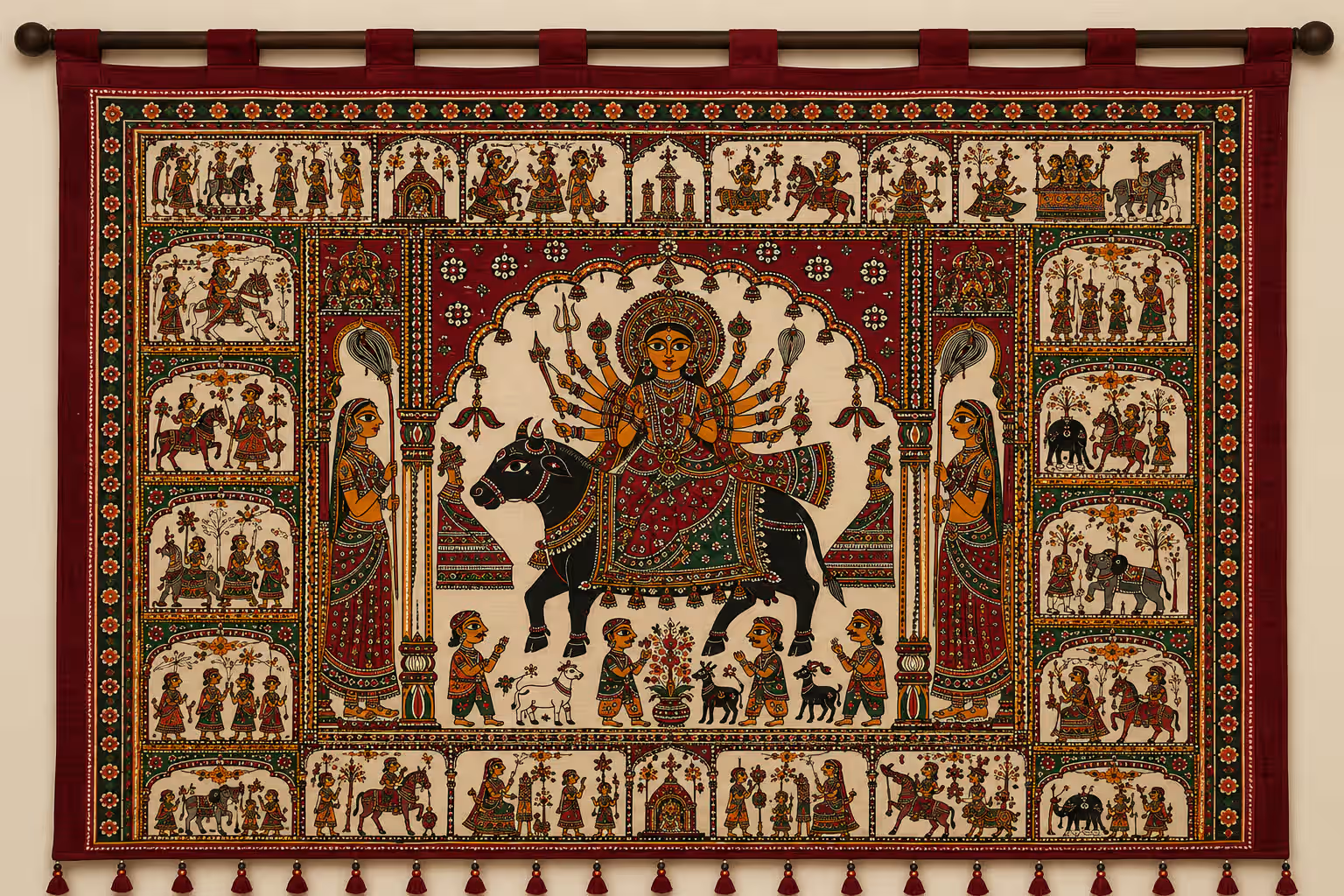
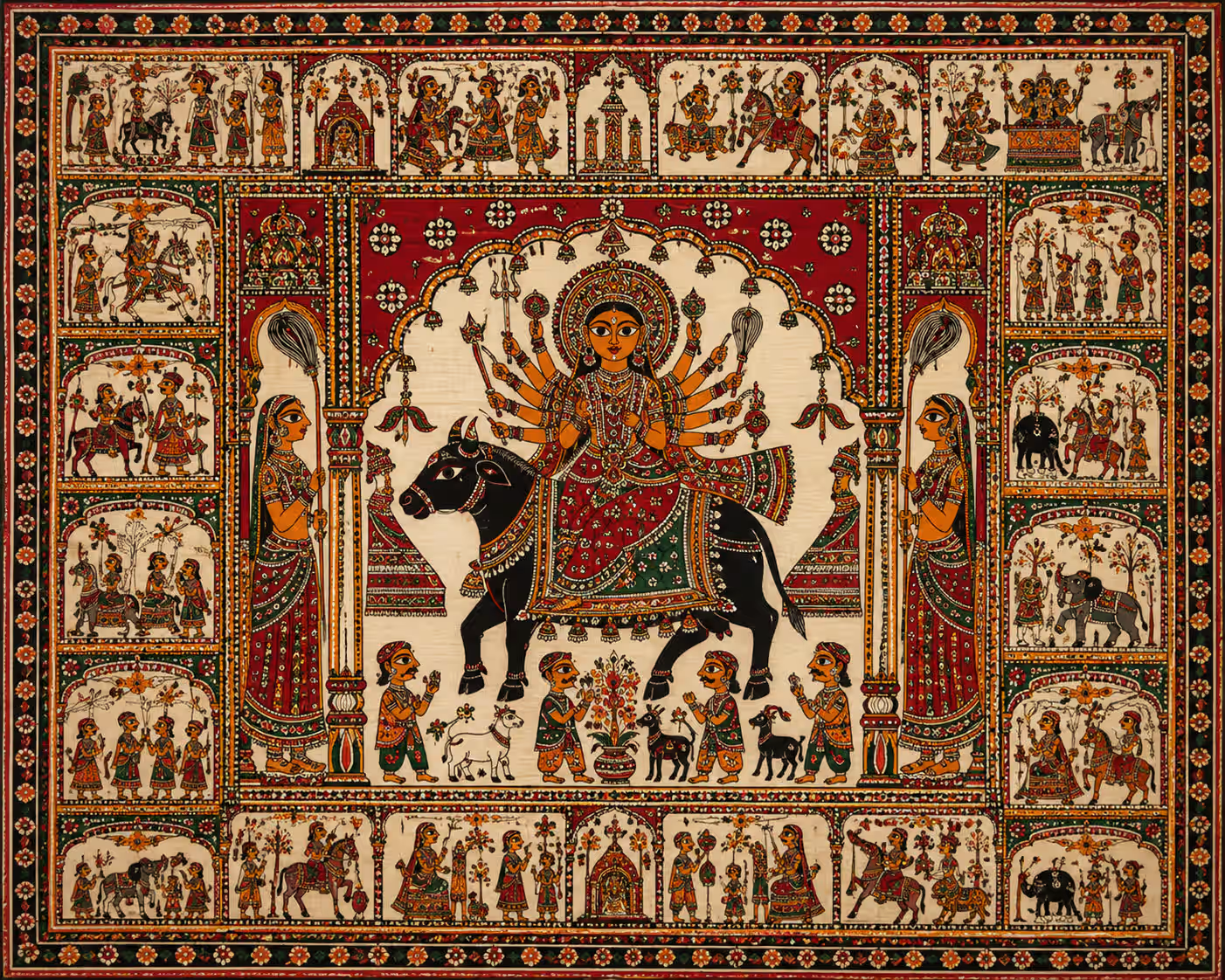
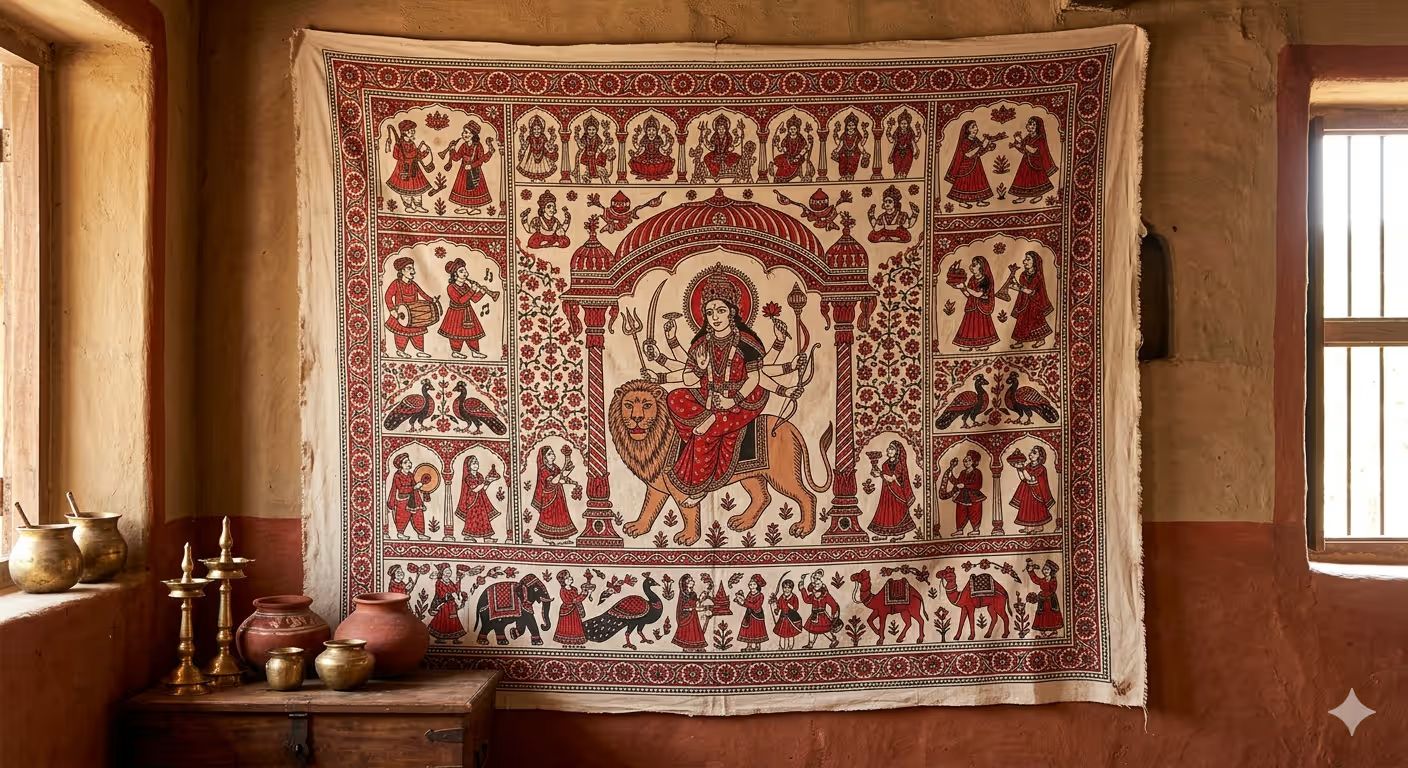
Mata Ni Pachedi
History and Origin
The history of Solapuri Chaddars can be traced back to centuries ago and is associated with the textile industry. This craft has grown during the Peshwa rule, with small-scale weaving units operated by artisan families.
This craft has traditionally been practiced by weaving and scheduled castes, such as Padmashali and Devanga, who have migrated from southern India and settled in Maharashtra. This craft has traditionally been practiced as a family business, with men working on looms and women helping in spinning, dyeing, and related processes.
In the 1950s, weaving units were converted into cooperative mills, and jacquard machines were introduced.
Types of Chaddars
- Traditional Handloom Chaddar : Made using handlooms. It is composed of thick cotton yarns. It has traditional geometric and striped designs
- Jacquard Solapuri Chaddar : Jacquard looms are used for weaving, it is composed of floral and peacock designs
- Cotton Blend Chaddar : Composed of cotton blended with viscose or polyester. It is lightweight and easier to maintain.
- Decorative or Gift Chaddar : It has decorative designs and bright colors.
Fibres and Materials used
Traditional Solapuri Chaddars primarily use cotton yarn, chosen for its breathability and durability.
Main materials
- Cotton yarn (warp and weft threads)
- Coarse cotton yarn for strength and thickness
- Sometimes blended fibers such as viscose or polyester in modern versions
The weaving technique often uses the extra-warp principle, where additional yarns create decorative woven patterns integrated into the fabric structure.
Traditional Colours
Traditional Solapuri Chaddars are known for their bold and contrasting colors.
Common traditional colors include:
- Deep red
- Indigo blue
- Emerald green
- Mustard yellow
- Black and white combination
Earlier, these colors were achieved using natural dyes, giving the chaddars rich and earthy tones.
Motifs
Common motifs and patterns
- Stripes (Patta / Patti)- One of the most recognizable designs. It has alternating bands of contrasting colors
- (Chaukat / Bidi) – Squares, diamonds, and checkered designs
- Stylized flowers woven across the surface
- Peacock (Mor) motifs
- Textured patterns created by manipulating warp and weft threads
Manufacturing method
1. Yarn Preparation
Cotton yarn is spun and strengthened by twisting and doubling.
2. Dyeing
Yarns are dyed in desired colors.
3. Winding and Warping
Threads are wound onto bobbins and arranged as warp threads on the loom.
4. Design Setting
Patterns are programmed using dobby or jacquard mechanisms.
5. Weaving
The fabric is woven using warp and weft threads on handlooms or power looms.
6. Finishing
The chaddar is washed, pressed, inspected, and packaged.
This careful process ensures the fabric remains strong, breathable, and long-lasting.
Past and Present Practices
Aspect | Past Practices (Traditional) | Present Practices (Modern) |
Materials | • Pure cotton yarn from local sources • Natural dyes from plant extracts • Thick hand-spun yarn | • Commercial cotton and cotton blends • Synthetic or chemical dyes • Use of viscose or polyester blends |
Weaving Process | • Entirely manual weaving on pit looms \ • Family-based craft with skills passed through generations • Slow and labour-intensive production | • Use of jacquard and power looms • Mechanized processes for winding and warping • Faster production while retaining some traditional techniques |
Designs | • Simple geometric patterns, stripes, and checks • Limited but bold color combinations • Motifs inspired by nature and local culture | • More complex jacquard designs • Wider color palette due to synthetic dyes • Fusion of traditional and modern motifs |
Challenges and Future Focus
- One of the major problems is that there is a threat of competition from synthetic textiles and imported products, which are generally cheaper. Moreover, there is a lack of demand in this product, as many are opting to buy soft blankets and bedsheets.
- Another problem is that of high production costs involved in the craft of handloom weaving. Also, water scarcity and increased prices of raw materials are adding to the costs of production.
- Another problem is that of fake products being sold under the Solapuri chaddar brand, which is a threat to the original craft.
- However, there are a number of ways in which this craft can be sustained and promoted in the future.
- One of these is to strengthen the GI and brand of this craft to ensure that it is authentic.
- Another is to introduce innovative and fashionable designs to attract the younger generation. Moreover, this craft can also be promoted through electronic commerce sites to reach a wider audience.
- Another way of promoting this craft is to increase awareness about Indian textiles all over the world, thus increasing the market and resulting in the growth of this craft.
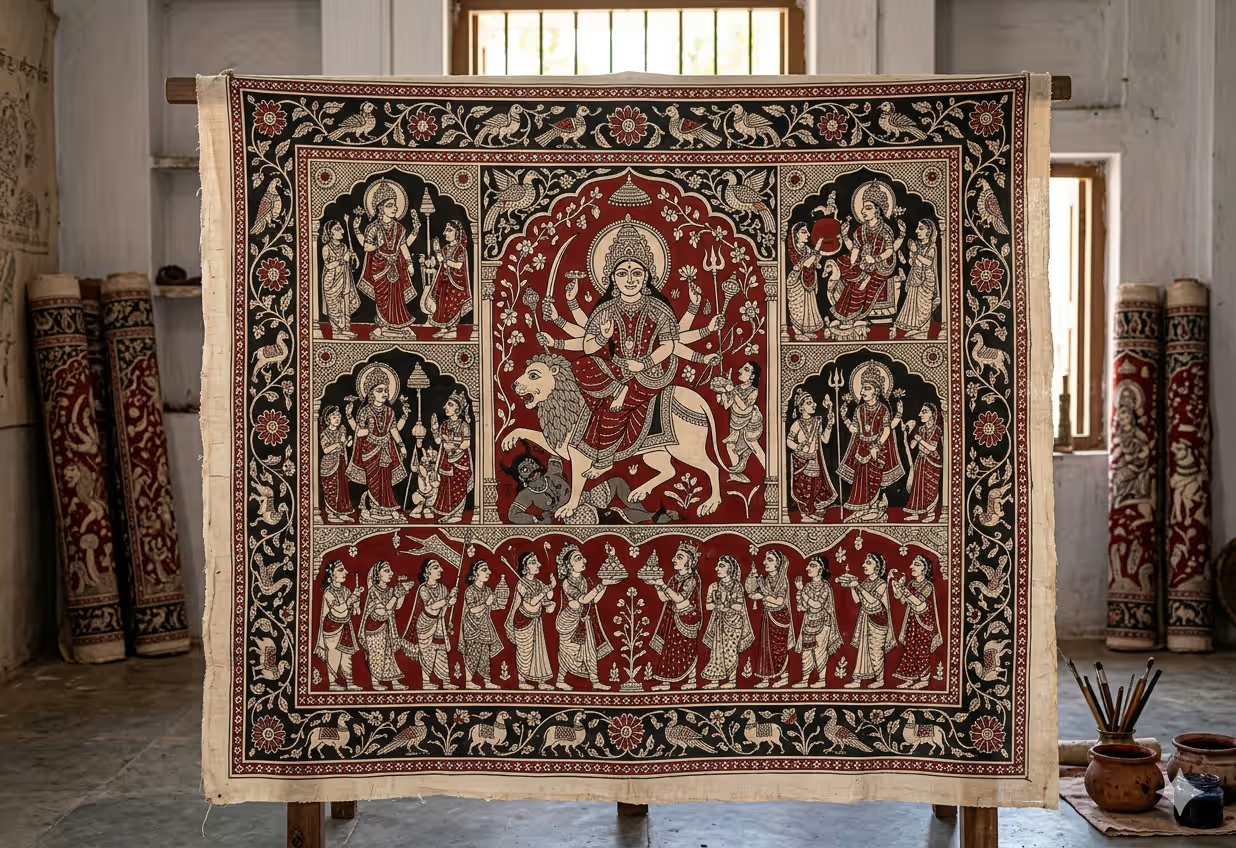
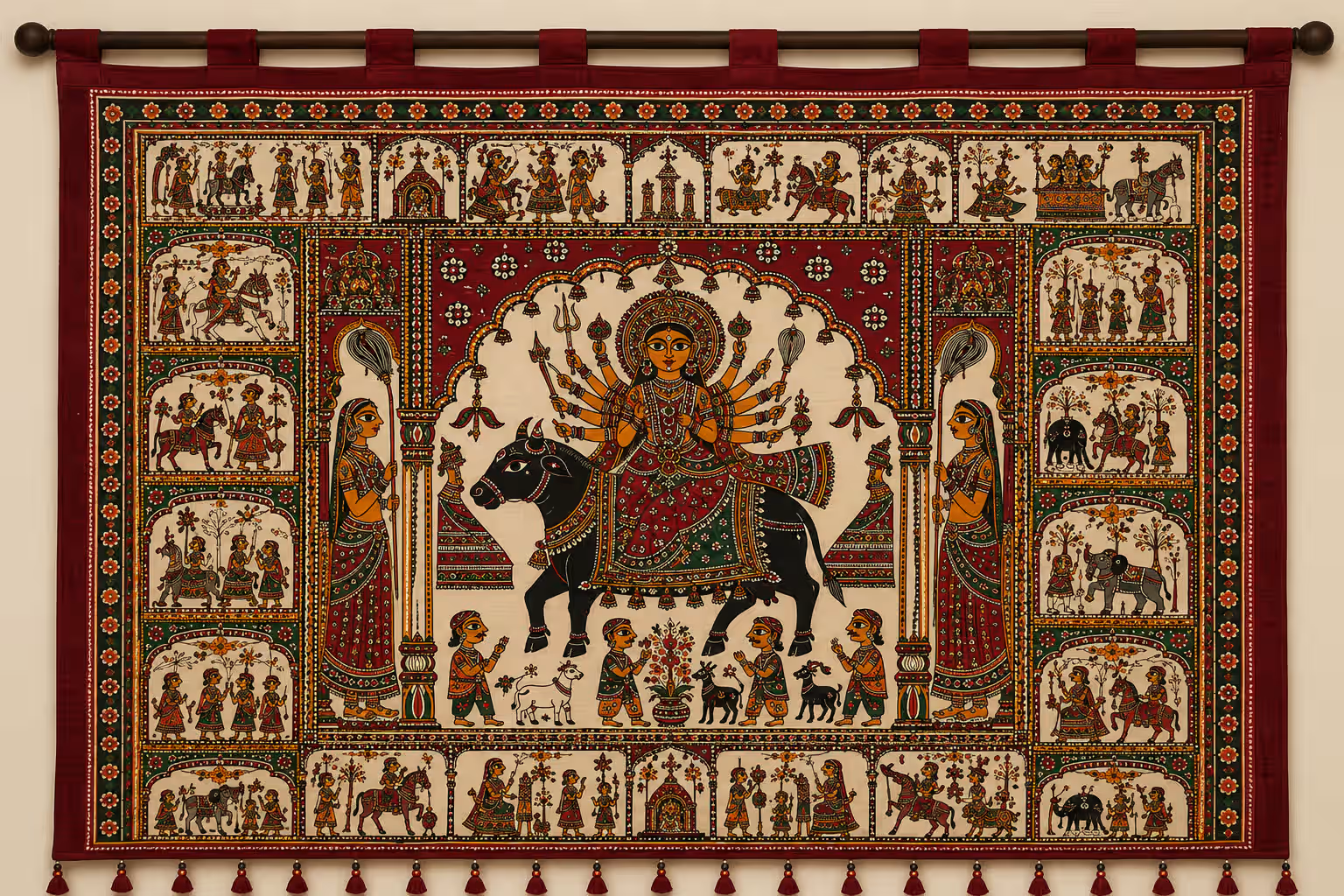
It is a form of art very rare and particularly specialized in the textile field, from Gujarat, India; which uses thick or sticky paste made with castor oil to create designs on cloth.. The word “Rogan” or “Roghna” is derived from the Persian which means “oil” or “varnish”, paying tribute to this special technique. A dying art form, only a few families continue to craft it today.
History and Origin
Rogan painting has its roots in Persia and found its way to Gujarat many centuries back. It is related to an extended family of oil-based painting traditions in the region. This craft had historical origins in the Punjab regions of Sindh, now in Pakistan; Peshawar and Gujarat. Today the art form is largely confined to the Khatri community of Nirona village in Kutch, Gujarat. This is the last village in which this extremely specialised work still survives. I:The craft has survived through the efforts of a handful of families like Khatri’s which have worked tirelessly to revive, document and ensure that the technique is not lost.
The design and color of Chandrakala Sarees have changed over time, but one can always see the originality in terms of the fabric used, which is silk, with zari and elegant designs. Thus, it has become a part of Maharashtrian heritage. Today, it holds importance due to its eternal look and feel.
Types of Rogan Art
A number of fabrics are decoratively designed using the Bandhani technique, the use depending on the fabric to be adorned and different patterns for bandhani are used for different fabric.
Gharchola: This is a religious wedding saree, usually red or green, which has zari checks with a Bandhani sign in each square. It is a representation of marital fortune.
Chunnari/Chunnadi : A less elaborate version in cotton, often with bright colors. The Panchrangi (five-coloured) and the Navrangi (nine-coloured) are among the favourites.
There are different ways knots may be tied, called Dani (a dot), Sircum (knot in a straight line or square shape, used for border and outside the scrolls) and Bharti (cladded dots laid closely to create a pattern).
- Silk Chandrakala – These are woven with silk for a more luxurious feel and a beautiful sheen. Often used for festive occasions, they usually have more elaborate zari work on the borders and pallu.
- Zari Border Chandrakala – The main feature here is the wide gold or silver zari borders. The design keeps things simple, with very few motifs on the body, so all eyes are drawn to the striking contrast.
- Butti Chandrakala – These have tiny zari or thread motifs (called buttis) woven across the body of the fabric, adding a touch of subtle decoration.
- Contemporary Chandrakala – These are modern takes on the classic saree, and you can find them in all sorts of colors, not just the traditional black. Sometimes, they’re made with lighter materials or have simpler borders, making them perfect for everyday wear.
Fibres and Materials used
The Rogan art technique utilises certain materials to make its distinct creations. Base fabric Most often cotton or silk, picked for its smooth texture. The main ingredient of the art is Rogan paste, which is prepared by boiling castor oil for four hours and 11-12minutes to get a rather jelly-like gooey material.
The common colours of the paste were originally evidence of their love to nature which was derived from mineral or plant based pigments. At present the craftsmen generally apply synthetic pigments and napthol dyes to get additional colours. These powder pigments are ground and combined with the prepared Rogan paste.
Traditional Colours
Artists commonly use deep shades of red, yellow, green, blue, white, and black, each carrying cultural and symbolic significance. These vibrant colours are carefully applied to create intricate floral and geometric patterns on dark fabrics, especially black cloth, which helps the designs stand out vividly. The colours not only enhance the visual beauty of Rogan art but also reflect the heritage, craftsmanship, and festive spirit of the local communities in Gujarat.
Motifs
- Motifs in Rogan artpay tribute to its Persian roots and are elaborate and stylized.
- Geometric Patterns: Tangled shapes and designs are popular.
- Flowers and leafy patterns: Stylized ‘tree of life’, flowers and vines are familiar designs.
- BIRDS, ANIMALS :Representations of a variety of birds and beasts occur often.
- Islamic Calligraphy: Not as frequent nowadays, this element was popular in the past.
- The patterns frequently intermingle decorative and figural motifs to tell a highly detailed narrative on cloth.
Manufacturing method
- Paste Preparation: Boil castor oil for a minimum of four hours to produce the Rogan paste. The paste is then cooled to 35 – 45 °C after boiling.
- Mixing of Color: A mixture is prepared of the ground pigments with the Rogan paste after its cooling.
- Painting: The artist spread a small quantity of paste on their palm, and applied the style (suya or kalam) to pull out a fine thread of the paste. They with this thread make delicate, freehand designs onto the fabric without any pre-guided outlines.
- Pattern Transfer: Special method where the artisan only draws half of the fabric. The cloth is then folded so that the motif can be imprinted also, a mirrored image on the other half.
- Drying: The final product is sun dried for 6-8 hours, which makes the paste hard and acquires shiny enamel finish.
Past and Present Practices
Aspect | Past Practices (Traditional) | Present Practices (Modern) |
Materials |
|
|
Weaving Process / Technique |
|
|
Designs |
|
|
Challenges and Future Focus
Near Extinction: Rogan art nearly disappeared due to cheaper machine-made textiles and declining demand.
Time and Labor: The process is slow, skill-intensive, and expensive because of the lengthy preparation and hand-painting work.
Limited Artisans: Only a few families continue practicing the craft, making its survival vulnerable.
Health Concerns: Traditional preparation involves boiling oil for long hours, producing harmful fumes.
Luxury Market: Rogan art is now valued as a premium handmade textile craft for niche buyers and collectors.
Modern Collaborations: Partnerships with fashion designers and interior decorators are increasing its popularity.
Technological Integration: Social media and websites help artisans market their work globally.
Sustainable Livelihood: Fair wages, training, and artisan support are essential for preserving the craft for future generations.